

Shabbat
The Powerful Blessings of Welcoming Shabbat Early: A Segulah for Health, Children, and Prosperity
Discover the spiritual rewards of Tosefet Shabbat, including blessings for children, long life, and livelihood, and the remarkable story of the Ridvaz that reveals the power of honoring Shabbat
- Rabbanit Chagit Shira
- | Updated
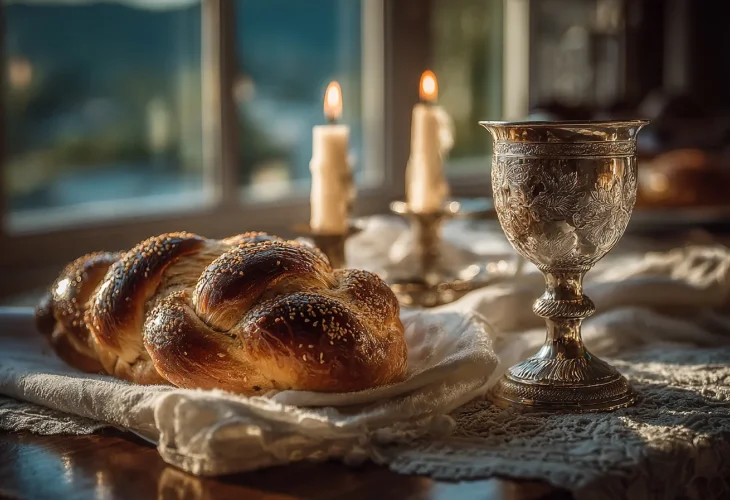
The practice of Tosefet Shabbat—adding extra time to Shabbat by welcoming it early and extending its departure—is traditionally associated with three extraordinary blessings: Banei, Chayei, U'Mezonei, meaning children, life, and sustenance. According to Jewish teachings, those who are careful to extend the holiness of Shabbat may merit blessings of children and family happiness, long life and good health, and abundant livelihood.
The Blessing of Children
The holy Arizal taught that those who wish to merit children should be especially careful to observe Tosefet Shabbat and encourage others to do the same, both by welcoming Shabbat early on Friday and extending its departure on Saturday night. Through this merit, they may be blessed with children. The Chafetz Chaim similarly taught that those who make an effort to welcome Shabbat early and encourage others to follow their example may merit the blessing of children.
The Blessing of Long Life
The Pri Megadim writes, "One who adds from the weekday to the sacred will have life added to them." This teaching reflects the idea that when a person dedicates additional time to the holiness of Shabbat, Hashem may reward them with additional years of life, accompanied by goodness and compassion.
The sefer Siddur Shel Shabbat also emphasizes the importance of welcoming Shabbat early, explaining that from the moment the Shabbat candles are lit, the forces of evil and impurity depart from the home. This teaching, attributed to the Zohar, highlights the spiritual protection associated with bringing the holiness of Shabbat into one's home.
The Blessing of Abundant Livelihood
The verse "From Asher, his bread shall be rich, and he shall provide royal delicacies" (Genesis 49:20) is traditionally associated with a segulah for livelihood. According to this custom, it is beneficial to recite the verse ten times in the morning and ten times in the evening.
A beautiful interpretation connects this verse to the practice of welcoming Shabbat early. The Hebrew letters aleph, shin, and reish (אשר) are the letters immediately preceding those of the word Shabbat (שבת) in the Hebrew alphabet. They therefore allude to the time leading up to Shabbat, suggesting that honoring these additional moments can bring blessings of abundance and prosperity.
The words "Me'Asher shemeinah lachmo"—"From Asher, his bread shall be rich"—are understood as a hint that welcoming Shabbat early can bring the blessing of plentiful sustenance, financial comfort, and dignity. The continuation of the verse, "Vehu yiten ma'adanei melech"—"And he shall provide royal delicacies"—alludes to the spiritual abundance that Shabbat itself bestows upon the entire week.
Expanding the Boundaries of Shabbat Brings Expanded Blessings
The sefer Melechet Shabbat teaches that those who welcome Shabbat early and delay its departure may receive blessings according to the principle of middah keneged middah—measure for measure. By expanding the boundaries of holiness and reducing the time devoted to ordinary weekday activities, a person merits that Hashem will expand the boundaries of His blessings in return.
Should such a person encounter hardship, Heaven forbid, and call out to Hashem, the merit of extending Shabbat may help bring relief and deliverance. This teaching is connected to the verse, "For now Hashem has made room for us, and we shall be fruitful in the land" (Genesis 26:22). Just as a person creates additional space for holiness, Hashem may grant that person greater space, relief, and abundance in life.
The Ben Ish Chai likewise teaches that the Jewish people merit wealth and blessing through the practice of welcoming Shabbat while it is still daylight, emphasizing the spiritual significance of extending its sanctity beyond the required time.
The Remarkable Story of the Ridvaz
A moving story about the Ridvaz illustrates the extraordinary merit traditionally associated with Tosefet Shabbat. During his tenure as rabbi of Slutsk, the Ridvaz became gravely ill. One night, he dreamed that he was standing before the Heavenly Court, where the judges were deliberating his fate. To his horror, he saw that they were preparing to decree his death.
Desperate to change the verdict, he pleaded with the judges. "I am in the middle of writing my sefer!" he cried. "If I am taken from this world now, I will never be able to finish it!" The judges responded calmly, "Do not worry. Someone else will complete your book."
The Ridvaz continued pleading. "But I help so many widows and orphans! Who will take care of them if I am no longer here?" Once again, the judges answered, "Do not worry. We will send two other charitable individuals who will look after the widows and orphans."
Finally, the Ridvaz presented another merit in his defense. "Already on Thursday night," he declared, "the tablecloth is spread across my table in honor of the holy Shabbat. My family and I welcome Shabbat while there is still plenty of daylight, carefully observing the mitzvah of Tosefet Shabbat."
When the Heavenly Court heard this, the judges issued a decisive ruling: "In the merit of adding time to Shabbat, additional years of life shall be granted to you!"
Indeed, the Ridvaz recovered and lived for many more years. He completed his sefer and eventually merited moving to Eretz Yisrael, where he served as the rabbi of Safed.
This story offers a powerful illustration of the spiritual significance attributed to welcoming Shabbat early. By setting aside additional time for holiness, we express our love for Shabbat and our desire to draw closer to Hashem. According to these cherished teachings, even a small addition to Shabbat can carry extraordinary merit, bringing blessings of children, health, livelihood, and spiritual abundance into our lives.

