

Personal Stories
From Party Life to Torah: How One Woman Rediscovered Her Passion Through Faith
Maya Blumberg shares her remarkable journey to religious observance, and how she found a way to embrace her love of dance while living a life of Torah and mitzvot
- Michal Arieli
- | Updated
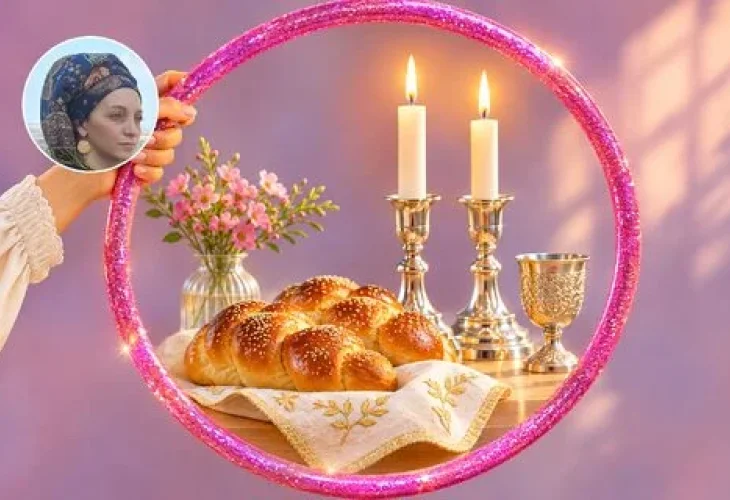 In the circle: Maya Blumberg
Watching Maya Blumberg glide across the stage, spinning flaming hoops, leaping through the air, and performing impressive acrobatic tricks, one might assume she grew up in a circus family. But her story began somewhere entirely different: in a hospital on the outskirts of Hong Kong. “Not at all,” she laughs at the suggestion that she was raised in the circus. “My parents lived in the Far East for 25 years, and that's where I was born.”
Maya remembers her early childhood as comfortable and happy. Her family lived in a spacious home, employed a Filipino housekeeper, and socialized with Jewish families and businesspeople from around the world. Her parents maintained certain Jewish traditions, although religious observance was not a central part of their lives. “We waited three hours between meat and dairy, even though the meat itself wasn't kosher,” she recalls. “We also made Kiddush on Friday nights, but without any explanation or deeper meaning behind these practices.”
One childhood experience remains particularly vivid in her memory. During a Chinese holiday, neighborhood children dressed in costumes and went from house to house collecting candy. Wanting to join the fun, Maya put on a costume and accompanied them. When a woman opened her door, however, she looked at Maya and remarked, “But you're Jewish.” Maya returned home bewildered, unable to understand what made her different from the other children.
From Hong Kong to Tel Aviv
When Maya was five, her family immigrated to Israel and settled in northern Tel Aviv. Her childhood and teenage years followed what she describes as a typical Israeli path, including dance classes that nurtured her passion for movement and performance. By the age of 18, however, dance lessons were no longer enough. Maya had become fascinated by the world of parties and entertainment, eventually turning her enthusiasm into a career. “I felt that this was my life,” she explains. “At first it was just a hobby, but eventually I started working in the field and earning a pretty good living.”
Despite her success, Maya found herself increasingly restless. She was constantly organizing parties and creating new experiences, yet nothing seemed to provide lasting satisfaction. Whatever captured her interest quickly lost its appeal, leaving her searching for something else. Eventually, her search led her somewhere entirely unexpected: Kibbutz Yahel in the Arava desert, far removed from the bustling nightlife she had known. “ Specifically there, I felt my soul opening up,” she recalls. “There was something about the desert that opened my heart. I suddenly felt that I wanted to do something genuinely good and spiritual.”
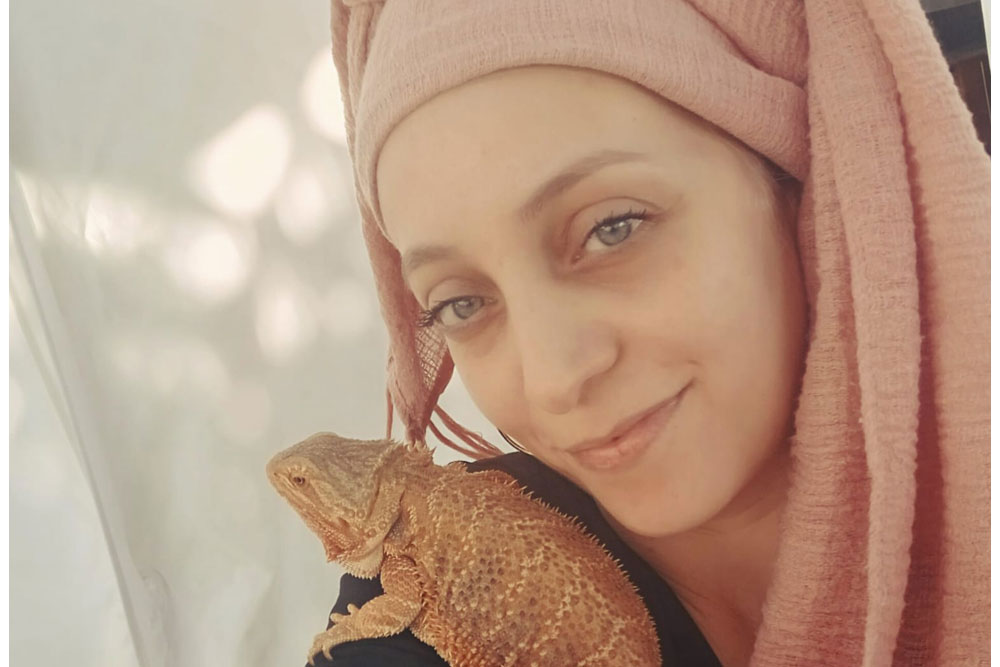
Finding Shabbat in the Desert
Living in the remote desert made it impossible for Maya to continue organizing entertainment events. For the first time, she had the space to reflect on what she truly wanted. It was there that she made a decision that would change the course of her life: she began observing Shabbat. “I didn't know much about Shabbat, and I certainly didn't understand how to observe it properly,” she admits. “I simply felt that my soul needed something real. After experiencing all the parties in Tel Aviv and realizing how shallow and empty everything felt to me, I needed something meaningful to fill that emptiness.”
Maya observed her first Shabbat at 18 and continued doing so consistently, even after returning to her parents' home in Tel Aviv. Her decision, however, was not immediately welcomed. Her mother, who had immigrated to Israel from Yemen, was familiar with religious Jewish life but had chosen to leave religious observance behind. Maya's decision to embrace the very lifestyle her mother had rejected created considerable tension at home. “At first, both my parents were uncomfortable with my decision to become religious,” she recalls. “There were many arguments, and for a long time, keeping Shabbat required tremendous determination and personal sacrifice.”
Discovering a World She Never Knew Existed
Observing Shabbat was only the beginning of Maya's spiritual journey. Having grown up without meaningful exposure to religious Judaism, she was eager to understand the beliefs and practices she was beginning to discover. After returning from the desert, she began speaking with traditional Jews, eagerly asking them to explain what they knew about Hashem and the spiritual world. She was astonished to learn about the Torah, mitzvot, and the concepts of this world and the World to Come. Even more surprising was the realization that these ideas, which were entirely new to her, were already familiar to so many people. “I couldn't understand how people could know that Hashem created the world and that the Torah and mitzvot existed, yet not necessarily live according to that knowledge,” she explains.
Initially, Maya directed her questions to an elderly uncle who had immigrated from Yemen, hoping he could provide answers. As time went on, she began meeting religious women and Torah teachers who helped her explore Judaism more deeply. “I was so happy to discover that they had answers to my questions,” she says. “It was exactly what my soul had been searching for all those years. From there, I just kept moving forward.”
Building a Life of Torah and Faith
At 21, Maya met the man who would become her husband. Their relationship developed alongside her growing commitment to Jewish observance. “On our first date, I wore jeans. On our second date, I came wearing a skirt. By our third date, I told him wholeheartedly that I wanted to become religious and observe the mitzvot, but I didn't have the knowledge or tools to know how.”
Her future husband had already been on his own journey toward religious observance for several years and helped her establish a foundation in Jewish practice. The couple married in a traditional Jewish wedding with separate seating for men and women and continued growing together spiritually. They recently celebrated their 14th wedding anniversary and are now the parents of four sons. Today, they belong to a community of baalei teshuvah, Jews who have embraced religious observance, in Ra'anana.
For years, Maya supported her family by running a home daycare. Although she was grateful for the life she had built, she gradually began to feel that certain parts of her former identity had been left behind. Then, about five years ago, an unexpected experience opened a new chapter.
Rediscovering Dance Through Joy and Holiness
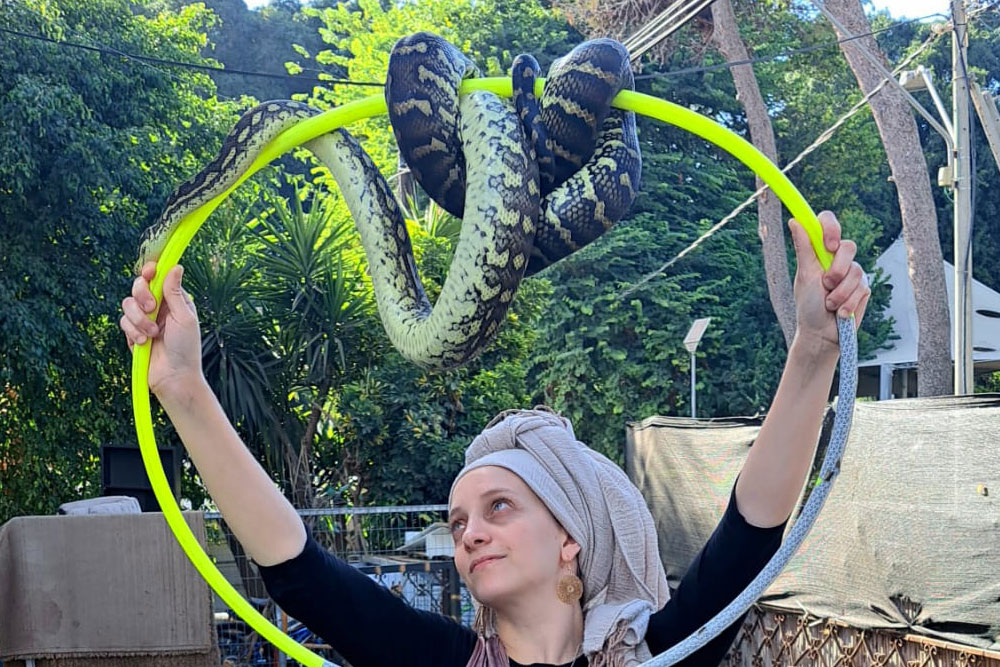
Maya began attending women's events and discovered a vibrant world of music, dancing, and artistic expression within religious Jewish life. “It brought my soul back to life,” she says emotionally. “I realized that dancing and holiness aren't opposites.” At one event, she watched a young woman perform with a hula hoop. Captivated by the graceful movements and unusual technique, Maya approached the performer afterward and asked if she could try it herself. “Once I started, I couldn't stop,” she recalls.
From that moment, Maya knew she wanted to perform with hoops. She began practicing, developing her skills, and eventually appearing at women's events, where she now combines dance, acrobatics, and circus-inspired artistry. For Maya, however, the experience represents far more than entertainment. “I feel that this is much more than self-expression,” she explains. “For me, it's truly medicine for the soul.”
For years after becoming religious, Maya had felt that embracing her new way of life meant giving up aspects of her former self, including her hobbies, musical interests, and even parts of her personality. Rediscovering dance transformed her understanding of spiritual growth. “I realized that Hashem wants us to be happy. He doesn't want us to erase who we are, but to use the abilities He gave us,” she says. “That realization gave me tremendous strength and connection.” Maya came to understand that becoming religious did not require abandoning everything she once loved. Instead, she could find a meaningful place for those interests within her new life. “You can remain who you are, with your old passions and all the different parts of yourself, and discover how all those colors can come together to create something beautiful.”
Learning to Grow Through Setbacks
Maya's journey into professional performance was not without challenges. She recalls one of her earliest appearances, when she was invited to perform alongside Israeli singer Din Din Aviv. Until the moment she stepped onto the stage, she had no idea that she would be performing before an audience of 600 women. To make matters worse, the stage was slippery, restricting her movements, and at one point, the hoop flew out of her hand.
Maya felt that she had made a serious mistake and was disappointed that her performance had fallen short of her expectations. To her surprise, however, the audience responded enthusiastically, showering her with encouragement and positive feedback. Rather than allowing the experience to discourage her, she used it as motivation to improve. She began studying additional circus techniques, incorporating new props into her performances, investing in professional equipment, and gaining experience. “I'm still learning every day that there are ups and downs along the way,” she says. “And that's okay, because every experience helps me move closer to my goal.”
Helping Young Girls Discover Their Strengths
What began as performances at women's events soon developed into another meaningful endeavor: teaching hula hoop classes to young girls. Throughout the year, Maya teaches her students different movements, tricks, and routines, culminating in a performance at the end of the program. Over time, she has discovered that the hoop is much more than a recreational accessory. “It's an incredible tool for building self-confidence,” she explains. “I watch the girls learn not to give up when the hoop falls. They discover abilities and inner strength they never knew they had.”
Maya's own performances incorporate a wide range of artistic styles, from circus-inspired acrobatics to ballet, modern dance, and athletic routines. She also collaborates with other female performers, including at the Colors of Song festival, held at the Music Square Auditorium in Jerusalem, where she is delighted to perform alongside other talented women.
For someone whose journey began in Hong Kong, continued through Tel Aviv's nightlife, and eventually led to religious life in Israel, the combination of faith and performance might seem like an unexpected destination. But Maya sees it differently. “People always ask me how I became involved in something so unusual,” she says. “I tell them that I didn't reinvent myself. I simply took what had always been part of me and found the right place for it to flourish.”
 Personal StoriesA Night to Remember: When Torah Entered the Movie Theater
 Personal StoriesFrom Chabad Emissary to Dance Instructor: A Journey of Faith and New Beginnings
 Personal StoriesA Lesson in Sensitivity: The Mistake This Rabbi Never Forgot
 Personal StoriesBack to the Source: How Shabbat Brought Me Home

