

World News
Iran Reports Oil Tanker Explosions in Strait of Hormuz, Threatens US Bases
Iran claims three oil tankers struck naval mines near the Strait of Hormuz and warns of attacks on US military bases, as Washington maintains economic pressure while leaving the door open to diplomacy
- Yuval Aviv
- | Updated
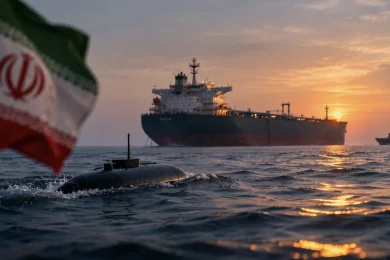
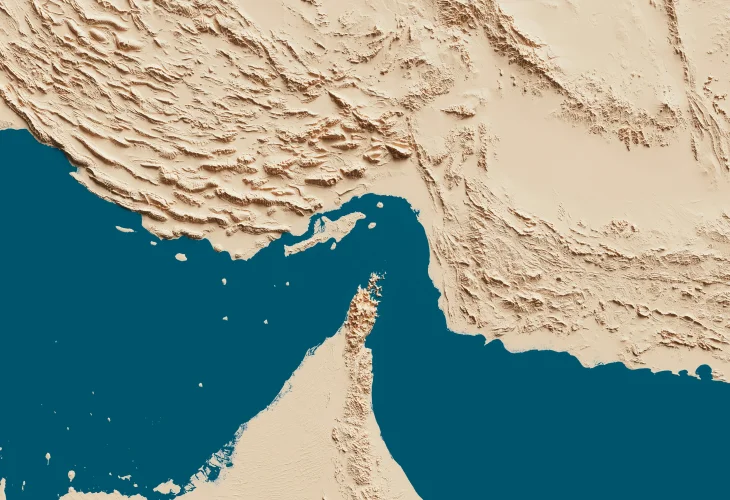 The Strait of Hormuz (credit: unsplash)
Amid escalating tensions between Iran and the United States, Iran's Islamic Revolutionary Guard Corps (IRGC) announced Wednesday that two oil tankers exploded and caught fire overnight in the Strait of Hormuz after allegedly striking naval mines. Iran's official IRNA news agency released footage it claimed showed the explosions.
According to the IRGC Navy, the tankers had disabled their identification and navigation systems and attempted to pass through a shipping route prohibited by Iran. Iranian officials claimed the vessels were accompanied by American fighter jets and guided by a US military officer. The identities of the tankers and the condition of their crews were not disclosed. Separately, the Iranian Navy reported that another tanker caught fire early Wednesday east of the strait, also allegedly after striking a mine.
Iran Threatens US Military Bases in Europe
The reported incidents come amid increasingly forceful warnings from Tehran. Mohsen Rezaei, secretary of Iran's Supreme National Security Council, warned in an interview with Al Mayadeen that American military bases in Europe would be targeted if they were used to launch aircraft carrying out strikes against Iran. "Any new American attack will be met with strikes against US military bases, including those located far away," he declared.
Rezaei also insisted that Iran would not transfer "even a single grain" of enriched nuclear material out of the country. He said Tehran had informed Russia that the material would remain under Iranian control for the development of nuclear-powered vessels and submarines. He further identified an end to regional hostilities, particularly in Lebanon, as a condition for reaching an agreement.
Iran's chief of staff, Ali Abdollahi, issued a similar warning, declaring that any location posing a threat to Iran could become a target for asymmetric military operations. "The previous blows were only the beginning. If there is another miscalculation, they will face far more devastating strikes," he said. Iranian Parliament Speaker Mohammad Bagher Ghalibaf also threatened an immediate response that would exceed the expectations of Iran's adversaries.
Washington Favors Economic Pressure Over Renewed Fighting
Meanwhile, according to Axios, US Secretary of State Marco Rubio told his G7 counterparts in Paris that President Donald Trump had decided, for now, to prioritize economic pressure rather than resume military operations against Iran. Three participants in the discussions said no deadline had been established for ending the pressure campaign.
Rubio publicly emphasized that American sanctions and the naval blockade were proving effective, while reiterating Washington's willingness to pursue an agreement and continue diplomatic mediation through Qatar.
The developments highlight the contrasting approaches of Washington and Tehran, with the United States maintaining economic and maritime pressure while Iranian officials threaten further military retaliation if hostilities resume.
 World NewsTrump: "Hit Them Hard"; U.S. Strikes Iran for the Ninth Straight Night
 World NewsTrump Draws a Red Line: When the U.S. Could Strike Iran Again
 World NewsUS-Iran Peace Talks: Qatar Reports Progress on Nuclear Deal and End to War
 World NewsIran Escalates Attacks in Strait of Hormuz, Threatening Global Oil Supplies

