

Personal Stories
Torah Study for Seniors: The Remarkable Kollel Network Transforming Lives
Inspired by the Lubavitcher Rebbe, Lev Leviev's Tiferet Zekenim initiative brings Torah learning, community, and renewed purpose to thousands of seniors across Israel and beyond
- Michal Arieli
- | Updated
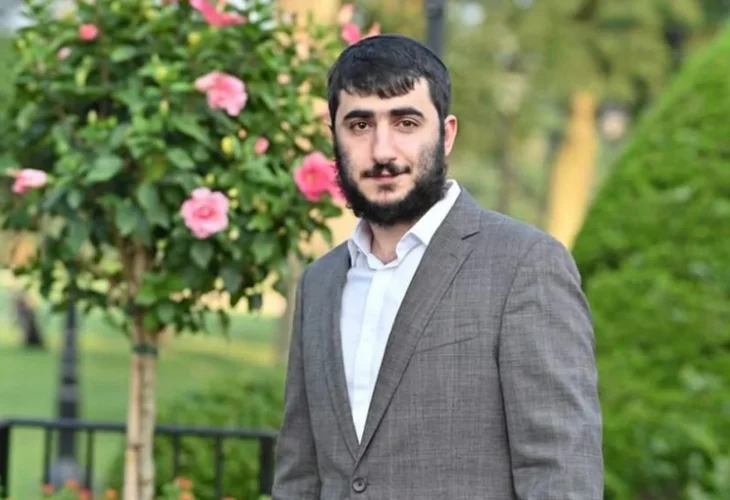 Yehoshua Leviev
The term kollel is generally associated with young married men who devote their days to Torah study. But the Tiferet Zekenim–Levi Yitzchak network is redefining that familiar image, offering older adults the opportunity to participate in structured Torah learning well into their later years. Across Israel, thousands of seniors begin their mornings with three hours of dedicated study, much like full-time kollel scholars.
In an interview, Yehoshua Leviev, son of businessman Lev Leviev, shared the story behind the initiative and the vision that inspired its creation more than four decades ago.
"In 1980, when my father was just 21 years old, long before he entered the business world, he traveled to the United States," Leviev recalled. "Divine Providence led him to the synagogue of the Lubavitcher Rebbe on a Saturday night, just as a farbrengen [Chassidic gathering] was taking place. That evening, the Rebbe introduced the idea of establishing kollels specifically for elderly people."
According to Leviev, the Rebbe challenged the conventional way society views older adults. "When we see an elderly person, our immediate instinct is to think about how we can help them carry their shopping bags, obtain medication, or heat their home. But the Torah views elderly people with tremendous respect. They are individuals who have acquired wisdom and have so much to share with the rest of us."
The Rebbe emphasized that these institutions should not resemble charitable soup kitchens or social assistance centers. Instead, they should be prestigious Torah institutions, welcoming distinguished rabbis and community leaders, with participants treated with the utmost dignity. He also insisted that the programs be accessible to Jews from every community and background.
"At the end of his remarks, the Rebbe promised that whoever established these kollels would see blessings 500 times greater than their investment," Leviev continued. "He asked who was willing to take responsibility for the project, and my father stepped forward."
From that moment, Lev Leviev committed himself to the initiative. Over the years, he has repeatedly attributed his business success to the blessings associated with establishing these Torah study programs.
From a Single Kollel to a Nationwide Network
The first Tiferet Zekenim kollel opened in Bnei Brak more than 40 years ago. Additional branches followed, many serving members of the Bukharian Jewish community. "About four years ago, we entered into a partnership with Colel Chabad, and that marked the beginning of tremendous growth," Yehoshua Leviev explained. "Later, businessman Moti Ben-Moshe joined the initiative and began supporting it generously."
During the first year of the partnership, pilot programs were launched in several Israeli cities. Approximately 50 kollels opened over the following six months, with another 150 established during the next two years. "Our goal for next year is to reach 500 kollels throughout Israel," Leviev said. "Today, our northernmost branch is in Shlomi, while our southernmost is in Eilat. This week, we opened our 280th kollel in the community of Revava. There is hardly a week when another branch doesn't open."
Although the network provides initial funding and organizational support, individual kollels enjoy considerable independence in developing their study programs. Some offer lectures by visiting rabbis, while others emphasize chavruta learning or regular classes led by a resident rabbi. Each branch is headed by one of its senior participants. Some communities have also developed creative ways to expand their activities. In Elkana, for example, residents collect recyclable bottles and use the proceeds to fund additional Torah classes and guest lecturers.
During a recent visit by representatives of Israel's Ministry of Welfare, officials suggested that the programs incorporate more physical activity. Leviev noted that some branches already offer exercise programs and that the network intends to expand them. He also explained the philosophy that distinguishes the initiative from conventional elderly care.
"You identify an elderly person's problems and try to solve them. We ask ourselves what their strengths are," he told the officials. "The Torah teaches that a person's wisdom grows with age, and our goal is to develop that wisdom further. When seniors spend meaningful hours every morning engaged in serious Torah study, we know we have achieved our primary objective."
More Than Torah Study: Building Connections Across Generations
The kollels welcome participants from a wide range of ages and backgrounds. Although most members are between 65 and 75, many branches include older participants, Holocaust survivors, and individuals over the age of 100. "Most of our kollels have participants from the age of 55 onward, but anyone interested in learning is welcome, including younger people," Leviev said.
Beyond the daily learning sessions, the network provides refreshments and organizes approximately 10 to 12 special events throughout the year, including visits to the gravesites of revered Jewish sages, Chanukah celebrations, and Rosh Chodesh gatherings. Participants also receive occasional gifts as expressions of appreciation.
One of the network's newest initiatives seeks to connect generations through Torah study. "We're launching a special program that pairs seniors with schoolchildren for chavruta learning," Leviev explained. "Each older participant will be matched with two or three children, giving them the opportunity to learn together, guide them, and contribute to their development."
The project is supported by several prominent rabbinic figures, including Rabbi Zamir Cohen, who takes an active role in the initiative, visits the kollels, and delivers Torah lectures at several branches.
Expanding Opportunities for Women and Jewish Communities Worldwide
The network is also preparing to establish Torah study programs specifically for older women, fulfilling another aspect of the Lubavitcher Rebbe's original vision. "The Rebbe explicitly requested that programs be developed for both men and women," Leviev said. "We already have an approved budget for this year and intend to begin establishing women's Torah study centers in various communities in the near future."
The initiative has also expanded internationally. During the past six months, branches have opened in Moscow, Vienna, Kyiv, and Azerbaijan, followed by additional locations in Florida and South Africa.
Leviev believes the programs can also transform how families perceive their older members. "There's a tremendous difference between a family that regards its grandfather as the president of the family and one that sees him simply as an elderly person who needs to be cared for," he explained. "When someone gets up in the morning and goes to a place where they feel valued and continue developing intellectually, the entire family's perception of that person changes."
He recalled a recent gathering that brought together three former Knesset members—Eliezer Mizrahi, Yitzhak Vaknin, and Yitzhak Saban—at one of the network's kollels. "All three spoke about how difficult it had been to leave politics and public life behind," Leviev said. "They had spent years contributing to society, and suddenly that chapter was over. But through the kollel, they discovered a renewed sense of purpose."
The former lawmakers described feeling just as useful and valued as they had during their years of public service. "It was deeply moving to hear them speak," Leviev recalled. "They said they feel no less capable of contributing than they did in the past. What more could we possibly ask for?"
For the Tiferet Zekenim–Levi Yitzchak network, that may be the clearest measure of success: providing older adults with opportunities to continue learning, sharing their knowledge, and making meaningful contributions to their communities.
 Personal StoriesUri Geller on the Lubavitcher Rebbe: “I Still Have His Pen”
 Personal StoriesFrom Stuttering to Inspiring Thousands: Rabbi Butman's Remarkable Journey
 Personal StoriesFrom World-Famous Violinist to Baal Teshuva: The Story of Mírel Reznic and the Auschwitz Violin
 Personal StoriesIsraeli Social Media Star Celebrates Birthday in Uman Amid Spiritual Journey

