Facts in Judaism
10 Common Jewish Expressions and Their Surprising Origins
Discover the fascinating Torah sources and Jewish traditions behind ten familiar expressions
- Naama Green
- | Updated
From "Mazel Tov" and "Baruch Hashem" to "Bli Ayin Hara," many familiar Jewish expressions are so deeply woven into everyday conversation that we rarely consider their origins. Yet these simple phrases have roots in biblical verses, Talmudic teachings, and centuries-old traditions.
Following are ten common Jewish expressions and the meanings behind them.
1. "Ad Meah V'Esrim" – Until 120
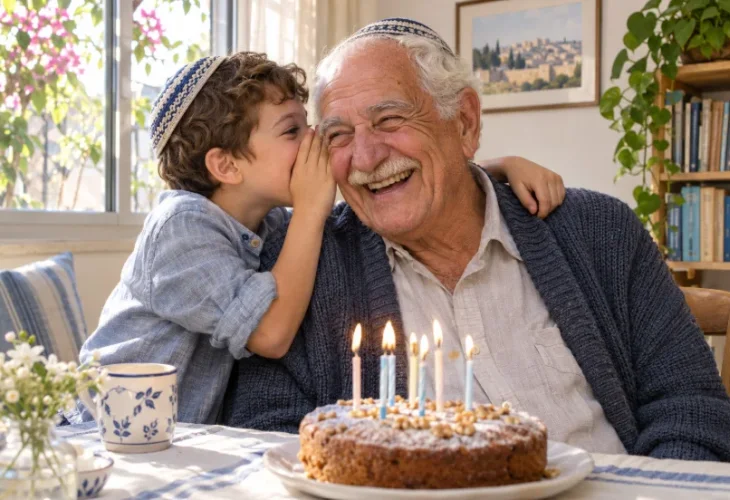
One of the most familiar Jewish birthday blessings is "Ad meah v'esrim," meaning "Until 120." The expression is associated with Moshe Rabbeinu, about whom the Torah states: "Moshe was 120 years old when he died; his eyes had not dimmed, and his vigor had not diminished" (Deuteronomy 34:7). Inspired by Moshe's remarkable longevity and strength, the traditional blessing expresses a wish for a long life accompanied by good health and vitality.
2. "Bli Ayin Hara" – Without the Evil Eye
When praising a child or mentioning someone's good fortune, many Jews add "Bli ayin hara," meaning "Without the evil eye." The concept appears in several teachings of our Sages. The Talmud (Bava Metzia 107b) recounts that Rav visited a cemetery and attributed the deaths of 99 out of every 100 people buried there to the evil eye.
Pirkei Avot offers a moral perspective, with Rabbi Yehoshua identifying an "evil eye" as one of the qualities that can lead a person to ruin (Avot 2:11). Beyond expressing the hope that our blessings will be protected, the phrase also invites us to consider how we respond to others' good fortune—with generosity and happiness or with envy and resentment.
3. "B'Sha'ah Tovah" – At an Auspicious Time
When hearing about an anticipated happy event, such as a pregnancy, it's customary to offer the blessing "B'sha'ah tovah," meaning "At a good time." The expression conveys the hope that the awaited event will take place at the right moment and under favorable circumstances.
The significance of timing also appears in the Talmud. In Shabbat 156a, Rabbi Chanina teaches that the hour of a person's birth influences their destiny.
4. "Mazel Tov" – Congratulations
Whether celebrating the birth of a baby or a wedding, Jews traditionally offer the same two words: "Mazel Tov." Although commonly translated as "congratulations," the phrase literally refers to good fortune or a favorable constellation.
The Talmud discusses the influence of the constellations on human life, including Rabbi Yochanan's teaching that "Ein mazal l'Yisrael"—Israel is not bound by astrological destiny (Shabbat 156a). In everyday usage, "Mazel Tov" celebrates a happy occasion while expressing the hope that it will be followed by continued blessing.
5. "Baruch Hashem" – Blessed Be G-d
"How are you?" "Baruch Hashem." These familiar words, meaning "Blessed be G-d," reflect a tradition of acknowledging Hashem with gratitude.
When Avraham's servant Eliezer learned that Rivkah belonged to his master's family, he bowed and declared: "Blessed be Hashem, the G-d of my master Avraham" (Genesis 24:27). Similarly, saying "Baruch Hashem" in everyday conversation offers an opportunity to express gratitude before describing our circumstances.
6. "B'Ezrat Hashem" – With G-d's Help
"We'll meet on Thursday, b'ezrat Hashem." This familiar expression reflects the belief that our plans ultimately depend on divine assistance. A closely related idea appears in Tehillim: "From where will my help come? My help comes from Hashem, Maker of heaven and earth" (Psalms 121:1–2).
While "Baruch Hashem" expresses gratitude for what has already happened, "B'ezrat Hashem" conveys hope and prayer for what lies ahead.
7. "Chas V'Chalilah" – G-d Forbid
The expression "Chas v'chalilah" is used to reject an accusation or express the hope that something terrible will never happen. Before the destruction of Sodom, Avraham pleads with Hashem to spare the righteous inhabitants, declaring: "Far be it from You to do such a thing, to put the righteous to death with the wicked" (Genesis 18:25). Rashi explains "Chalilah lecha" as referring to an action that would be profane or unworthy.
Later, when Yosef's brothers are accused of stealing his silver goblet, they respond: "Far be it from your servants to do such a thing" (Genesis 44:7). Onkelos translates "chalilah" into Aramaic as "chas." The two words appear together in the expression we use today to strongly reject wrongdoing or ward off the possibility of misfortune.
8. "Labriut" – To Your Health
Why do we respond to someone's sneeze with "Labriut," meaning "To your health"? An ancient explanation appears in Pirkei D'Rabbi Eliezer (Chapter 52), which describes a tradition that, in earlier generations, a person's soul would depart suddenly following a sneeze.
According to the Midrash, Yaakov Avinu prayed that illness should precede death, allowing a person time to prepare and bid farewell to loved ones. The Midrash also mentions the custom of responding to a sneeze with "Chaim," meaning "Life." Today's expression preserves the underlying wish for continued life and good health.
9. "Refuah Shleimah" – A Complete Recovery
When someone is ill, we often wish them a "Refuah shleimah," meaning "A complete recovery." The phrase reflects the language of Jewish prayer. In the Ashkenazi version of the Refa'einu blessing in the Amidah, we ask Hashem to "bring complete healing to all our afflictions."
Personal prayers for someone who is ill also frequently include "Refuat hanefesh u'refuat haguf"—healing of the soul and healing of the body. The blessing expresses a wish for recovery that encompasses both physical and emotional well-being.
10. "Zichrono Livrachah" – May His Memory Be a Blessing
When mentioning someone who has passed away, Jews often add "Zichrono livrachah," meaning "May his memory be a blessing." The expression is rooted in Mishlei: "The memory of the righteous is a blessing" (Proverbs 10:7).
A closely related formulation appears in the Talmud (Kiddushin 31b), which discusses how children should continue honoring their parents after their passing. The Gemara teaches that when a son quotes a Torah teaching from his deceased father, he should refer to him respectfully. After twelve months, the prescribed expression includes "Zichrono livrachah l'chayei ha'olam haba"—"May his memory be a blessing in the life of the World to Come."
The familiar phrase preserves this tradition of honoring the deceased and the legacy they leave behind.
Ancient Wisdom in Everyday Words
Whether celebrating a joyful occasion, wishing someone good health, expressing hope for the future, or remembering a loved one, these expressions connect everyday conversation to the Torah and the teachings of our Sages.
Behind some of the most ordinary words we speak lie generations of Jewish faith, wisdom, and tradition.