

Health and Nutrition
New Peanut Allergy Tablet Shows Promising Results in Clinical Trial
A clinical trial involving 150 children and adults found that a daily tablet placed under the tongue increased peanut tolerance in some participants, offering hope for a new treatment to reduce the risks of accidental exposure
- Shira Dabush
- | Updated
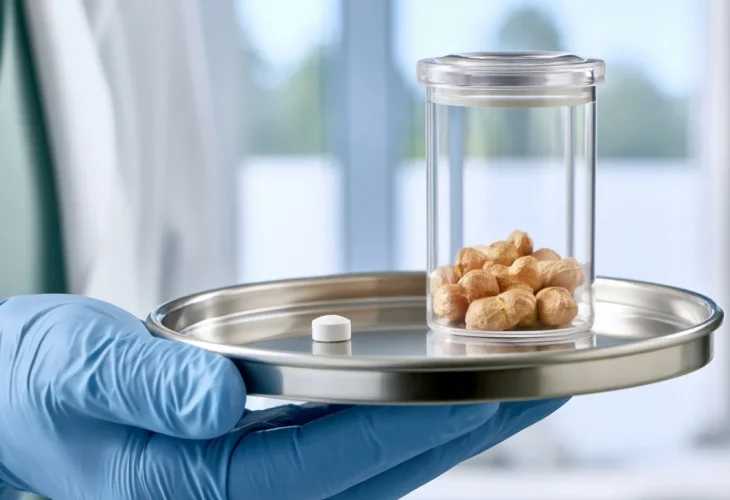
Millions of children and adults worldwide must carefully check food labels, examine ingredients, and ask questions about meals served at restaurants, parties, and social gatherings. For people with peanut allergies, these precautions are essential. In some cases, even a tiny amount of peanut protein can trigger a severe, potentially life-threatening allergic reaction known as anaphylaxis.
Now, a clinical trial involving 150 children and adults with peanut allergies has produced encouraging results. Researchers tested a daily tablet developed by pharmaceutical company ALK that dissolves beneath the tongue and is designed to gradually increase the body's tolerance to peanut protein. In an announcement released ahead of a medical conference in Phoenix, Arizona, the company reported that the treatment improved peanut tolerance in some participants, raising hopes for another approach to managing the allergy.
How Does the Peanut Allergy Tablet Work?
The treatment uses a method known as sublingual immunotherapy, which involves exposing the immune system to carefully controlled amounts of an allergen. The goal is to gradually reduce the immune system's sensitivity, potentially making allergic reactions less severe if accidental exposure occurs. When the tablet dissolves beneath the tongue, peanut allergens interact with immune cells in the lining of the mouth, helping the body develop greater tolerance over time.
Previous studies have investigated sublingual immunotherapy primarily using liquid preparations placed beneath the tongue. This trial explored whether the same approach could be delivered through a daily tablet.
What Did the Clinical Trial Find?
The study included 150 participants between the ages of 4 and 65, all diagnosed with peanut allergies. They were randomly assigned to three groups: two received different doses of the experimental tablet, while the third received a placebo containing no active ingredient.
After a gradual increase in dosage, participants continued taking a fixed daily dose for 24 weeks. At the end of the treatment period, researchers conducted supervised food challenges to determine how much peanut protein participants could tolerate before developing symptoms that required the test to be stopped.
The results showed a significant improvement among those receiving the higher dose. At a challenge dose of 300 milligrams of peanut protein, 49% of participants in the higher-dose group tolerated the amount, compared with 18% in the placebo group. At 600 milligrams, the figures were 31% and 8%, respectively, while at 1,000 milligrams, 22% of participants receiving the higher dose tolerated the amount, compared with just 2% of those receiving the placebo. Statistical analysis indicated that these differences were unlikely to be explained by chance alone.
Researchers Plan to Investigate Longer Treatment
Dr. Edwin Kim of the University of North Carolina, who led the trial, explained that participants receiving the higher dose demonstrated greater improvement in the amount of peanut protein they could tolerate. Researchers now plan to investigate whether a longer treatment period could produce even stronger results.
According to ALK, no life-threatening allergic reactions or serious medical events attributed to the treatment were reported during the trial.
Although the findings are promising, the experimental tablet is not a cure, and further research is needed to establish its long-term safety and effectiveness. Individuals with peanut allergies should continue following their prescribed precautions and treatment plans.
Nevertheless, the results suggest that a daily tablet could eventually help reduce the risks associated with accidental peanut exposure, offering a potentially valuable new option for people living with the allergy.
 Health and NutritionStudy Finds Up to One-Third of Children Diagnosed With Peanut Allergies May Not Be Allergic
 World NewsScientists Create Unlimited Supply of Cancer-Fighting Immune Cells in Major Breakthrough
 Health and NutritionCould a Small Device on Your Ear Help Lower Blood Pressure?
 Health and NutritionLosing Weight After 50: New Study Reveals Why Even 5% Matters

