

Raising Children
Why Children Fall Apart After School: Understanding the Emotions Behind Their Behavior
A parenting expert explains how emotional stress affects children's behavior and how connection, reassurance, and emotional support can help them adjust
- Leah Auerbach
- | Updated

When the little animals returned home from preschool, school, or work, each came back a little differently.
The baby hedgehog seemed perfectly fine at first. He announced that he'd had fun and hadn't cried at all, dropped his bag on the floor, and asked what there was to eat. When his mother asked whom he'd played with, he avoided her eyes. Before long, however, the afternoon had turned into one continuous battle. Beneath his prickly exterior was a tender, sensitive heart, overwhelmed by everything he'd experienced. But all his mother could see were the sharp spines he was shooting in every direction, hurting her, upsetting his siblings, and pushing everyone away.

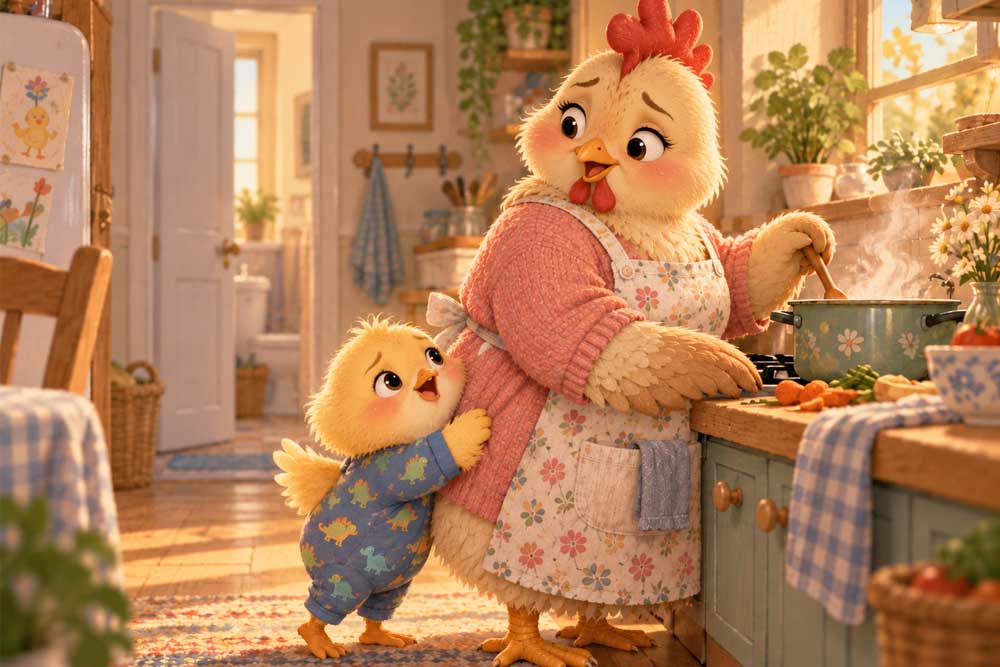
The little chick reacted differently. From the moment he was reunited with his mother, he refused to leave her side. Wherever she went, he followed. When she turned right, he hopped right. When she went to the bathroom, he waited outside the door. And when she tried to prepare a pot of seed soup, he begged her to pick him up. Eventually, after hours of constant chirping and clinging, his exhausted mother let out a frustrated squawk of her own. She couldn't bear the sound of his tiny footsteps following her for another minute.
When the puppy came home, his mother was delighted to see him. She'd missed his sweet little voice and couldn't wait to hear about his day. A thousand whimpers later, she felt quite differently. From the moment he arrived until bedtime, the puppy barked, whined, and howled without stopping. There seemed to be no pattern to his crying and no obvious reason for his distress. At one point, she wondered whether he was deliberately looking for something to cry about.

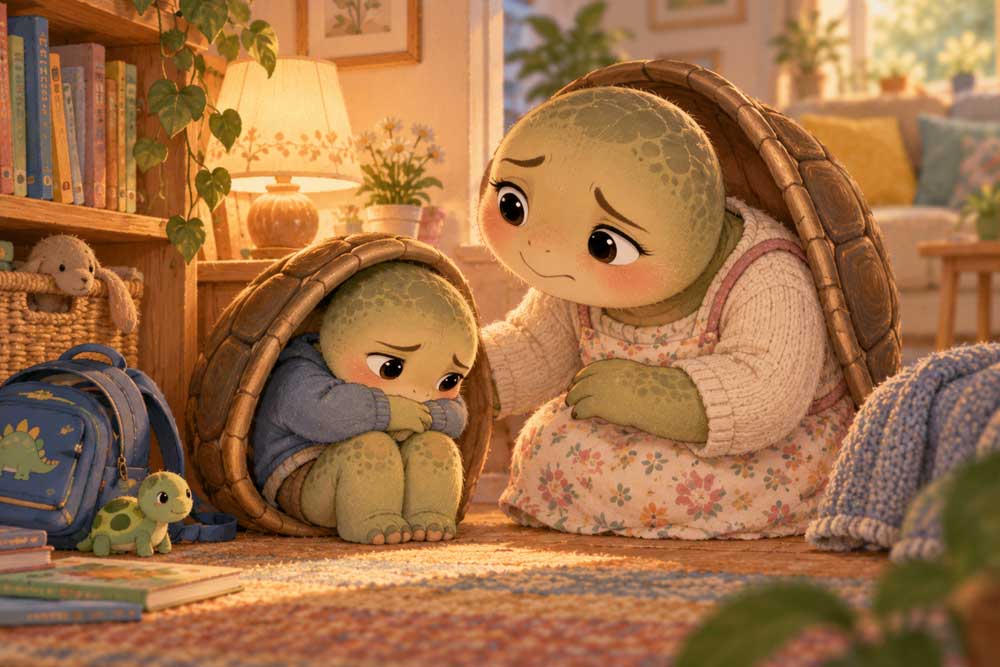
The baby turtle's mother couldn't read his expression at all. He sat curled up deep inside his shell, unwilling to come out and see what was happening around him. At preschool, he'd spent most of the day alone in the reading corner, avoiding the other children. When his teacher chose him to collect charity, he quietly refused. Now, whenever his mother mentioned school, he insisted that he didn't want to go back the next day. Perhaps, he suggested, he was getting sick.
Then there was the little squirrel. One look at his dirty paws told his mother that he hadn't stopped moving all day. He was sweaty and restless, darting from place to place as though he had no choice. Throughout the afternoon, he couldn't stay on one branch for more than ten minutes. That evening, when she tried to put him to bed, he tossed and turned, got up for a drink, asked for food, drank again, and still couldn't fall asleep. And through it all, he barely stopped talking.

Later that evening, the exhausted mothers gathered over coffee and wondered what was wrong with their little ones. The elderly lioness listened quietly before speaking in her hoarse voice. “My cubs were exactly the same,” she reassured them. “That was generations ago. And just look at the magnificent lions they've become!”
Adjustment Doesn't End at the School Gate
The past week has been another week of adjusting to school, preschool, and everyday routines—but without the excitement that accompanies a fresh beginning. The initial enthusiasm has faded, expectations have become more realistic, and children may have less emotional energy to make the effort to fit in. Yet while schools and preschools may have officially declared the adjustment period over, at home, the process is still very much underway.
Real adjustment isn't measured only by how well children manage during the school day. It's also reflected in what happens afterward, when they return to the place where they feel safest. Home is where children can finally cry, make mistakes, argue, struggle with boundaries, and even behave unpleasantly without fearing that their place in the family is at risk.
A child may arrive home with an unsettled, vulnerable heart hidden beneath layers of protection—sharp spines, a hard shell, or a nervous system still racing from the demands of the day. Beneath these reactions is often a need to feel secure enough to let those defenses down. What children cannot express or process in the classroom may emerge once they're home. And although every child responds differently, four essential ingredients can help them regain their emotional balance: connection, dependence, regulation, and emotional release.
Four Ways to Help Children Feel Safe
Connection: Offer your child repeated invitations to connect, with warmth and unconditional affection. Create opportunities for closeness that don't depend on good behavior or cooperation. Instead of waiting until your child desperately seeks your attention, take the initiative. You might playfully pull them close and declare, “You're sitting with me now, and I'm not letting you go anywhere. I need a really big hug!” The message is simple: You don't need to fight for my attention. I'm here, and I want to be close to you.
Dependence: Allow your child to rest in the relationship without feeling responsible for giving something in return. Sometimes this means temporarily doing things they already know how to do independently, helping with homework even when they don't strictly need assistance, or offering additional comfort at bedtime. These gestures aren't about encouraging helplessness. They can provide an opportunity for children to relax, lean on a trusted adult, and feel cared for when the demands of independence have become overwhelming.
Regulation: Create space for activities that help children release physical tension and settle their nervous systems. Some children need energetic movement, active games, and opportunities to expend pent-up energy. Others benefit from quieter experiences, such as breathing games, making silly faces, experimenting with funny sounds, or enjoying a long, warm bath. The goal is to help children move from a state of heightened tension toward a greater sense of calm, using activities that suit their individual needs.
Emotional Release: Make room for tears, even when the immediate reason for crying seems insignificant. Your daughter may burst into tears because you brought her pink pajamas instead of green ones. She may become distraught because dinner is chicken rather than pizza. To an adult, these reactions can seem wildly disproportionate. But the pajamas or dinner may simply be the final frustration in a day filled with emotional demands. The tears may express feelings of separation, disappointment, exhaustion, or tension that the child couldn't release earlier. Rather than dismissing the reaction or rushing to stop the crying, offer a calm, supportive presence. When children feel safe expressing difficult emotions, they may find it easier to recover and reconnect.
Above all, parents need patience—with their children and with themselves. Take a deep breath, and then another. A child may appear to be managing well at school while struggling at home, where they finally feel safe enough to express what they've been holding inside. That doesn't mean the adjustment is failing. Sometimes, the difficult afternoons, sudden tears, constant need for closeness, or overwhelming restlessness are part of the process of settling back into everyday life.
Each child will need something slightly different, and each parent will have to find the right combination of warmth, reassurance, boundaries, and support. But beneath the different behaviors lies a common need: a secure relationship in which children can gradually regain their emotional footing.
Real adjustment takes time. And sometimes, the most important part of it happens not at school, but in the safety of home.
Leah Auerbach is a parent educator specializing in developmental attachment-based parenting, highly sensitive children, emotional regulation difficulties, and parenting twins.
 Raising ChildrenHow to Help Kids Handle New Beginnings with Humor
 Raising ChildrenStarting a New School or Preschool? A Parent’s Guide to Easing First-Day Anxiety
 Raising ChildrenHelping Children Adjust to Preschool: What to Do When Separation Is Hard
 Raising ChildrenEvery Student Has a Frequency: A Back-to-School Message for Teachers

