

Behind the News
Inside Operation Midnight Hammer: How Israel Helped Pave the Way for U.S. Strikes on Iran
U.S. B-2 stealth bomber pilots reveal how Israeli airstrikes weakened Iran's defenses, last-minute changes threatened the mission, and a daring 37-hour operation targeted Iran's nuclear facilities
- Yuval Aviv
- | Updated
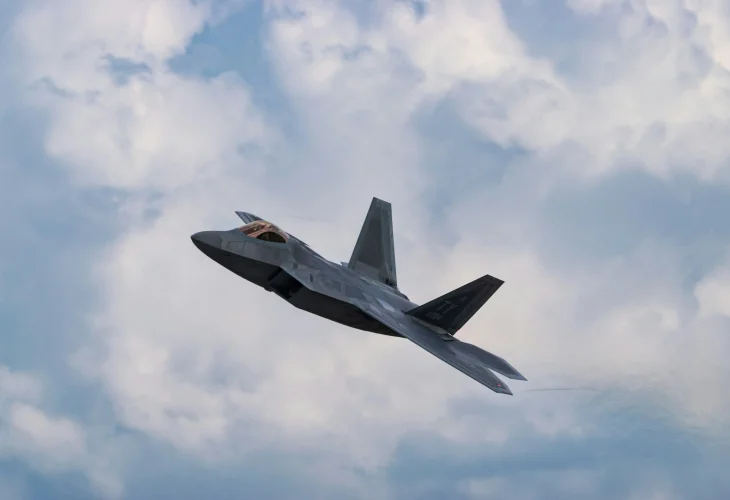 (Credit: unsplash)
Israel's strikes against Iran in June 2025 did more than weaken the Islamic Republic's air defenses. They also significantly improved the conditions for the subsequent American attack on Iran's nuclear facilities, according to an investigation published by Air & Space Forces Magazine.
Based on firsthand accounts from B-2 stealth bomber pilots who participated in Operation Midnight Hammer, the report reveals how Israeli military operations, years of planning, and last-minute intelligence developments shaped the mission. "They eliminated an enormous number of threats and made the mission much safer for us," said one of the pilots who led the attack, identified by the callsign "Alpha."
He described the Israeli Air Force's performance during Operation Rising Lion, which began on June 13, as "a master class in Western airpower," demonstrating how carefully selected strikes could establish control of the skies.
A Last-Minute Challenge to the Attack Plan
Despite Israel's success in weakening Iranian defenses, the American operation nearly encountered a major setback before the bombers took off. In the days leading up to the strike, U.S. intelligence discovered that Iran had begun covering the ventilation shafts of the underground Fordow uranium enrichment facility with concrete. These shafts had been selected as the primary entry points for the American bombs, and the additional fortifications threatened to undermine the original plan.
Military planners were forced to revise the sequence of the attack. The first bombs would need to penetrate the concrete barriers, allowing subsequent weapons to reach deeper into the underground facility. "We had to figure out how to put all the pieces back together based on the new reality," Alpha recalled.
The final plan was completed just 16 hours before the operation began, after some of the pilots had already gone to rest.
Fifteen Years of Preparation
American preparations for a possible strike on Fordow began in 2009, when intelligence analysts identified unusual construction activity in mountains southwest of Tehran through satellite imagery. Over the following 15 years, military and intelligence personnel studied the facility's layout, depth, ventilation systems, and potential vulnerabilities. Among those involved was a former B-2 pilot, identified as "Matthew," who continued contributing to the project after retiring from active service.
A central component of the preparations was the GBU-57 Massive Ordnance Penetrator (MOP), a bomb weighing approximately 13.6 metric tons and designed to destroy heavily fortified underground targets. The B-2 Spirit is the only aircraft capable of carrying the weapon.
To preserve the element of surprise, American forces also developed a deception plan. Additional bombers departed visibly toward the west, encouraging speculation that they were heading for Guam or Diego Garcia. Meanwhile, the seven aircraft assigned to the attack prepared to fly eastward across the Atlantic Ocean and Mediterranean Sea toward Iran.
A 37-Hour Flight Into Enemy Territory
The seven B-2 bombers departed Whiteman Air Force Base in Missouri around midnight on June 21, beginning a mission that would keep their crews airborne for approximately 37 hours. The journey required repeated aerial refueling operations and extraordinary endurance. Inside the cramped cockpits, pilots managed short naps of 30 to 45 minutes, while some relied on caffeine and medically authorized stimulants to remain alert.
After approximately 18 hours of flying, the aircraft approached Iran. Six were assigned to strike Fordow, while the seventh targeted the Natanz nuclear facility, which Israel had already attacked. As one pilot spotted a city emerging from the darkness below, he suddenly exclaimed, "My God, that's Tehran!"
The Bombing of Fordow
At approximately 2:10 a.m. Iranian time, the first B-2 reached Fordow and released two GBU-57 bombs. With the heavy weapons gone, the aircraft immediately became easier to maneuver.
"Let's get out of here!" one pilot exclaimed. His copilot, however, wanted to confirm that the bombs had detonated. The two turned toward the ground, and approximately 15 seconds later, an enormous flash illuminated the mountains, followed by a fireball rising to the height of a ten-story building.
The success of the attack depended on the precise timing of the subsequent strikes. Once the initial weapons had penetrated the concrete barriers, the following bombs needed to travel through the exposed shafts into the facility. "Everything had to happen correctly, at the right time and in the right order," one pilot explained.
The margin for error was approximately 15 seconds in either direction. After releasing the additional weapons, the crews waited anxiously for confirmation. "Those were the longest five seconds of your life," the pilots recalled.
Escaping Iranian Air Defenses
Even after completing their bombing runs, the crews remained concerned about possible interception by Iranian air defenses. Warnings of potentially hostile activity sounded inside the cockpits, and the pilots were particularly wary of surface-to-air missiles they nicknamed "flaming doughnuts" because of the ring of fire surrounding them.
Post-mission investigations eventually determined that Iranian forces had not launched missiles at the B-2 bombers. As Alpha and Bravo cleared Iranian airspace, they transmitted a message confirming their escape: "We're done. We're safe!"
Returning Home After a Secret Mission
While the bombers were returning to the United States, President Donald Trump had already publicly announced the strikes. The crews learned of the announcement during an aerial refueling operation, when they received an unexpected message: "You're all over the news!"
As the aircraft approached home, Alpha led the formation over Washington, D.C., in an impromptu celebratory gesture. After more than 36 hours in the air, the exhausted pilots finally landed at Whiteman Air Force Base, where they reunited with their families and underwent medical evaluations. Some received intravenous fluids before attending a classified debriefing, during which they were shown satellite images of the targeted facilities.
Only after the debriefing did they learn the official name of the operation they had completed: Operation Midnight Hammer.
Their accounts offer a rare glimpse into the planning and precision behind the attack, while highlighting how Israel's earlier strikes helped create the conditions for the American bombers to reach their targets.
 Behind the NewsIran’s Goal Is Survival—and U.S. Pressure Has Not Forced It to Yield
 Behind the NewsTrump Calls for Uprising Even as US Officials See Regime Likely to Hold
 Behind the NewsIs Another War With Iran Inevitable? Expert Warns of a Growing Threat to Israel
 Israel NewsFirst F-35 Air-to-Air Kill: Israeli Jet Downs Iranian Fighter Over Tehran

