

Israel News
Six Arrested for Illegal Treasure Hunting at Ancient Archaeological Site in Israel
Israeli authorities catch six suspects excavating a 2,000-year-old archaeological site in the Judean Hills, causing irreversible damage while allegedly searching for buried treasure
- Yuval Aviv
- | Updated
 (Photo: Yoli Schwartz, Israel Antiquities Authority)
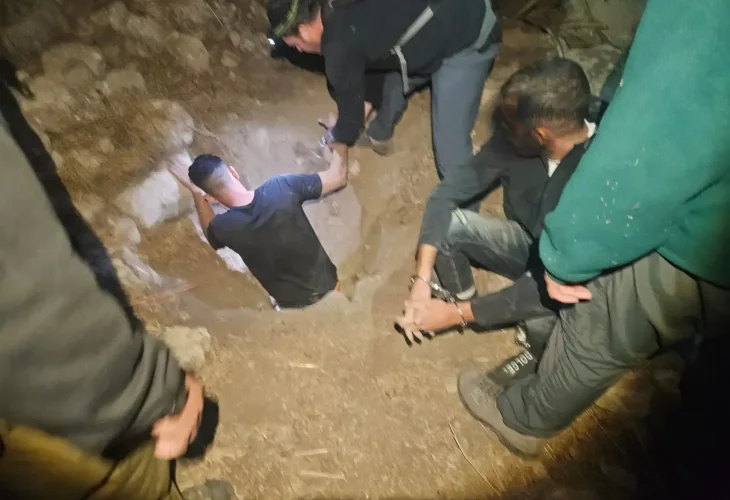
Six people were arrested on suspicion of illegally excavating antiquities and damaging an archaeological site at Horvat Adash, near Mevo Beitar in the Judean Hills. Inspectors from the Israel Antiquities Authority's Antiquities Theft Prevention Unit caught the suspects conducting unauthorized excavations inside an ancient water cistern approximately nine meters (30 feet) deep.
According to investigators, the suspects arrived at the site equipped with a generator, an electric demolition hammer, power drills, a ladder, lighting equipment, and excavation tools. While some members of the group worked underground, others sat around a campfire, apparently attempting to make their presence at the archaeological site look like an ordinary picnic. Authorities believe the suspects were searching for buried treasure.
Ancient Artifacts Discovered Inside Water Cistern
During the investigation, inspectors discovered fragments of hundreds of pottery vessels, stone utensils, and part of a vessel featuring an animal-shaped neck, dating to the early Islamic period. The presence of artifacts from several historical periods supports the theory that the ancient water cistern was eventually repurposed as a refuse pit.
Horvat Adash is a protected archaeological site that was inhabited from the first century BCE through the eighth century CE. Previous excavations have uncovered a ritual bath (mikveh) with two entrances, residential structures, water systems, industrial installations, and an ancient mosque. These discoveries provide valuable evidence of the communities that lived in the area over several centuries.
The Israel Antiquities Authority said the unauthorized excavation caused irreversible damage to the cistern's walls, floor, and ancient plaster layers. The six suspects were transferred to police custody for questioning, and authorities will determine whether criminal charges should be filed. Under Israeli law, damaging a protected archaeological site carries a maximum penalty of five years in prison.
Antiquities Authority Warns Against Social Media Treasure-Hunting Trends
Dr. Amir Ganor, director of the Antiquities Theft Prevention Unit, warned that stories about hidden treasures circulating on social media are encouraging people to conduct illegal excavations at historical sites.
"These stories encourage people to go into the field and dig without permits at archaeological sites, hoping to get rich quickly," Ganor said.
He emphasized that the consequences extend beyond the physical destruction of ancient structures and artifacts. Unauthorized excavations can also erase valuable historical information that archaeologists may never be able to recover.
Ganor warned that illegal treasure hunting can result in fines and imprisonment, stressing the importance of protecting archaeological sites for future generations. "The damage caused to antiquities sites is damage to the heritage and history of us all," he concluded.
 MagazineThe Israeli Winery That Carries 150 Years of Jewish History
 Israel NewsAncient Shiloh Discovery: 3,000-Year-Old Storage Jars Unearthed Near the Site of the Tabernacle
 Israel NewsA Giant Second Temple mikveh Just Opened at Tel Hebron
 Israel NewsThousands of Hasmonean-Era Coins and Artifacts Seized in Major Jordan Valley Antiquities Bust

