

Personal Stories
From Years of Infertility to a Mother of Six: Michal Franco’s Journey of Faith
After seven years of waiting and a high-risk triplet pregnancy, Michal Franco shares her remarkable journey through infertility, motherhood, and the power of holding on to faith even in the darkest moments
- Moriah Luz
- | Updated
Three heartbeats appeared on the ultrasound screen. Michal Franco, 44, who had waited years to become a mother and now had a two-year-old son, felt as though she was about to faint. The doctors around her were not smiling. “Everyone looked so serious,” she recalls. “They were convinced that we needed to undergo fetal reduction.”
For years, Michal had spent countless nights alone in a quiet home while her husband, Ariel, worked night shifts for Israel Railways. Yet that morning, despite the doctors’ concerns, she looked at the ultrasound screen with a deep sense of certainty: “We had been given a gift.”
Michal and Ariel married young. He was 24, and she was 19 and a half. Their first two years of marriage were happy ones, as they eagerly anticipated starting a family. “Every month brought disappointment, accompanied by renewed hope and faith that, with Hashem’s help, the following month would be different,” she recalls. Two years into their marriage, the couple received a phone call from Ariel’s sister, a nursing student at Shaare Zedek Medical Center. After attending a lecture on fertility given by Rabbi Menachem Burstein, head of the Puah Institute, she encouraged them to seek medical advice.
“At first, we felt that she was interfering in something very personal,” Michal admits. “But we also recognized her genuine concern and love. She is very close to Ariel and took our situation to heart as though it were her own. Because of her, we began looking at things differently and started undergoing medical evaluations.” What Michal refers to as “the journey” began with several months of consultations and tests, during which the couple gradually came to understand the magnitude of the challenge they were facing.
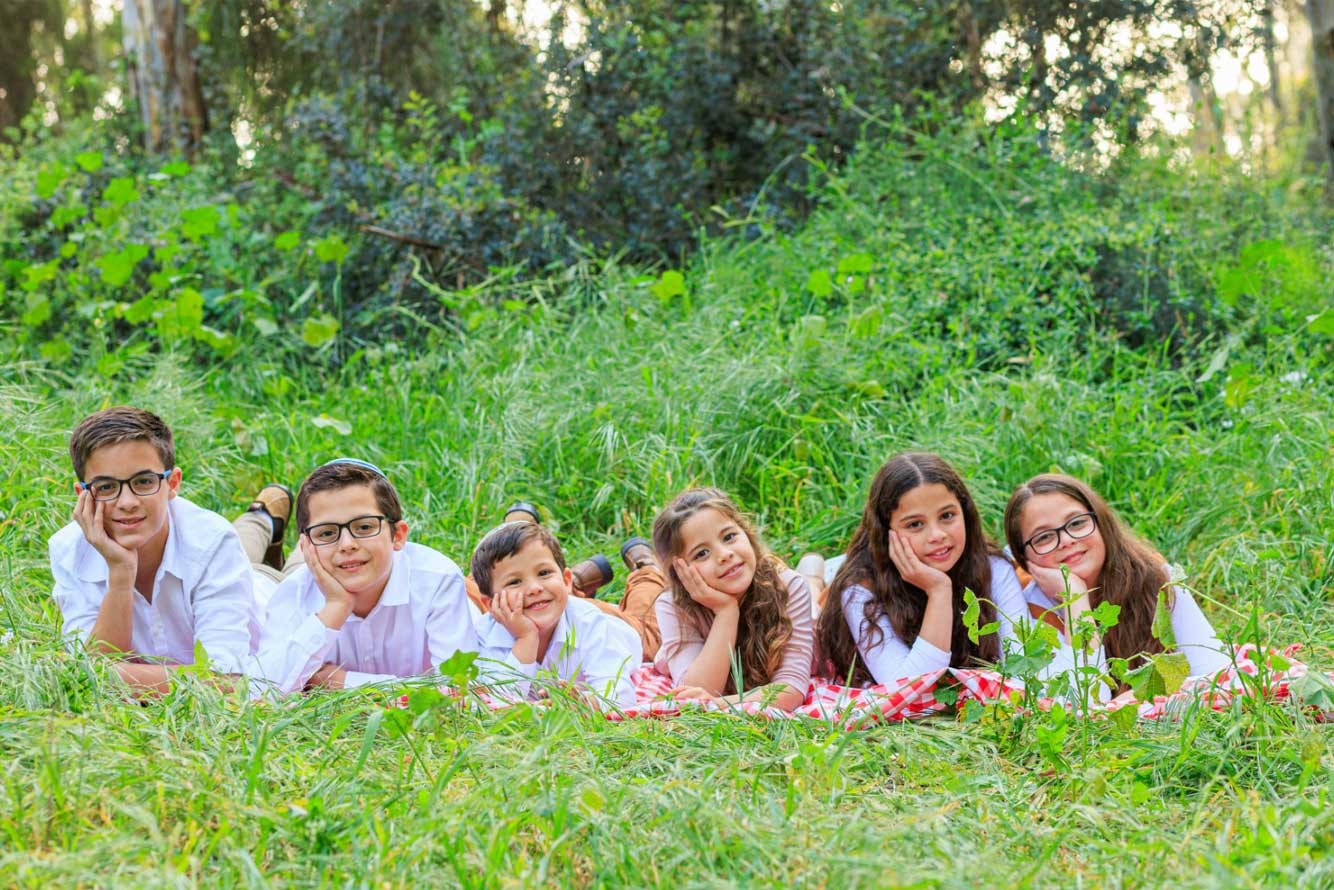
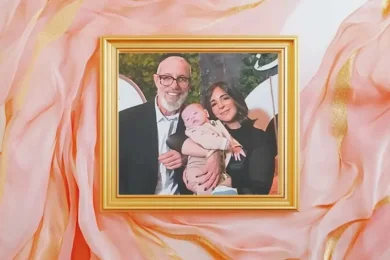
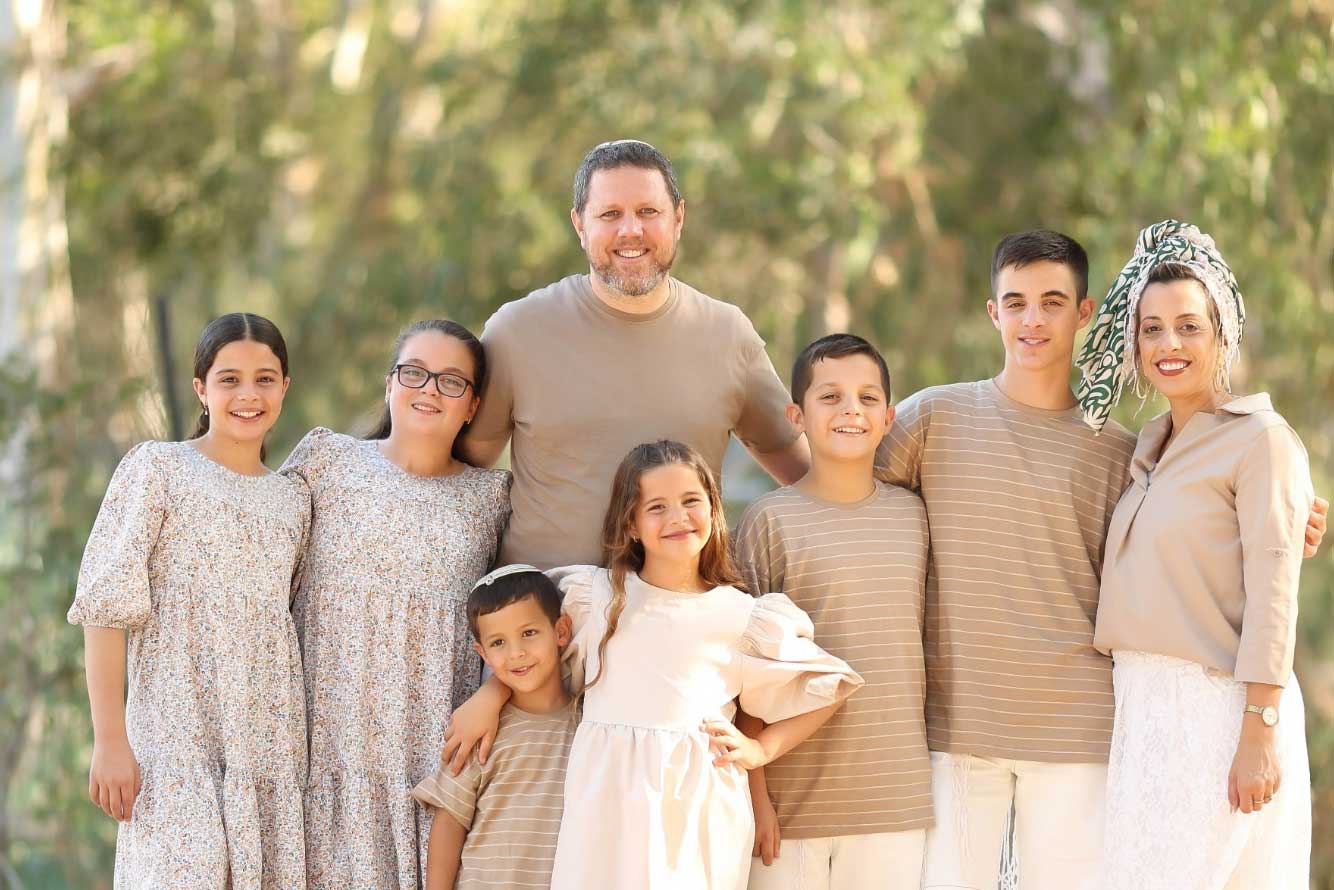 The Franco family. Photo: Zohar Elcharar
What was the most difficult part of that journey?
“I think the natural yearning that Hashem instilled in us to have children and become parents is so powerful that it defies words. Our matriarch Rachel says, ‘Give me children, or else I shall die.’ Beyond the longing itself, there is the feeling of being set apart from your community and from what seems to be the natural course of life, in which people marry and have children. I was a college student, and everyone around me was, thank God, moving forward, having babies and arriving with strollers. Experiencing that gap was very difficult.”
Michal had always loved children and was frequently told how suited she was to becoming a preschool teacher. Compounding the pain of infertility was Ariel’s work schedule, which meant that she spent many nights alone. “Being alone at night, surrounded by silence within the four walls of your home, is not easy.”
Holding On to Faith
A kindhearted woman in Michal’s neighborhood regularly brought homemade challah for Shabbat to women who had recently given birth. Even after all these years, Michal remembers how desperately she wanted to receive one herself. “I wanted to be a woman who had become a mother. Receiving that challah would have meant that I belonged among those women.” One particularly difficult night, while Ariel was at work, Michal sat alone at home, overwhelmed by emotion. Text messaging was less common at the time, so in her distress, she sent a fax to Rabbi Burstein. “I wrote to him that I was drowning in my tears. Those were my exact words.” The rabbi’s wife passed the fax along to her husband, who called Michal at one o’clock in the morning to offer her encouragement.
Another painful memory dates back to when her mother-in-law was sitting shiva for her own mother. Michal and Ariel had already been married for seven years, and Michal felt emotionally drained. She went to comfort her mother-in-law, but just as she was preparing to leave, two of her sisters-in-law entered the room. “They both came with their babies. One sat to my right and the other to my left. I remember that moment as being particularly painful. When I left, I sat in the car and sobbed.”
Did you ever ask Hashem why He had given you this challenge?
“Truthfully, no. I was experiencing tremendous pain, but at the same time, I was trying to understand what more we could do to grow spiritually, perform good deeds and make the necessary practical efforts. There was never a moment when I found myself asking, ‘Why?’ My closeness to Hashem only intensified. Prayer, faith and speaking to Him became an anchor for me. I knew that only with Him would we be able to make it through this journey. In general, I don’t approach life by asking why. I constantly think about what more I can do and how I can move forward.”
Michal also drew strength from the experiences of the biblical matriarchs. “I saw myself as so small in comparison, but I was strengthened by the teaching that the matriarchs experienced infertility because Hashem desired their prayers.”
Did you consider the possibility that you might never have children?
“Absolutely. Of course, you try to push such thoughts aside, but given our medical circumstances, it was certainly a possibility. Nevertheless, we held on to our faith. We live by the words, ‘Is anything too wondrous for Hashem?’ Miracles happen, and Hashem is the Healer of all flesh, who performs wonders.”
Although infertility can place considerable strain on a marriage, Michal says that their relationship became a source of strength. “I am constantly grateful for that. Life presents us with challenges that can lead to different outcomes, depending on who we are and how we respond. We knew that we were in this together every step of the way. There was no emotional distancing or blame. Quite the opposite. Hashem had placed both of us on this journey together.”
“I Cried and Prayed the Entire Way”
After seven years of waiting, on the day before Shavuot, Michal received a phone call from the fertility clinic informing her that she was pregnant. “Those were moments of redemption,” she says. “In an instant, you are transported from one side of the divide to the other. You want to share your happiness with the entire world, but initially, we kept the news as something special between the two of us.” During Shacharit on Shavuot, Michal stepped onto her balcony and spoke to Hashem. “It was close to our seventh wedding anniversary. I thanked Hashem that we had been privileged to wait seven years and no longer. There were so many tears of gratitude and excitement.”
Yair, now 17, was born on Friday night. In a remarkable turn of events, Ariel’s sister, who had originally encouraged them to seek medical advice, happened to be at the hospital that Shabbat. “She had come to the hospital with her son. It was truly Divine providence, and she remained by my side throughout the birth.” When Yair was a little older, the couple resumed fertility treatments. Balancing the demands of motherhood with the challenges of treatment made the journey more complicated, but Michal remained determined. “I kept thinking about how much I wanted us to have a large family and for Yair to have a sibling.”
When Yair was two, the couple learned that Michal was pregnant again. An ultrasound revealed three fetuses with heartbeats. “I nearly fainted when I heard the news. It was beyond comprehension. Even blessings require us to develop the capacity to receive them,” she laughs. The medical team, however, did not share their excitement, and the couple was referred from one doctor to another, each expressing serious concerns about the pregnancy. “Deep down, we knew that Hashem was with us and that, after everything we had been through, we had received a gift. At the same time, we needed support in making a decision that involved considerable risk.”
The couple contacted the Puah Institute, whose staff were familiar with their long journey and shared in their excitement. The institute guided them through the next steps, helping them make a more informed and carefully considered decision. Meanwhile, doctors continued to warn Michal about the possible complications. Some told her that she might spend the remainder of her pregnancy hospitalized, while others emphasized the risks of extreme prematurity. The possibility of being separated from her young son was particularly distressing. “I couldn’t even imagine not being at home with him every day and not being present as he grew up,” she says, her voice still trembling at the memory.
At the recommendation of the Puah Institute, the couple consulted Professor Simcha Yagel at Hadassah Medical Center during the tenth week of pregnancy. “I cried and prayed the entire way there,” Michal recalls. After conducting the necessary examinations, Professor Yagel turned to the couple. “There are women whom I immediately refer for fetal reduction,” he told them. “In your case, I don’t think the risk would be exceptionally high.” The couple decided to continue the pregnancy. Although Michal does not minimize the physical difficulties of carrying triplets, her faith and desire to bring all three children into the world sustained her. “There was an enormous amount of prayer and faith. My siddur was almost constantly in my hands.”
Did you have any doubts about whether you had made the right decision or taken too great a risk?
“No. I was holding firmly to my faith. I felt that Hashem was compensating us and making up for the years we had spent waiting. Faith was so powerful and so healing that it pushed those thoughts aside.”
Three Babies, Just in Time for Rosh Hashanah
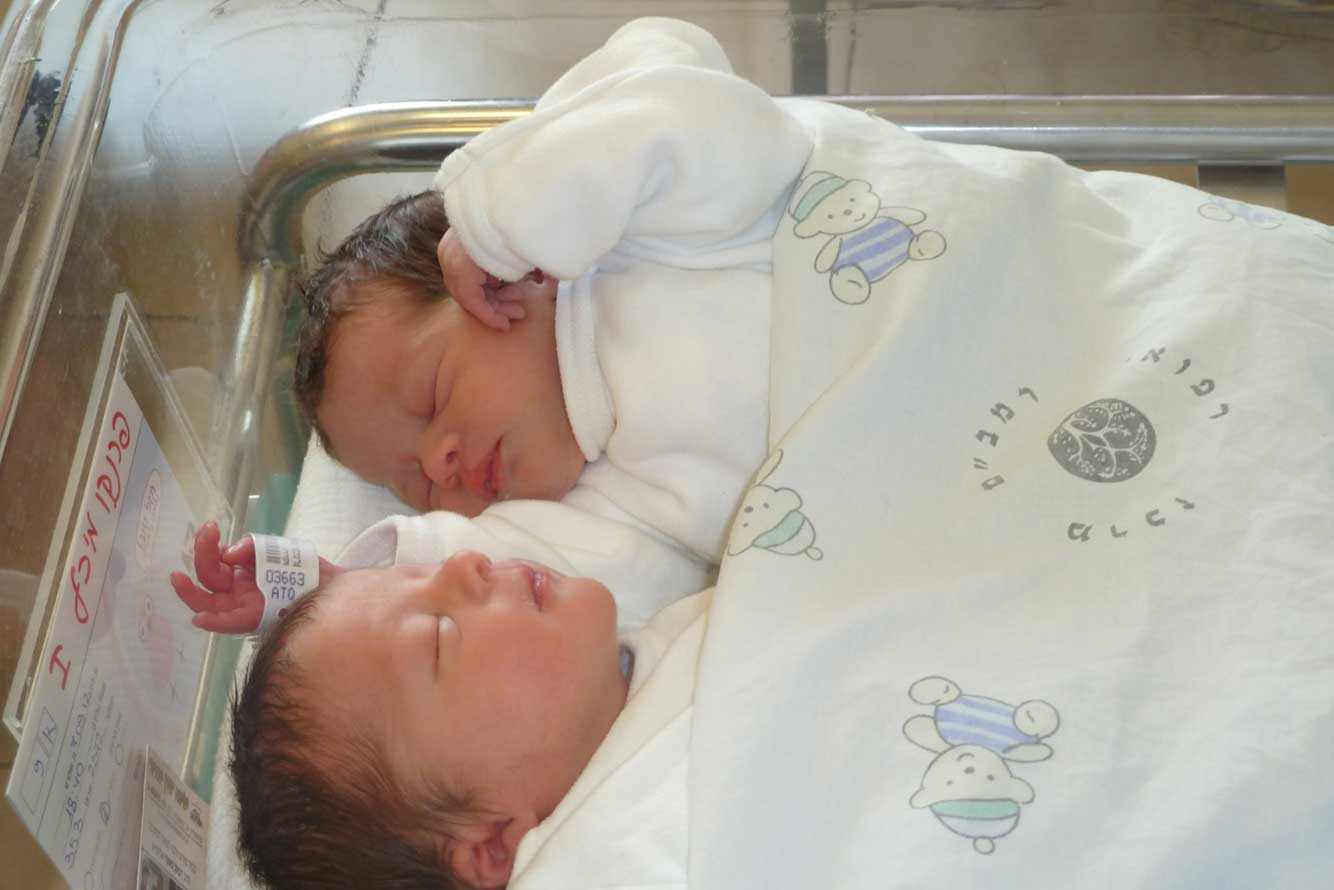
Throughout her pregnancy, Michal prayed for three things: that she would not give birth prematurely, that each baby would weigh more than two kilograms, and that none would require neonatal intensive care. All three of her requests were fulfilled. On a Friday night at the beginning of her ninth month of pregnancy, Michal gave birth to two girls and a boy. “‘For a brief moment I forsook you, but with great compassion I will gather you.’ There are no words to describe those moments. It was an uninterrupted experience of gratitude.”
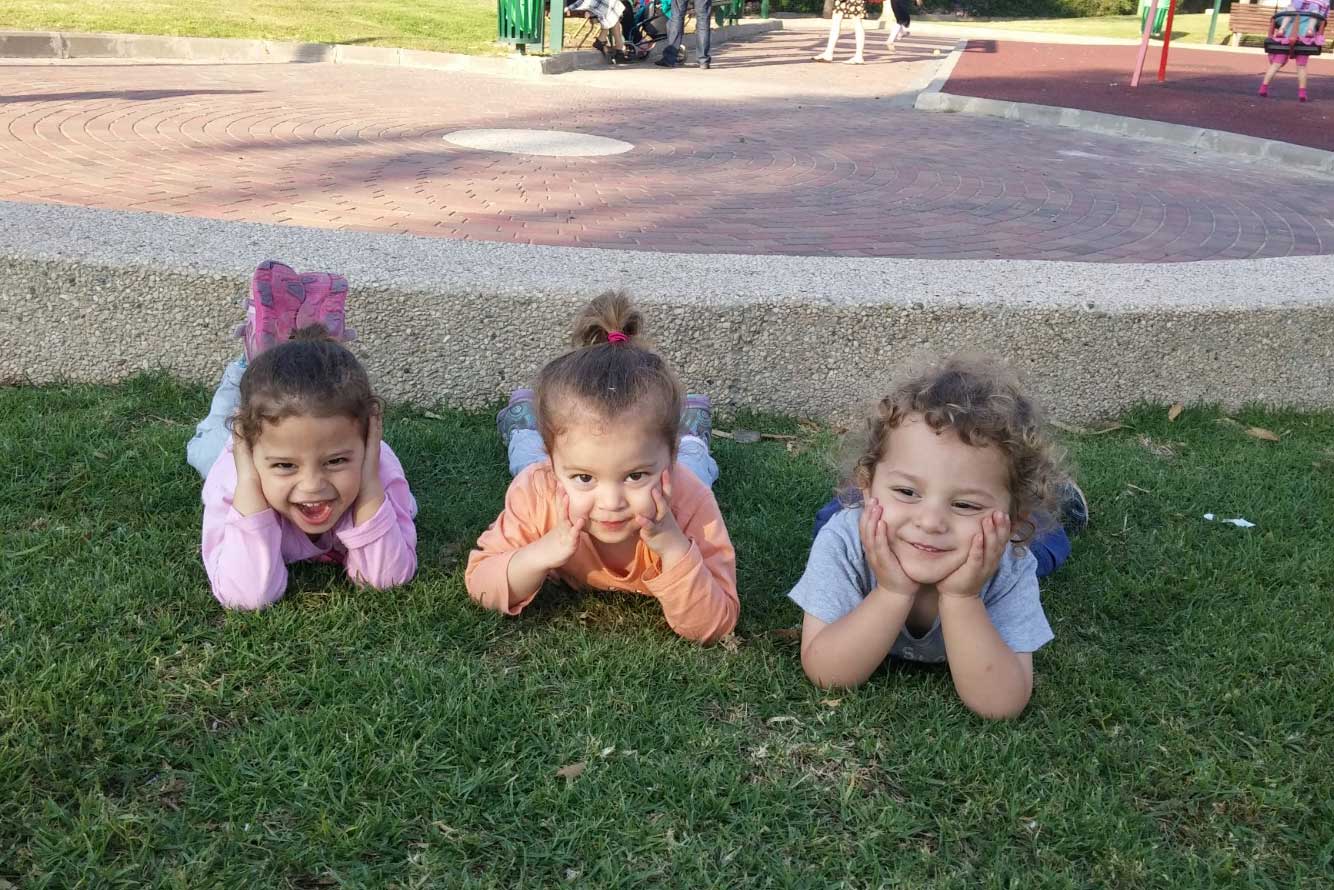
Did the people around you know that you were expecting triplets?
“Our families knew because I couldn’t leave the house or do many things on my own, and we needed their support. One friend also knew and helped me pick Yair up from daycare. For everyone else, it was a surprise. When I was six months pregnant and took Yair to the playground on Shabbat, everyone stared. But even those who couldn’t understand how I was so large at that stage assumed I was carrying twins, not triplets.”
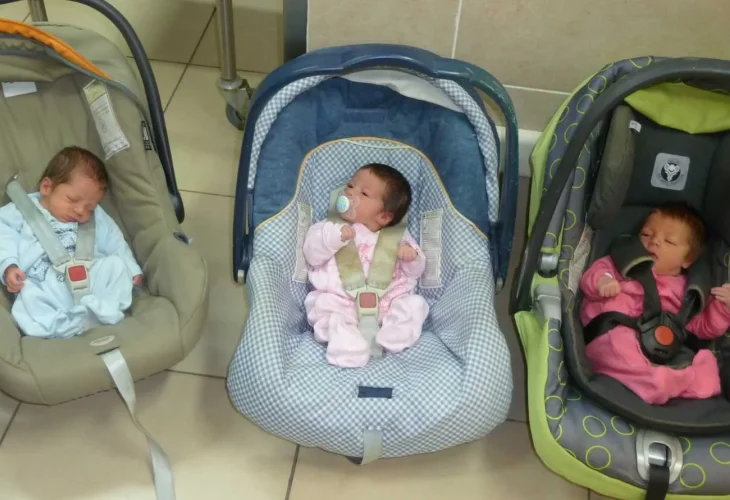
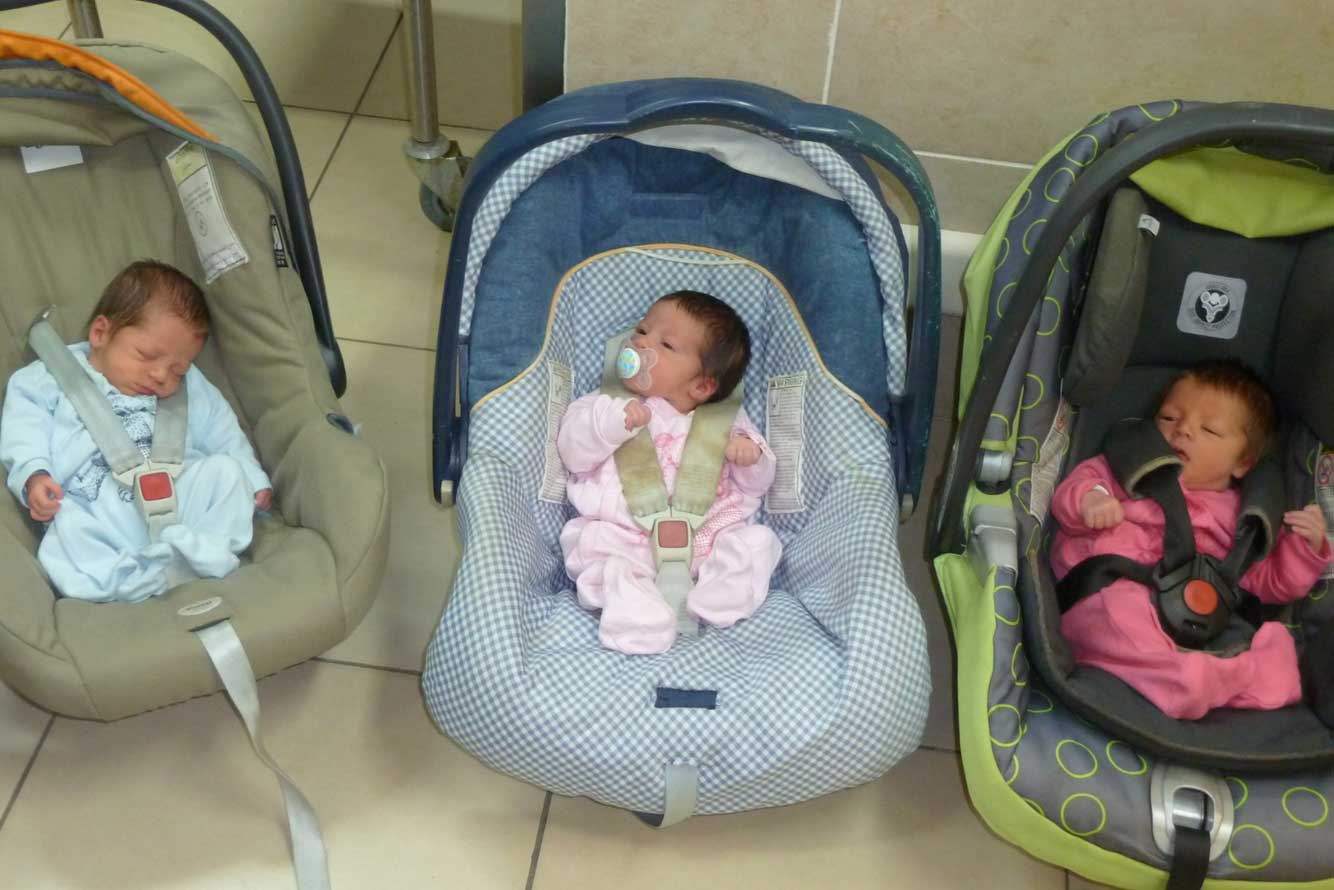
On Saturday night, as news of the births spread, the couple’s phone filled with excited messages and calls. “There was a feeling of shared joy. So many people had prayed for us, and they were thrilled to hear the news.” On the eve of Rosh Hashanah, Michal was discharged from the hospital. “We went straight into the holiday with three infant car seats,” she says with a smile.
The babies were named Osnat, Itamar and Naama. Michal shares a particularly moving anecdote about their names. During one of the lonely nights of her years of infertility, she had written a heartfelt prayer that eventually became a song titled Ana Hashem — “Please, Hashem.” After naming the triplets, someone pointed out that the Hebrew initials of their four children’s names could be arranged to form the same expression.
How do you manage a household with four very young children?
“You have no choice but to accept help. There were three babies who needed three pairs of hands.” Michal speaks warmly of the Kiryat Shmuel community, where the family lived at the time. A group of retired women volunteered their assistance, while an organized network provided the family with daily meals for two months. “Cooking was simply impossible. I thought I would never again manage to put a pot of pasta on the stove,” she laughs.
“I think our strength truly came from the blessing of having waited. We took absolutely nothing for granted and felt that we had received extraordinary gifts. The gratitude and happiness gave us tremendous strength and shaped the way we viewed and approached everything.” Visitors would often remark on how peaceful the Franco household felt, despite the demands of caring for triplets. For Michal, it was reassuring to hear that they were managing well. “But it really was difficult,” she adds with a smile. “There were days when all I wanted was to sleep.”
You Can Feel Pain and Still Have Faith
Over the years, Michal and Ariel were blessed with two more children, Avigail, nine and a half, and Yishai, six and a half. Today, Michal shares her personal journey through storytelling and song in a performance for women titled Steps of Hope. She also mentors women navigating fertility challenges. “This is truly my mission today. We have six children, and I joke that the show is our seventh child. Believe me, bringing it into the world involved its own labor pains.”
Through her performance, Michal hopes to offer women encouragement without making promises about how their stories will unfold. “We cannot promise anyone what the future will bring, but we can offer strength and hope for the present and for the journey itself. We have the ability to make a difference within the reality we are facing.” The responses have been deeply rewarding. One woman told Michal that the performance had given her the strength to resume fertility treatments, while another, who attended shortly before Rosh Hashanah, said that the experience would change the way she prayed. “I share our very personal story, but it touches every woman and is relevant to her own life and challenges. I feel that Hashem’s presence rests upon this show.”
What would you like to say to couples who are still waiting to have children?
“When a woman comes to me, the first thing I do is meet her in her pain, because it really is difficult. I want to remind her that she possesses strength she may not even realize she has. I want to embrace these women and continue offering them hope and faith in Hashem’s limitless power. I would encourage them not to lose their faith, even during the most difficult times, and to remember that pain does not contradict faith. You can feel pain and still believe.”
 Personal StoriesDiagnosed With Cancer Days After Giving Birth: One Mother’s Story of Faith and Hope
 MagazineThe Chanukah Oil That Was Lost and A Prayer That Changed Everything
 MagazineAfter 32 Years of Waiting: The Incredible Journey of Sigalit Asraf
 MagazineAgainst All Odds: Survival, Faith, and Two Extraordinary Miracles

