

For the Woman
Faith Amid Financial Hardship: Learning to Trust Hashem Beyond the Bank Balance
The remarkable story of Rabbi Chanina ben Dosa’s wife offers timeless lessons on financial struggles, social comparison, and cultivating emunah and bitachon without allowing money to determine our inner peace
- Galit Levy
- | Updated
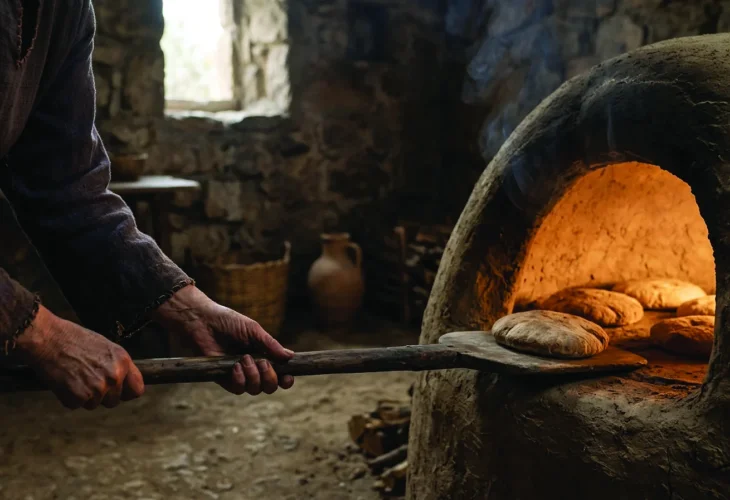
There once lived a holy man in whose merit the entire world was sustained. The flow of abundance to the entire world passed through the merit of the great Tanna, Rabbi Chanina ben Dosa. Equally astonishing is the Gemara’s description of Rabbi Chanina’s financial circumstances, which offers a glimpse into a level of poverty rarely encountered.
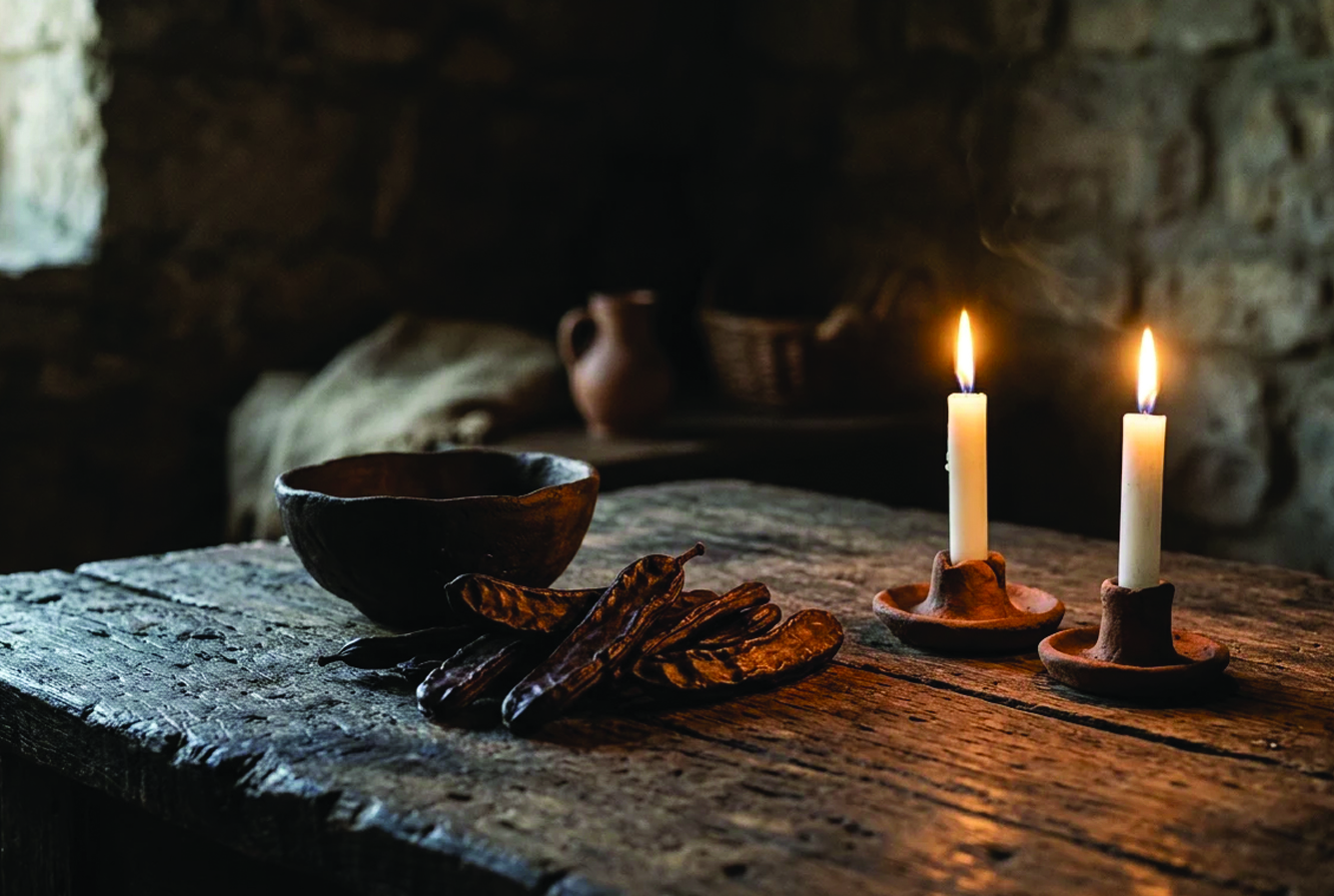
Rav Yehuda said in the name of Rav: “Every day, a heavenly voice emerges and declares: The entire world is sustained in the merit of My son Chanina, yet My son Chanina subsists on a single kav of carobs from one Shabbat eve to the next” (Ta’anit 24b).
Not even pieces of stale bread that might provide some nourishment, but only carobs. That was all there was to eat in Rabbi Chanina ben Dosa’s home. Naturally, the person who felt the burden of this poverty most acutely was his wife. She was the one who divided the few carobs so that they would last throughout the week, tried to serve them with dignity, and stood in an empty kitchen every Friday, attempting to prepare for Shabbat out of practically nothing.
Does Having Faith Mean Never Feeling Ashamed?
Rabbi Chanina ben Dosa’s wife certainly did not prepare meatballs or stuffed vegetables for Shabbat. There were no salads on the table, not even a roughly chopped cucumber and tomato. There was no leftover rice from the previous day because there had been no rice the previous day either. She did not settle for a more modest meal because there was nothing with which to prepare even a modest meal. There was not so much as a piece of weekday bread with which to honor Shabbat. Nothing at all. Only carobs.
Why, then, does the Gemara tell us that every Friday she would heat her oven and cause smoke to rise from it? For the simple reason that she was ashamed. Smoke rose from her neighbors’ ovens as they baked bread and prepared their Shabbat meals, while in her own home, there was nothing.
What can we learn from this? The Gemara presents reality as it is. Even the wife of Rabbi Chanina ben Dosa, a holy Tanna, experienced embarrassment. The Gemara explicitly states that she did so mishum kisufa — because of shame (Ta’anit 25a). Shame is a human emotion that arises when we feel that others have something we lack. And what about us?
Social media is filled with glamorous posts about one woman’s vacation and another’s home renovations. Advertisements bombard us from every direction, displaying three- and four-room apartments at prices that, just a few years ago, could have purchased luxurious houses. Meanwhile, the demands of everyday life seem to be in constant conflict with our budgets. Regardless of our financial circumstances, advertisements and our neighbors, whether virtual or real, somehow manage to remind us of precisely what we do not yet have.
It is a feeling that almost every woman recognizes, even when her financial situation is relatively stable. There will always be someone who has more. When that disparity becomes painfully apparent, we begin to conceal our circumstances and feel ashamed. In effect, we begin generating smoke from an empty oven.
And yet, in the same passage in which the Gemara reveals the very human embarrassment experienced by Rabbi Chanina ben Dosa’s wife, it also reveals an extraordinary expression of faith.
She had an unkind neighbor who knew perfectly well that there was nothing in Rabbi Chanina’s home. When the woman saw smoke rising from the chimney, she knocked on the door to discover what was actually being prepared. Rabbi Chanina’s wife retreated into an inner room, and then a miracle occurred: the oven filled with bread.
The astonished neighbor called out, “Bring your baker’s peel! Your bread is burning!” Rabbi Chanina’s wife calmly replied, “That is precisely why I went inside.”
The Gemara adds that this was not an evasive response but the truth: “She had indeed gone inside to retrieve the baker’s peel, because she was accustomed to miracles” (Ta’anit 25a).
Rashi explains that she had not gone to borrow a baker’s peel from her neighbors. In a home where bread was not ordinarily baked, the very utensil used to remove bread from the oven was ready and waiting. Rabbi Chanina ben Dosa’s wife kept it there out of faith that one day she would have bread to remove from the oven. She was accustomed to miracles and therefore had no need to borrow it from anyone. At every moment, she believed that Hashem could provide her with bread.
How Can We Live With Faith and Trust Without Allowing Our Bank Balance to Dictate Our Mood?
Rabbi Zamir Cohen offers guidance in his book Keys to Life: “A person who seeks to fully internalize the attribute of trust cannot properly acquire it if his faith is lacking. For the attribute of trust is like a second story built upon the foundation of knowing that God exists.”
Rabbi Cohen explains that bitachon, trust in Hashem, does not develop on its own. It is constructed like a building, one floor at a time. The first floor is emunah, the clear recognition that the world has a Creator who governs it. Only upon this foundation can the second floor be built: the inner tranquility that comes from trusting that Hashem cares for us, our financial circumstances, the approaching Shabbat and all the Shabbatot that will follow. When our trust begins to falter, we must first strengthen its foundations.
Allow Hashem to oversee your household’s financial circumstances. Give Him the credit, rather than your credit card, and trust that what He does is ultimately for your benefit, in the past, present and future. Believe wholeheartedly that He has countless ways of providing for you, as King David said, “Cast your burden upon Hashem, and He will sustain you” (Psalms 55:23).
Set aside your spreadsheets and bank statements for a moment and make one simple calculation: Hashem truly has the ability to bring something out of nothing. Do not limit your sense of possibility by thinking, “Where could an unexpected sum of money possibly come from? What could possibly change at work? The cost of living just keeps rising.”
In other words, do not dictate to Hashem where your salvation must come from. Allow Him to be your financial manager without limiting the amount or the means through which His assistance may arrive.
Rabbi Chanina ben Dosa’s wife did not know when or how the bread would arrive. She simply made sure that her baker’s peel was ready. We, too, do not always know where our salvation will come from, but we can prepare ourselves to receive abundance. We can allow our imagination to envision possibilities, dare to dream, feel worthy of receiving blessings and experience the tranquility that comes from trusting Hashem, while remaining grateful for everything we already have. May we all merit to live with such faith.
“Be still and know that I am God” (Psalms 46:11).
 For the WomanFinancial Stress and Bitachon: 5 Ways to Trust Hashem When Money Is Tight
 Words of TorahWhat Is Meant for You Cannot Be Taken Away: A Powerful Lesson From the Talmud
 Faith (Emunah)Rabbi Chanina ben Dosa: The Story of Faith That Made Vinegar Burn
 For the WomanParashat Chayei Sarah: 4 Lessons from Sarah Imeinu on Finding Inner Peace

