

Torah Personalities
10 Fascinating Facts About Zerubbabel: The Leader Who Rebuilt the Second Temple
Discover the inspiring story of Zerubbabel, the descendant of King David who led the return from Babylon, rebuilt the Second Temple despite fierce opposition, and earned the rare title of "My Servant" from God for his unwavering faith and devotion
- Yonatan HaLevi
- | Updated
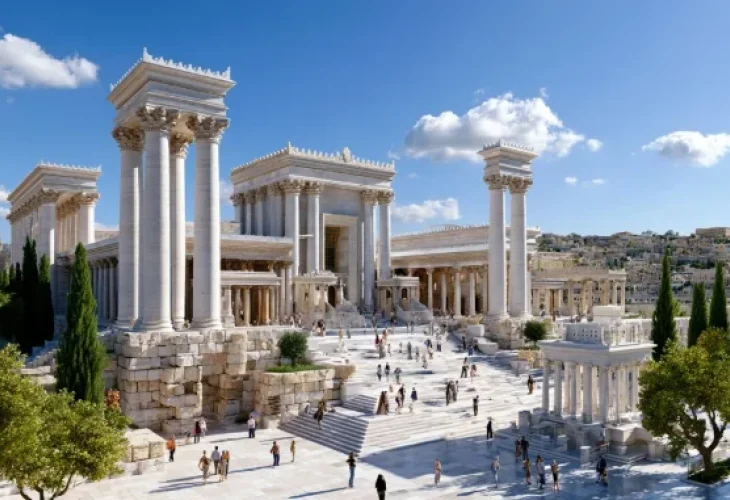
1. Zerubbabel Was a Descendant of King David
Zerubbabel, the son of Shealtiel, served as the governor of Judah. He was a descendant of King Jehoiachin and a member of the royal House of David. He was among the first Jews to return from Babylon to the Land of Israel and became the leader of the returning exiles.
The Talmud (Sanhedrin 38a) explains that he was called "Zerubbabel" because he was "conceived in Babylon" (zera b'Bavel), and adds: "What was his actual name? Nehemiah son of Hachaliah."
2. He Led the Return to Zion
The return to the Land of Israel began after King Cyrus of Persia issued his famous decree allowing the Jewish people to return to Jerusalem and rebuild the Holy Temple.
Zerubbabel led the returning exiles together with Joshua (Yehoshua) son of Jehozadak, the High Priest. Together, they oversaw the rebuilding of the Second Temple and the restoration of the sacrificial service.
3. The Temple Was Rebuilt Under Extremely Difficult Conditions
Jerusalem and the Second Temple were rebuilt despite enormous challenges. The Jewish people faced constant threats from the surrounding nations, political opposition, and severe economic hardship. Nevertheless, Zerubbabel remained determined to fulfill his mission.
4. He Was One of the Men of the Great Assembly
According to Rashi (Bava Batra 15a), Zerubbabel was among the Men of the Great Assembly (Anshei Knesset HaGedolah), the group of sages who guided the Jewish people during the early years of the Second Temple era.
5. The Altar Was Built Before the Temple
Immediately upon arriving in the Land of Israel, the returning exiles built the Altar of Burnt Offerings.
On Rosh Hashanah, the first day of Tishrei, they dedicated the altar and resumed offering sacrifices. The altar was completed before the Temple building itself, in accordance with the halachic principle: "Sacrifices may be offered even when there is no Temple." (Eduyot 8:6)
6. Zerubbabel Refused to Be Intimidated
Although King Cyrus officially authorized the rebuilding of the Temple, the nations and tribes living in the land strongly opposed the project.
Zerubbabel refused to give in to their threats. He hurried to build the altar because he believed that restoring the sacrificial service would bring Divine assistance.
As the Book of Ezra records: "They set up the altar on its foundations, despite their fear of the peoples of the land." (Ezra 3:3)
The Metzudot commentary explains that because the Jewish people feared their enemies, they built the altar first in order to merit God's protection.
7. He Laid the Foundations of the Second Temple
After completing the altar, Zerubbabel sent messengers to obtain cedar wood from Lebanon, as described in Ezra: "They gave money to the stonecutters and craftsmen... to bring cedar logs from Lebanon to the port of Jaffa, according to the authorization granted by Cyrus king of Persia." (Ezra 3:7)
In the second year after their return, during the month of Iyar, the builders moved from constructing the altar to laying the foundations of the Temple.
At this historic ceremony, Zerubbabel and Joshua the High Priest appointed the Levites to sing praises and thanksgiving to God in celebration of the laying of the Temple's foundation.
8. A Day of Joy, Tears, and Opposition
Scripture describes the tremendous joy that accompanied the laying of the Temple's foundation: "The people shouted with a great shout of joy, and the sound was heard from far away."
Yet alongside the celebration, many of the elderly priests and Levites who had seen Solomon's Temple wept as they remembered its former beauty and splendor. Their cries mingled with the joyful sounds of celebration.
Soon afterward, the Samaritans and the other "adversaries of Judah and Benjamin" requested permission to help build the Temple, claiming that they also worshiped the God of Israel.
Zerubbabel firmly rejected their request, declaring: "You have no part with us in building a house for our God." (Ezra 4:3)
He recognized that their true intention was to obstruct the project.
Indeed, Judah's enemies soon attempted to halt construction through intimidation, harassment, and hostile reports sent to the Persian authorities. As a result, work on the Temple was suspended until the reign of King Darius.
Despite the interruption, the sacrificial service on the altar continued uninterrupted for twenty-two years.
9. Encouraged by the Prophets Haggai and Zechariah
In the second year of King Darius, the prophet Haggai rebuked Zerubbabel, Joshua the High Priest, and the people for neglecting the rebuilding of the Temple.
He proclaimed: "Is it time for you to dwell in your paneled houses while this House lies in ruins?... Go up into the hills, bring wood, and rebuild the House, that I may take pleasure in it and be glorified, says the Lord." (Haggai 1:4–8)
Inspired by Haggai's words, Zerubbabel and Joshua resumed construction despite continued opposition.
Haggai strengthened them with the message: "Be strong, Zerubbabel... Be strong, Joshua son of Jehozadak... Be strong, all you people of the land... and work, for I am with you, declares the Lord of Hosts."
The prophet Zechariah also encouraged Zerubbabel with his famous declaration: "Not by might, nor by power, but by My Spirit, says the Lord of Hosts." (Zechariah 4:6)
His message was that the Temple would ultimately be completed not through military or political strength, but through Divine assistance.
Following the renewal of construction, the Persian Empire officially reaffirmed its approval of the Temple project and even ordered Judah's opponents to supply building materials, sacrificial animals, and whatever else was needed for the work (Ezra, Chapter 6).
10. God Called Him "My Servant"
Despite poverty, relentless opposition, and repeated attempts to stop the project, Zerubbabel succeeded in overseeing the construction of the Second Temple.
Because of his extraordinary faith, perseverance, and selfless dedication, God honored him with the remarkable title: "On that day... I will take you, Zerubbabel son of Shealtiel, My servant." (Haggai 2:23)
The title "My servant" was also given to Abraham and Moses, but notably not to Solomon, who built the First Temple.
This highlights a profound lesson: in God's eyes, the Second Temple — built through sacrifice, faith, and unwavering commitment in the face of hardship, was no less precious, and perhaps even more so, than the First Temple, which was built during an era of peace, prosperity, and national strength.

