

Israel News
Netanyahu Privately Urged Graham Not to Bring US Into Hezbollah War
Unreleased footage shows the late senator pushing for American strikes in Lebanon as Netanyahu warned Hezbollah could answer with total war
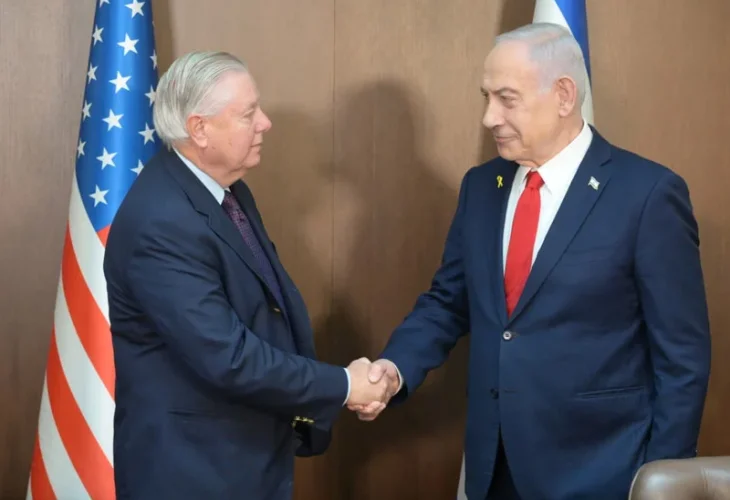 PM Netanyahu with U.S. Senator Lindsey Graham GPO/Amos Ben Gershom
Unreleased documentary footage shows Prime Minister Benjamin Netanyahu urging the late Sen. Lindsey Graham not to ask President Donald Trump to bring the United States into Israel’s campaign against Hezbollah in Lebanon.
The March 4 conversation, reported Sunday by The Wall Street Journal, captures an unexpected division between two prominent advocates of military action against Iran and its proxies. Graham wanted to widen direct American involvement, while Netanyahu argued that Israel needed to concentrate on Iran and avoid giving Hezbollah a reason to unleash a broader attack.
Graham was preparing to travel to Florida to meet Trump when he raised the possibility of persuading the president to have American forces join Israel’s bombing campaign in Lebanon. The call was recorded by filmmaker Alex Holder, who had followed Graham since 2023 for a documentary currently titled Lindsey’s Game.
“We’re concentrating right now on Iran,” Netanyahu told Graham, according to footage reviewed by the Journal. “If we tell Hezbollah that we’re going all the way, we threaten them, but if we actually do it, then they have no reason not to go all the way against us. And right now that’s not our interest.”
“That’s actually good counsel,” Graham replied.
The exchange took place days after the United States and Israel launched their war against Iran on February 28. Hezbollah entered the conflict on March 2 by firing rockets and drones toward Israel, prompting an expanding Israeli aerial campaign and ground operations in Lebanon.
Netanyahu’s position was therefore not an objection to attacking Hezbollah. His warning concerned direct American participation and the possibility that it would convince Hezbollah that a full-scale war had begun.
Graham nevertheless issued a public call that same day for Trump to “fly with Israel” against Hezbollah. He urged the United States to strike both Iran and its Lebanese proxy and cited Hezbollah’s role in the 1983 bombing of the US Marine barracks in Beirut.
Netanyahu’s warning did not prevent the Lebanon front from developing into a major war. Hezbollah continued attacking Israel, while the IDF expanded its air campaign and sent thousands of troops into Lebanon. A ceasefire announced in April quickly collapsed, and the fighting continued through the spring.
By late June, Israel and Lebanon had reached a Washington-brokered agreement calling for Lebanese army deployments in southern Lebanon, an Israeli withdrawal and the disarmament of Hezbollah. Implementation began in July, although Hezbollah rejected the talks and refused demands that it disarm.
What followed leaves room for two political readings of Netanyahu’s decision.
His supporters can argue that he understood Israel was already fighting Iran and sought to avoid an even broader regional confrontation. American entry might have pushed Hezbollah to use more of its arsenal earlier and intensified attacks against Israeli cities.
Critics can argue that the feared Lebanon war developed anyway, but without the additional American firepower Graham wanted to secure. The footage does not establish what Trump would have decided or whether US strikes would have weakened Hezbollah more quickly.

