

Yom Kippur
Why Kol Nidrei Matters So Deeply on Yom Kippur Eve
Discover the origins of Kol Nidrei, why it is recited three times, what its ancient Aramaic words mean, and the profound customs that make this unforgettable prayer the spiritual opening of Yom Kippur
- Yonatan HaLevi
- | Updated
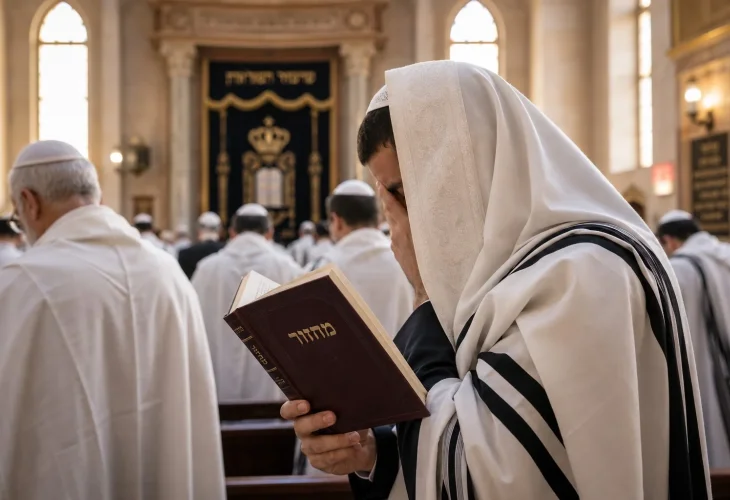
Kol Nidrei is the moving declaration recited immediately before the evening service on Yom Kippur. Spoken in Aramaic, it is one of the most recognizable and emotionally powerful moments of the Jewish year. The prayer consists of a formal declaration concerning vows and oaths made by the congregation and serves as the gateway to the holiest day of the year.
Because the annulment of vows is not performed on Shabbat or festivals, Kol Nidrei is recited shortly before sunset, prior to the official beginning of Yom Kippur (Magen Avraham, Orach Chaim 619:4).
When Is Kol Nidrei Recited?
Kol Nidrei is recited immediately before the Maariv (evening) prayer on the eve of Yom Kippur. For many Jews, even those who rarely attend synagogue during the year, it is one of the most meaningful and anticipated moments of the High Holidays.
Who Composed Kol Nidrei?
The exact origin of Kol Nidrei and the identity of its author remain unknown. Most scholars believe that the prayer was composed during the period of the Geonim (approximately the seventh to eleventh centuries).
The Meaning of Kol Nidrei
The Ashkenazi version of Kol Nidrei declares:
"All vows, prohibitions, oaths, consecrations, and commitments that we have vowed, sworn, dedicated, or taken upon ourselves from this Yom Kippur until the next Yom Kippur... we regret them all. May they all be released, forgiven, annulled, and rendered void. Our vows shall not be considered vows, our prohibitions shall not be prohibitions, and our oaths shall not be oaths."
The Sephardic version contains a more extensive text that includes vows made both during the previous year and those that may be undertaken in the coming year. It concludes with the verse:
"And all the congregation of the children of Israel shall be forgiven, together with the stranger who dwells among them, for all the people acted unintentionally."
Although the wording differs somewhat between traditions, both versions express sincere regret over personal vows and ask that they no longer be binding.
How Is Kol Nidrei Recited?
The service follows a unique and ancient custom.
Before Kol Nidrei begins, two members of the congregation stand beside the cantor while holding Torah scrolls. The Torah scrolls are taken from the Ark, and the congregation recites the verse: "Light is sown for the righteous, and joy for the upright in heart."
The two individuals then stand on either side of the cantor as he proclaims the declaration established by Rabbi Meir of Rothenburg: "By the authority of the Heavenly Court and by the authority of the earthly court, with the consent of God and the consent of this congregation, we permit ourselves to pray together with those who have transgressed."
This remarkable introduction emphasizes that on Yom Kippur, every Jew has a place in prayer and in the community.
Why Is Kol Nidrei Recited Three Times?
It is customary to repeat Kol Nidrei three times.
One explanation, cited in the customs of the Maharil, is that many rabbinic declarations are repeated three times for emphasis, similar to other legal formulas found throughout Jewish tradition.
The Machzor Vitry offers a more spiritual explanation.
The first recitation is said in a very soft voice, like someone who hesitates to enter the palace of the King and is afraid to approach Him.
The second recitation is spoken a little more loudly.
By the third recitation, the cantor raises his voice even further, reflecting the confidence of someone who has drawn closer to the King and now approaches Him with love, trust, and an open heart.
The Timeless Power of Kol Nidrei
More than a legal declaration, Kol Nidrei marks the emotional beginning of Yom Kippur. Its haunting melody, ancient words, and solemn atmosphere invite every Jew to enter the holiest day of the year with humility, honesty, and hope.
For centuries, the opening notes of Kol Nidrei have stirred hearts around the world, reminding us that no matter how difficult the past year may have been, the gates of repentance remain open, and every person has the opportunity to begin again.

