

Interesting
Foreign Accent Syndrome: Why Your Accent Can Suddenly Change
Some people wake up sounding as though they've developed a foreign accent, without ever learning another language. Here's why it happens.
- Tehila Cohen
- | Updated
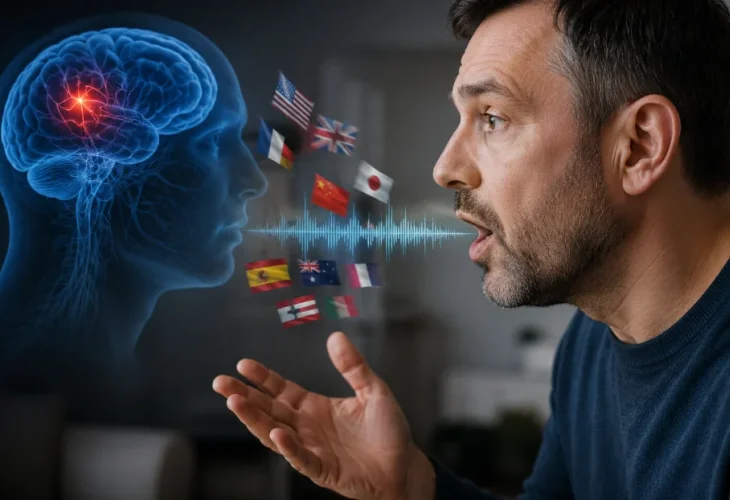
Imagine going to bed speaking exactly as you always have, only to wake up with family and friends insisting you suddenly sound like you're from another country. It may sound like something out of a movie, but this rare medical condition has been documented by doctors for more than a century.
When Your Accent Suddenly Changes
The condition is known as Foreign Accent Syndrome, an extremely rare neurological disorder that changes the way a person speaks. Although the person's voice remains the same, changes in rhythm, pronunciation, and speech patterns can make listeners believe they have developed a foreign accent.
The individual is still speaking their native language, but subtle changes in the way words are produced can create the impression of an entirely different accent.
What Causes It?
In most cases, Foreign Accent Syndrome develops after a stroke, traumatic brain injury, or another neurological condition that affects the brain's speech centers. In rarer cases, it has also been linked to other neurological or medical disorders.
Researchers believe that even small changes in the parts of the brain responsible for coordinating speech can alter the timing and movement of the lips, tongue, and jaw. Those subtle differences are often enough for listeners to perceive a completely different accent.
Since the condition was first described in the early 1900s, only a few dozen confirmed cases have been reported around the world.
One of the best-known cases involved a woman who developed what sounded like a foreign accent after suffering a stroke, despite never having lived in or even visited the country people believed she sounded like. In other documented cases, friends and relatives struggled to recognize the person's speech and were convinced something had fundamentally changed.
Does the Person Learn a New Language?
No. Despite the name, people with Foreign Accent Syndrome do not suddenly learn another language or acquire knowledge they never had.
The condition affects how a person speaks, not what they know. Their vocabulary, grammar, and language skills remain the same. What changes is the way the brain controls speech, creating the illusion that the speaker has adopted a foreign accent.
Although remarkably rare, Foreign Accent Syndrome offers a fascinating glimpse into the complexity of the human brain and the delicate systems that shape something as familiar—and as personal—as the way we speak.

