

Health and Nutrition
Why Does Your Body Jerk as You Fall Asleep? The Science Behind Hypnic Jerks
Learn what causes hypnic jerks, why they happen, whether they're dangerous, and simple ways to reduce these sudden nighttime muscle spasms
- Tehila Cohen
- | Updated
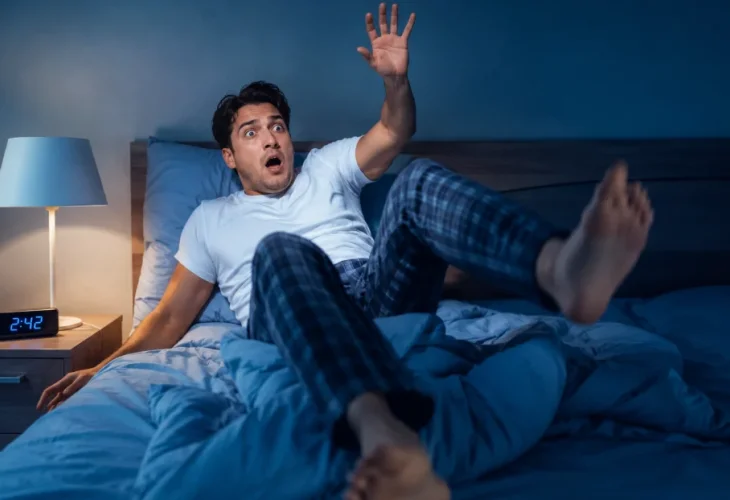
You're lying in bed, just beginning to drift off to sleep, when suddenly your whole body — or perhaps just one leg, jerks unexpectedly. Sometimes it feels as though you've fallen from a great height, and the sensation can even wake you up completely.
What's actually happening?
The phenomenon is known as a hypnic jerk (also called a sleep start). It is a sudden, involuntary muscle contraction that occurs during the transition from wakefulness to sleep. Researchers estimate that about 60% to 70% of people experience hypnic jerks at least occasionally during their lives. For some, they happen only rarely, while others experience them more frequently.
Although scientists do not yet fully understand why hypnic jerks occur, several leading theories have been proposed.
Your Brain Is Still Adjusting to Sleep
As you fall asleep, your nervous system gradually shifts from a state of alertness to one of rest. Sometimes this transition isn't perfectly smooth, causing the brain to mistakenly send a brief signal to the muscles, resulting in a sudden contraction.
Your Brain Thinks You're Falling
Another theory suggests that as your muscles begin to relax, your brain may misinterpret the rapid relaxation as a sign that your body is losing balance or falling. In response, it suddenly activates the muscles to "catch" you, producing the familiar jerk.
Fatigue, Stress, and Caffeine Can Make It Worse
Hypnic jerks are more common during periods of accumulated fatigue, emotional stress, sleep deprivation, or after consuming large amounts of caffeine or other stimulating beverages.
Are Hypnic Jerks Dangerous?
In the overwhelming majority of cases, the answer is no.
Hypnic jerks are considered a normal physiological phenomenon and are not a sign of disease or a problem with the nervous system. They do not cause harm, and although they may be startling or briefly interrupt your sleep, they typically do not require treatment.
However, if the jerks occur repeatedly throughout the night, significantly disrupt your sleep, are accompanied by loss of consciousness, unusual movements, or other concerning symptoms, it is important to consult a healthcare professional to rule out other medical conditions.
How to Reduce Hypnic Jerks
While they cannot always be prevented, the following habits may help reduce their frequency:
Maintain a consistent sleep schedule.
Avoid coffee, energy drinks, and other sources of caffeine in the evening.
Reduce stress before bedtime by reading, listening to calming music, or practicing relaxation or breathing exercises.
Limit screen time before bed to help your brain transition naturally into sleep mode.

