

Magazine
Glass Artistry Meets Presidential Legacy: The Journey of Jeremy Langford
From the Western Wall Tunnels and the Waldorf Astoria Jerusalem to international landmarks, renowned glass artist Jeremy Langford shares the philosophy, faith, and inspiration behind his extraordinary creations
- Miriam Solomon
- | Updated
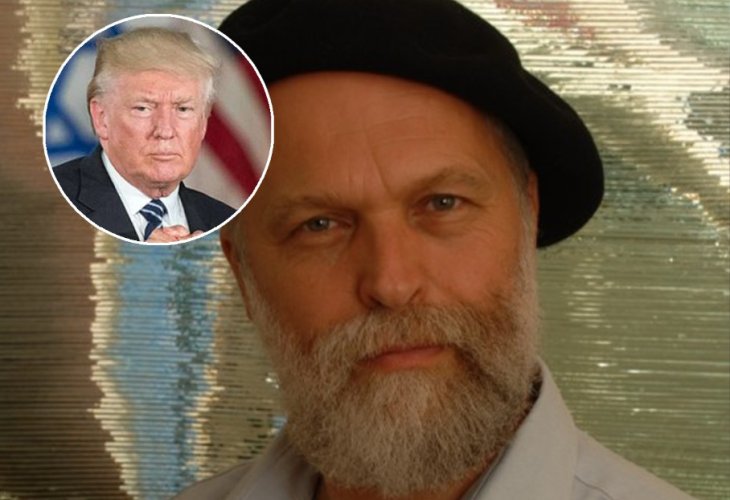 Artist Jeremy Langford
Finding time for an interview with Jeremy Langford is no easy task. His days are filled with constant creative work, leaving little room in his schedule. Yet when the opportunity finally arises, his extraordinary creations transport the conversation far beyond time and place. Every piece reveals new dimensions of glass art and artistic expression, and every answer offers a glimpse into the mind of the artist behind them.
The Difference Between Craft and Art
When asked how he began his journey as a glass artist, Langford first pauses to make an important distinction.
"It is essential to understand the difference between craftsmanship and art."
Craftsmanship, he explains, is the skilled use of materials through manual labor. A craftsman is a highly trained professional, like a carpenter or a potter, who produces beautiful and functional work.
Art, however, is something entirely different.
"Art expresses a personal idea or emotion. A true artist creates something that communicates a thought, a feeling, or a message. A work of art does not even have to be beautiful. It must simply say something meaningful."
To illustrate his point, Langford recalls a Holocaust exhibition in Germany. One artist displayed six glass food processors filled with water, each containing a live fish. A sign above them instructed visitors to "Please turn on the processor."
"It was horrifying," Langford says. "It wasn't beautiful in any sense. But it delivered a powerful message about those who claimed during the Holocaust, 'We were only following orders.' The artwork forced every viewer to confront that excuse. That is art."
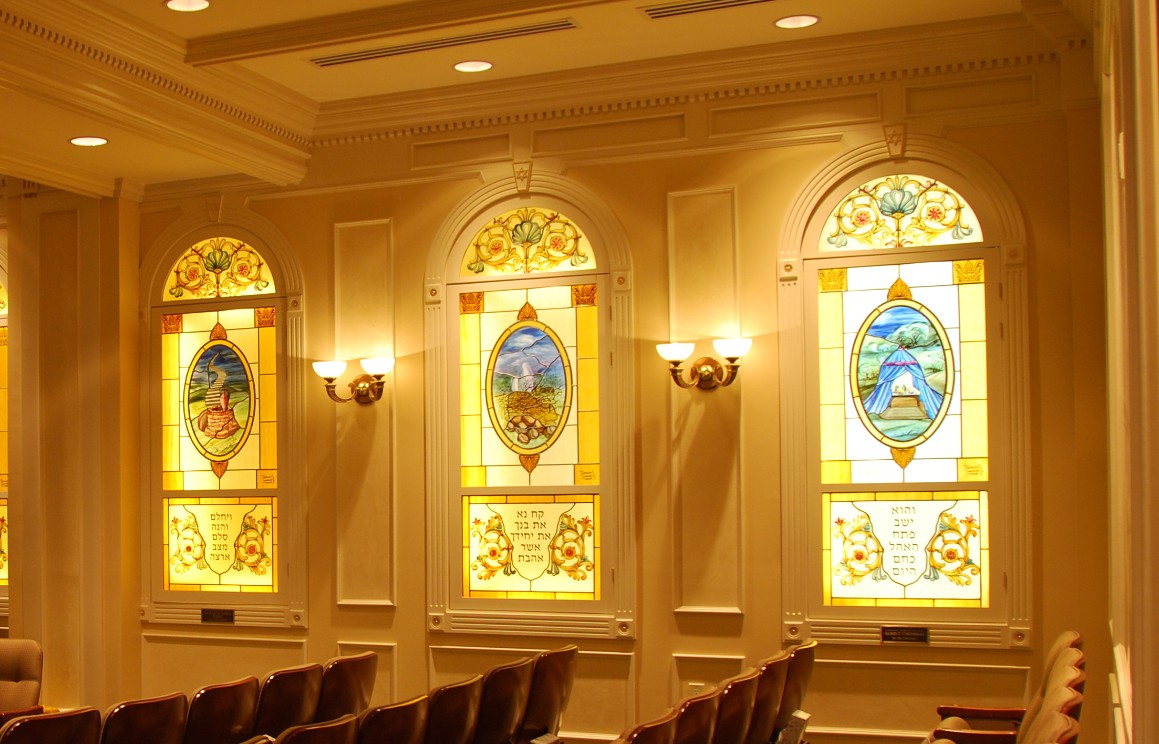 Ahava V'achva Synagogue
An Optimistic Artist
Langford describes himself as an optimistic artist.
"Many artists create from pain, depression, or brokenness, and they produce remarkable work. I choose a different path. I want my art to inspire hope, joy, and a sense of wholeness."
He believes that every artistic medium has its own language. Writers speak through words, musicians through sound, and glass artists through light, color, and transparency.
"My goal is to help people see beyond everyday reality," he explains. "I want my work to suggest that there is something deeper than what we normally perceive."
Creating for the Place
When Langford works independently in his studio, he enjoys complete artistic freedom. But much of his work involves commissions for specific locations, and those projects require a different approach.
"If I create a piece for a synagogue, a museum, a hotel, or a private home, the artwork must belong in that environment. My personal vision remains, but it has to speak the language of the place."
This philosophy has shaped some of his most celebrated works.
The Waldorf Astoria: A Vision of Peace
One of Langford's most prestigious commissions came from the Waldorf Astoria Hotel in Jerusalem.
The hotel's architect gave him complete artistic freedom, while the owners requested that the lobby feel both internationally elegant and unmistakably connected to Jerusalem.
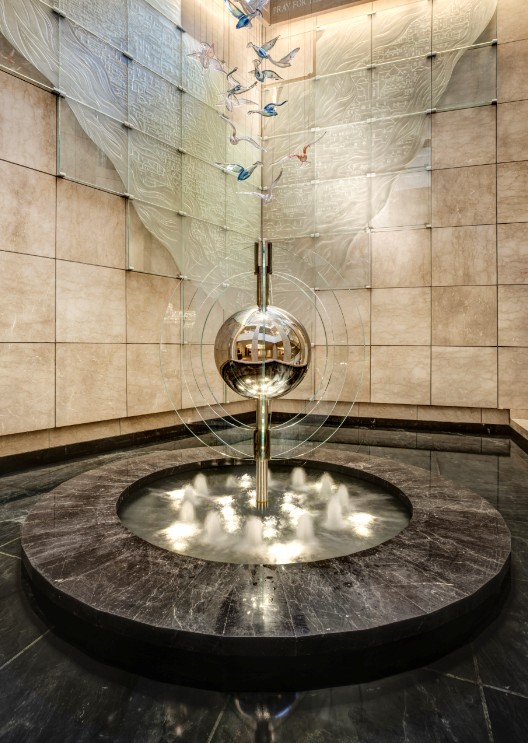 Waldorf Astoria. Photo: Nitzan Hefner
Searching for inspiration, Langford turned to the Book of Psalms and found the verse: "Pray for the peace of Jerusalem."
That verse became the foundation of an enormous twelve meter chandelier composed of 120 descending glass doves, symbolizing peace. Beneath it stands a reflective steel sphere surrounded by black stone and integrated with glass elements, while the surrounding walls combine images of Jerusalem's past, present, and future.
"It expresses the peace and completeness of the Messianic era," he says.
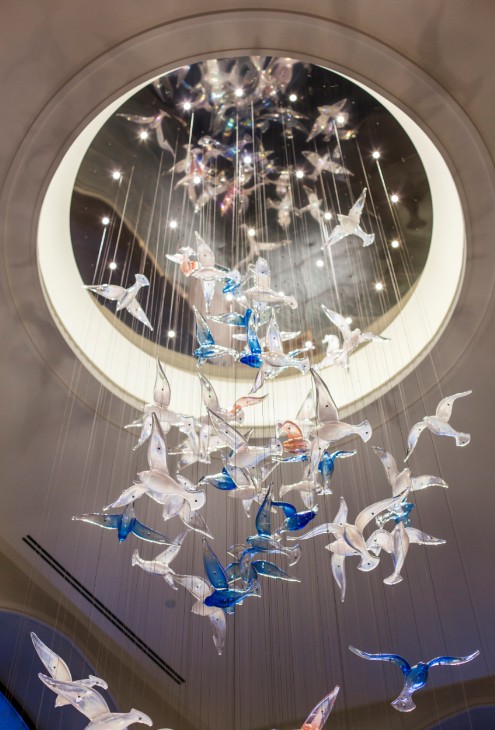 Waldorf Astoria. Photo: Nitzan Hefner
When Glass Was the Wrong Choice
Another commission took him to the City of David. Initially, the clients envisioned a glass installation similar to his famous work in the Western Wall Tunnels.
Rather than immediately accepting the commission, Langford spent several days walking through the archaeological site.
"I realized glass simply didn't belong there," he recalls. Instead, he proposed creating the artwork in marble and stone.
The finished monument was designed in Israel, carved from Italian marble, transported in thirteen tons of carefully packed sections, and assembled on site.
"It had to feel as though it had always belonged there."
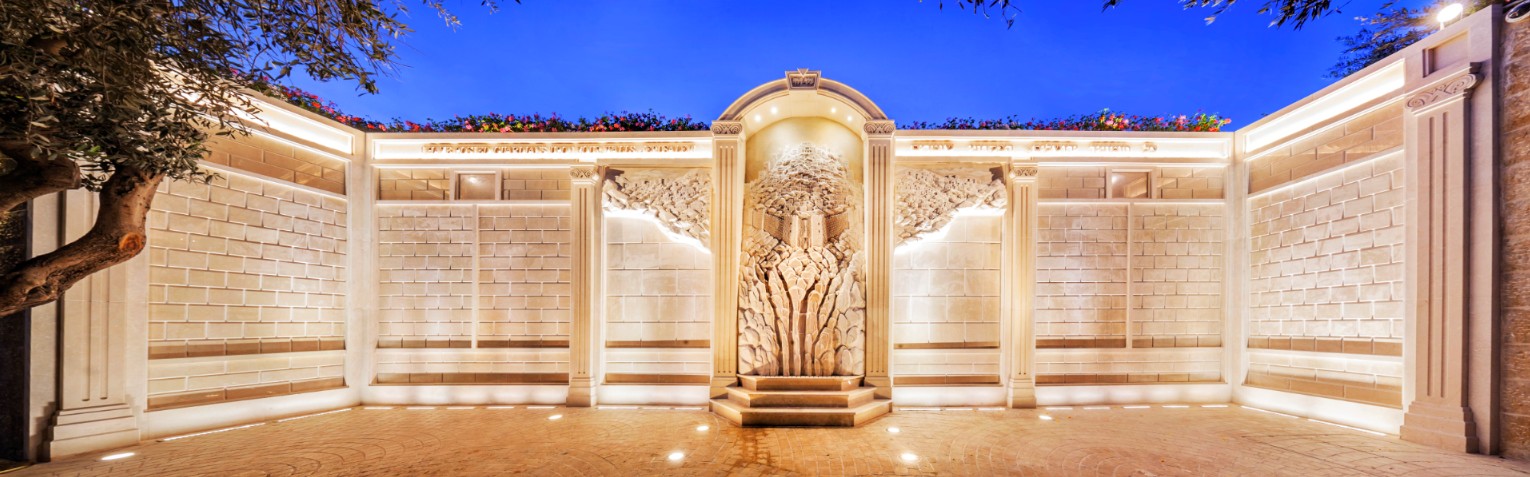 City of David. Photo: Kobi Harati
A Commission from Donald Trump
Years before Donald Trump entered politics, he commissioned Langford to create installations for three luxury residential buildings in Miami.
The client gave him complete creative freedom. "I walked around the buildings, which overlooked the ocean, and asked myself what belonged there."
His answer became a series of glass sculptures called Morning Whisper, inspired by sea breezes, ocean waves, and coastal light.
"I never imagined at the time," Langford says with a smile, "that one day this client would become President of the United States."
The Language of Glass
Although Langford works with many materials, glass remains his greatest passion.
"I don't want to be limited by a single material," he explains. "The more techniques I know, the more effectively I can communicate what I want to express."
He describes three primary categories of glass art:
Cold glass involves carving, engraving, and shaping finished glass without heat.
Warm glass is heated to approximately 800°C, allowing artists to fuse images and designs permanently into the material.
Hot glass reaches temperatures between 1,000°C and 1,400°C, transforming glass into a liquid that can be poured, blown, and sculpted into almost any form.
Langford finds deep symbolism in the process. "Glass begins as ordinary sand. Through intense heat it becomes transparent and filled with light. To me, that reflects the spiritual journey of a person, transforming from raw material into something capable of transmitting light."
Inventing New Techniques
Unsatisfied with the limitations of traditional methods, Langford developed his own process known as layered glass.
By stacking precisely cut sheets of glass, he created monumental works that were previously impossible to construct.
His renowned installation The Chain of Generations in the Western Wall Tunnels is one of the finest examples of this innovative technique.
Faith Before Success
Early in his career, Langford received an exceptionally lucrative commission to create artwork for a church in Kenya.
Unsure how to proceed, he sought halachic guidance. After consulting leading Torah authorities, he was advised that although there could be room for leniency under certain circumstances, it was not fitting for a Jewish artist to dedicate his talents to such a project. He declined the offer.
Soon afterward, during a television interview, he was asked about his greatest artistic dream.
Without thinking, he replied: "One day the Beit HaMikdash will be rebuilt. I would love to be its artist."
What followed surprised even him. Within a short time, he was commissioned to create works for the Tower of David Museum, Aish HaTorah overlooking the Western Wall, the Western Wall Tunnels, Rachel's Tomb, the City of David, and other sacred sites throughout Israel.
"I sometimes think about how each project has brought me physically closer to the Temple Mount," he reflects. "From the City of David, to the Old City, to the Western Wall. Perhaps one day I will truly merit to become the artist of the Beit HaMikdash."

