

Israel News
Givati Protest: Four More Soldiers Sent to Prison, Removed From Combat Duty
The IDF has completed disciplinary proceedings against everyone involved in the protest in the Givati Brigade’s Tzabar Battalion. Four additional soldiers were sent to prison and removed from combat duty, while the other participants underwent a command and educational process.
- Yuval Aviv
- | Updated
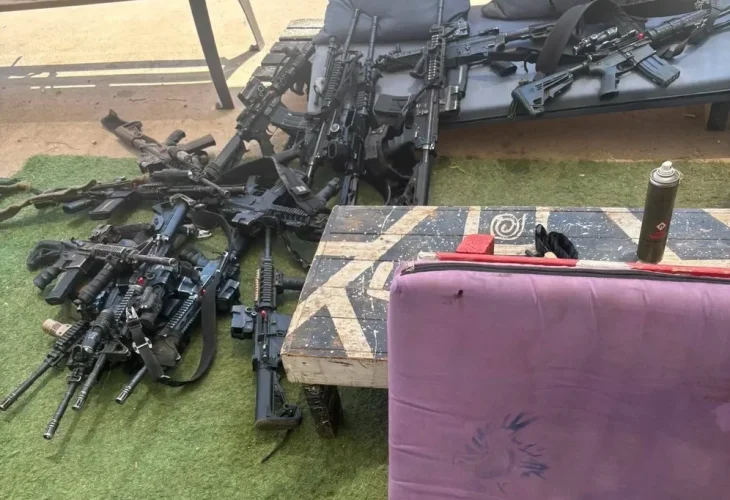 The abandoned weapon (use permitted under Section 28A)
The final four soldiers brought to trial over the protest incident in the Givati Brigade’s Tzabar Battalion were sentenced today (Tuesday) to prison terms and removal from combat duty, completing disciplinary proceedings against all the fighters identified as leaders of the protest.<\/p>
Three of the soldiers, who were considered leaders of the incident, were sentenced to 30 days in prison. In addition to their prison sentences, it was decided that they would be removed from combat duty and immediately taken out of combat service. Another soldier, who was tried while on pre-discharge leave, was sentenced to 20 days in prison. He, too, was removed from combat duty and his combat service was ended.<\/p>
The rulings follow the IDF’s decision last Friday, when it was announced that the 14 fighters who led the protest had been sentenced to 30 days in prison and removal from combat duty. About 80 additional fighters who took part in the incident left the base and later returned, but were not put on trial. According to the IDF’s statement, they underwent in recent days, together with their commanders, “a command and educational process to strengthen the discipline, values, and norms expected of IDF fighters.”<\/p>
The protest incident took place last Thursday, after the commander of the Tzabar Battalion ordered the fighters to dismantle the company sergeants’ post. The directive sparked a protest, during which some of the soldiers put down their weapons and left the base without authorization.<\/p>
The fighters, who had returned from Lebanon shortly before the incident, said they had not merely been asked to remove signs, but to dismantle the battalion corner, which they said included flags, items of symbolic value, and mementos of fallen fighters. They said the feeling that the battalion’s tradition was being harmed led to the protest, during which they put down their weapons as a sign of protest.<\/p>
The IDF presented a different version of events from the one described by the fighters. In its statement, the army said that “the soldiers were asked to remove signs connected to the battalion’s ‘youngsters and veterans’ tradition; the incident is under investigation.” It later stressed that the soldiers left the base without their commanders’ authorization after being asked to remove signs “connected to non-normative incidents,” and that the incident “is not in keeping with IDF values or what is expected of its soldiers.”<\/p>

