

Magazine
Their One Year Old Was Left in a Hot Car: The Miracle That Saved His Life
"Don't say it won't happen to me." After their toddler was accidentally left in a hot car, Oren and Efrat Sharabi share the terrifying experience, miraculous rescue, and lesson that changed their family forever.
- Avner Shaki
- | Updated
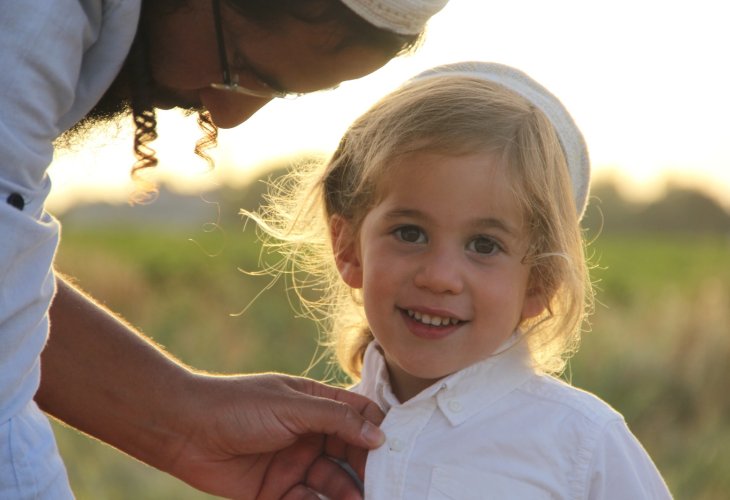 Tohar Yosef Sharabi (Photo: Merav Werner)
On a late afternoon, as dusk begins to settle, the view from the Sharabi family’s home stretches across an extraordinary panorama. "If you look to the left," says Oren, the father, "you can see the beaches of Ashdod. Look to the right and you can see Hadera. And you came on a day when the visibility isn't even at its best."
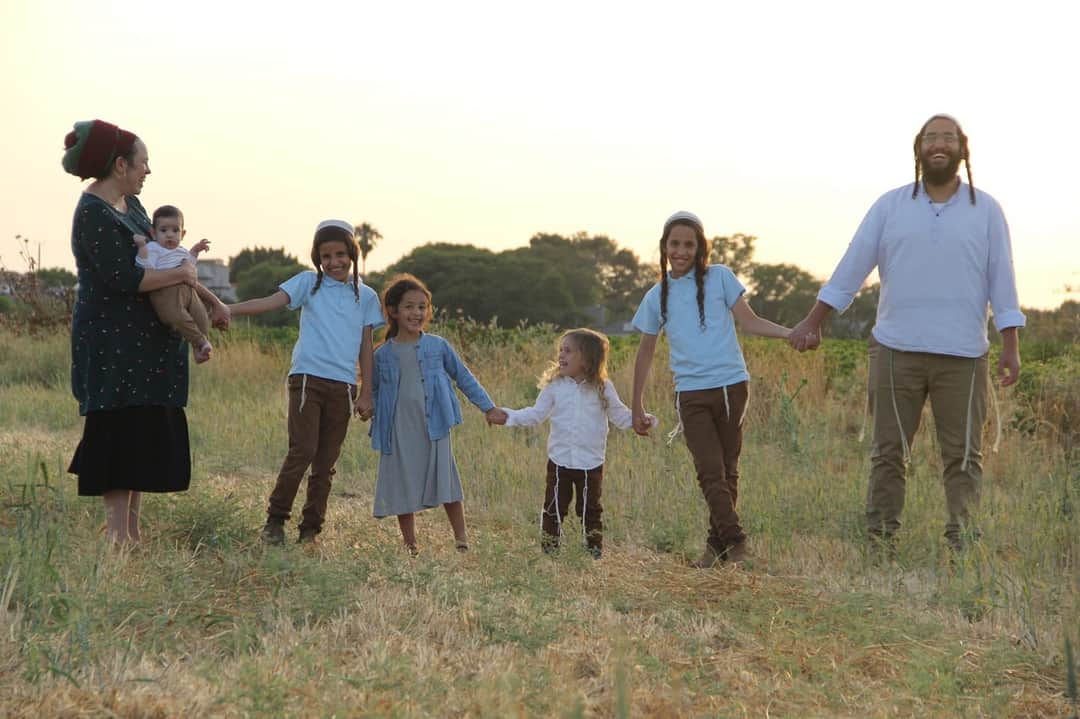
Just a few feet away, Tohar Yosef, the couple’s fourth child, plays happily with his siblings and friends. It is an ordinary family scene, but for Oren and Efrat Sharabi, it is something they will never take for granted.
When Tohar was just one year old, he was accidentally left alone inside a hot car. What followed were terrifying moments, a desperate prayer, and what his parents describe as a series of extraordinary miracles that saved their son's life. The couple decided to share their story publicly for one important reason: to warn other parents never to assume, "It could never happen to me."
"I Always Thought It Would Never Happen to Me"
The incident happened during a family vacation in northern Israel.
"We hadn't managed to take a vacation the previous summer, so the following year we booked a special getaway," Oren recalls. "We rented an amazing cabin in the north from Monday through Thursday. A few hours before we were supposed to head home, we heard that Efrat's family was visiting friends in Yesod HaMaala, so we decided to rent an apartment nearby and spend time with them."
On Friday morning, the family visited Safed before continuing to Yesod HaMaala. Along the way, they stopped at a farmers market and bought fruit. When they arrived, one of Efrat's sisters took one year old Tohar to play with him.
"We needed to organize a few things in the apartment we had rented, so we left him with my parents and went back to the apartment," Efrat recalls.
About an hour later, they returned to the parking lot near her parents. Efrat's brother unexpectedly arrived for a visit, creating excitement and distraction. In the middle of all the activity, Efrat's sister placed Tohar in the back seat of Oren and Efrat's car.
Neither parent realized he was there.
Before the trip, they had covered the back window with a piece of cloth to protect Tohar from the sun. As a result, they could not see him sitting in the back.
"We returned to our apartment, and while we were preparing for Shabbat, I said to Oren, 'It's so nice that Tohar is at my parents' and we can get everything organized,'" Efrat remembers. "If only I had known that he was trapped alone in the car. It's terrifying even to think about."
Several times, Efrat asked Oren to bring a kettle in from the car. He kept putting it off. Finally, as Shabbat approached, she urged him to go get it.
That delay could have ended in tragedy. But the fact that he eventually went to the car saved their son's life.
"I walked out toward the car. The kettle was in the trunk," Oren says. "For some reason, I looked toward the driver's seat. Hashem simply turned my head in that direction, and suddenly I saw Tohar lying there unconscious."
From that moment, everything happened within seconds. "I couldn't understand what I was seeing. Tohar was supposed to be with Efrat's parents."
Then another thought struck him. In the past, Oren had heard stories about children accidentally being left in cars, and he admits that he had judged the parents involved.
"I used to think, 'How can something like that happen? How can someone forget a child? You don't forget your phone, but you forget your child?' I had told myself for years, 'It won't happen to me.' And then it did."
The Small Detail That May Have Saved His Life
When Oren looked through the window, he saw his little boy in the driver's seat. Tohar's cheeks were bright red from the heat, and he appeared lifeless.
The fact that he was in the driver's seat was itself remarkable. Tohar had originally been placed in the back. His parents believe that, at some point, he tried to escape and managed to move toward the front of the vehicle. Had he remained in the back seat, the cloth covering the window might have prevented Oren from seeing him.
"I opened the door and lifted him," Oren recalls. "He was completely limp and unconscious. The moment I picked him up, he opened his eyes slightly, probably because he was finally getting some air. Then I saw his eyes rolling, and I was terrified that he had suffered brain damage."
Oren began screaming, and Efrat ran outside. "I saw her face frozen in shock, as though she were paralyzed," he says.
Oren immediately carried Tohar inside and began trying to cool him down. A few months earlier, Oren had attended a seudat hoda'ah, a thanksgiving meal held by the family of a girl who had survived a dangerous incident. Her father had described how, during the emergency, he forced himself to act rationally rather than emotionally. That memory returned to Oren at exactly the moment he needed it.
"I knew the most important thing was to cool him down," he says. "I ran with him to the bathtub and poured cold water over him. I held him and tried to wake him, but his head kept falling back. I realized how serious the situation was."
As he ran from the car, Oren cried out repeatedly: "Hashem, Hashem, save him."
"I have never prayed like that from the depths of my heart, either before or since."
"The Children Asked Me if He Was Alive"
"Those were the hardest moments of our lives," Efrat says. The other children were watching what was happening. "They asked me if he was alive, and I told them I didn't know."
Efrat tried to call an ambulance, but in her panic, she could not remember the emergency number. She called her father, who rushed over while contacting emergency responders. Within a short time, rescue personnel and police were on their way, and a helicopter was initially dispatched because of the severity of the situation.
Then, after approximately two terrifying minutes, Tohar regained consciousness.
"It was unbelievable joy to see him coming back to himself," Oren recalls.
An emergency medical volunteer arrived within minutes, examined Tohar, and the helicopter was canceled. "When I realized that, thank Hashem, he was going to live, I suddenly burst into uncontrollable tears," Oren says. "It was a flood of emotion that, in some ways, has never completely ended."
The experience continued to affect him long afterward. "Even today, when I take him to kindergarten in the morning, I hug him and say goodbye, then go to work. When I return to the hot car at the end of the day, my entire body becomes tense. The memories of that Friday come flooding back. It was a day that changed our lives forever."
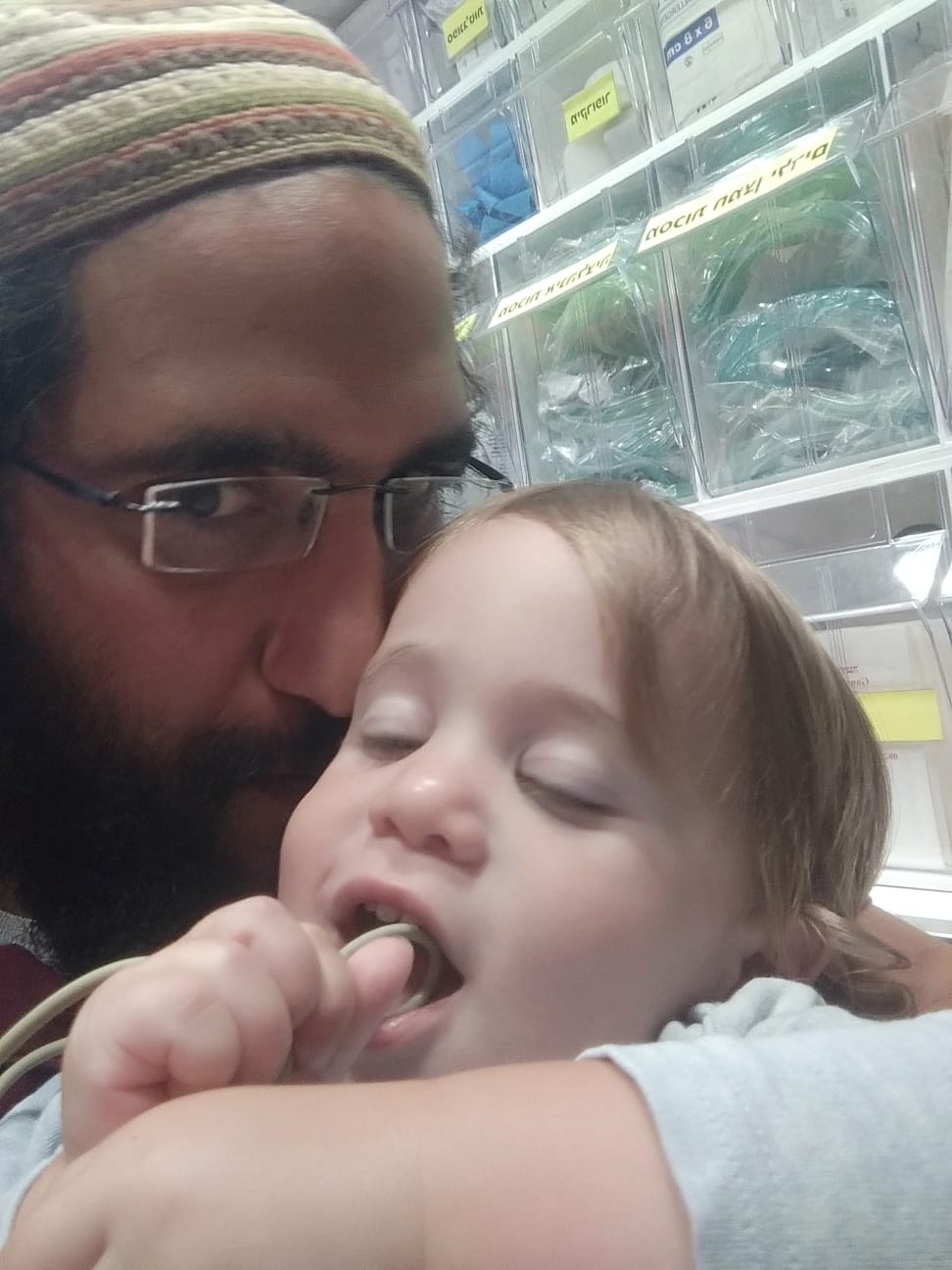
About half an hour before Shabbat, Oren and Tohar were taken by ambulance to the hospital in Safed. Doctors performed tests and gave Tohar fluids, and his condition continued to improve.
According to Oren, the doctors told the family that the timing had been critical. Had the incident happened during hotter hours of the day, or had Tohar remained in the vehicle for several more minutes, the outcome could have been very different.
On the way to the hospital, Oren asked his rabbi whether he would be permitted to return on Shabbat morning with a non-Jewish driver who was transporting nurses. His rabbi permitted it. Oren knew that Tohar needed his mother and that Efrat needed her son. The driver was exceptionally sensitive to what the family had been through, and after Shabbat, Oren called him to express his gratitude.
Eventually, Tohar returned to his family. "It is something we will never forget," Oren says.
"Charity Saves From Death"
Looking back, Efrat recalls another detail from earlier that same day.
While the family was in Safed, she went to buy a dress for Shabbat. Outside the store stood a man distributing pamphlets and collecting charity.
"Oren usually doesn't give charity to people he doesn't know, but that day I asked him to give," she recalls. Oren opened his wallet and gave each of their three older children a coin to donate. Tohar, who was only one, did not receive a coin.
The man handed Oren a pamphlet, which he placed in his pocket and later left in the apartment. The next morning, Efrat picked it up.
The title was "Complete Healing."
"I simply couldn't believe it," she recalls.
The pamphlet discussed people facing hospitalization and offered words of faith and encouragement for difficult moments. Among its messages was the teaching that "charity saves from death."
"We were simply in shock."
Two weeks after Tohar's rescue, the family held a large seudat hoda'ah to thank Hashem. At the time, the family was watching every expense carefully, but they decided not to hold back when it came to expressing their gratitude. More than 150 people attended, and the family spent over 7,000 shekels on the celebration.
"We felt such a strong need to thank the Master of the Universe," Efrat says.
The Warning Every Parent Should Hear
For Oren and Efrat, sharing such a frightening and deeply personal experience has a purpose. They want other parents and caregivers to understand that accidentally leaving a child in a vehicle is not something that happens only to careless or irresponsible people. "Since this happened to us, there is something I want to say to everyone who drives children," Efrat says. "Don't say, 'It won't happen to me.' It can happen to the most responsible people in the world. Do everything you can to make sure you haven't left a child in the car."
Oren once believed the same thing. He could not understand how a parent could possibly forget a child, until it happened to his own family. Today, the sight of Tohar running, playing, and growing up alongside his siblings is a daily reminder of how differently that Friday could have ended. "I wouldn't wish what we went through on anyone," Efrat says. "This is about human life, sometimes the lives of those we love most in the world."

