

Personal Stories
Itay Levy on Honoring Parents: “I Carry So Many Regrets When I’m Performing”
Israeli singer Itay Levy opens up about caring for his mother, their changing roles, and why he is moving her closer to him.
- Yitzchak Eitan
- | Updated
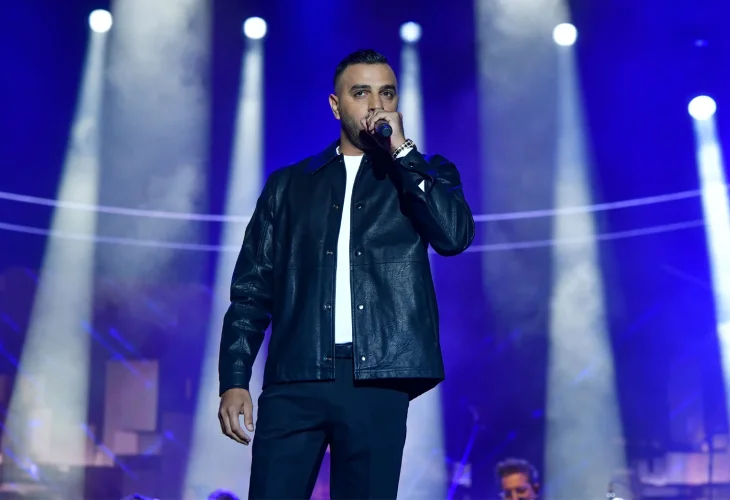 Itay Levy (Photo: Avshalom Sassoni/Flash90)
The mitzvah of honoring one’s parents is one of the Torah’s most important commandments, and it can take on an entirely new meaning as parents grow older and begin to depend on their children. Singer Itay Levy recently opened up about this difficult reality, sharing the emotional toll of caring for his mother and the complicated feelings that come with their changing roles.
“The role reversal with my mother is the hardest thing that has ever happened to me,” Levy said. “I’m a very wounded person—wounded in every direction, really. Whenever I’m not with her, or when I’m suddenly at a performance and all that, I’m flooded with so many regrets about it.”
Speaking on Mako’s Spill It podcast, hosted by Lilach Markovitz, Levy revealed that he is preparing to move his mother closer to him after waiting years to make it happen.
“I waited for this for years,” he said.
“I Hope Your Child Never Has to Take Care of You”
Levy also shared that mothers sometimes approach him and tell him, “I wish my child would be like you,” referring to the devotion he shows his mother.
But his response reveals how differently he sees the situation.
“I hope not—that your child never has to take care of you,” he tells them. “May you stay healthy until 90 and part from them with great love, and may they always remember what a wonderful mother you were to them.”
His words reflect the difficult side of caring for an aging or unwell parent: the devotion may come from love, but no child wishes for the circumstances that make that level of care necessary.
“That Child Is Still Inside Me”
Levy also spoke candidly about painful experiences from his childhood and the emotions that remain with him today. Despite everything he experienced, he emphasized that he does not hold on to anger toward his mother.
“That child is still inside me,” he said. “Sometimes I get these stomachaches.”
When asked whether he fears that something could happen to his mother, Levy responded immediately: “Heaven forbid.”
He explained that this fear is also part of the reason he wants her living nearby: “As for why I’m moving her close to me—this is one of the reasons.”
For Levy, honoring his mother has become much more than an abstract value. As their roles have changed, it has meant being present, taking responsibility, and caring for her even while carrying the complicated emotions of his own childhood.

