

Israel News
After 78 Years, Burial Site of IDF Fallen Soldier Shlomo Chaimson, Hashem Yikom Damo, Is Identified
An IDF Missing Persons Branch investigation, conducted with Israel’s Defense Ministry, determined that Shlomo Chaimson is buried in the ma’apilim section of a cemetery in Haifa. Chaimson was killed by guards at the Caraolos detention camp in Cyprus while attempting to escape.
- Shlomi Diaz
- | Updated
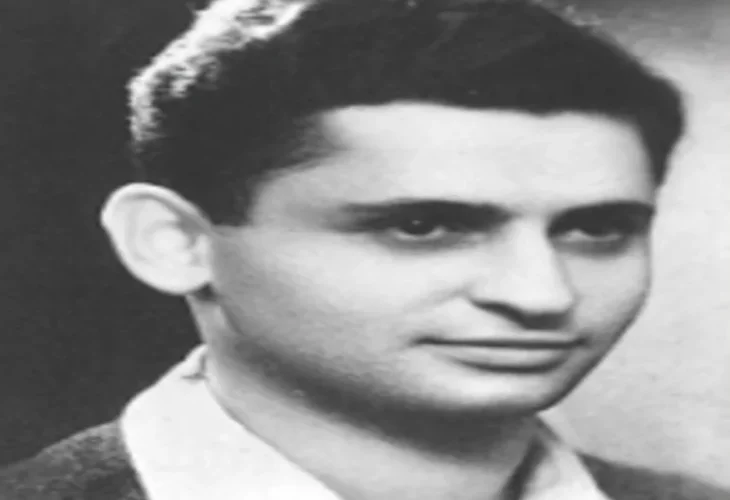 (Photo: IDF Spokesperson)
The IDF announced today (Wednesday) that, nearly 78 years later, the burial site of IDF fallen soldier Shlomo Chaimson, Hashem yikom damo, has been identified. According to the IDF Spokesperson, an investigation by the IDF Missing Persons Branch, in partnership with the Defense Ministry and the Cyprus Deportees Association, determined that Shlomo, one of those deported to Cyprus, is buried in the ma’apilim section of the cemetery in Haifa.
Shlomo Chaimson was killed by gunfire from guards at the Caraolos detention camp in Cyprus while attempting to escape from the camp on the night of 26 Elul 5708, September 29–30, 1948. He was buried in the Jewish cemetery in the Cypriot town of Margao.
In 1970, those buried in the Margao cemetery were brought to Israel, and most were buried in Haifa as unidentified individuals. Following an intensive investigation by the Missing Persons Branch of the IDF Casualties Division and the Military Rabbinate, together with the Defense Ministry and the Cyprus Deportees Association, Shlomo’s burial site was located.
Chaimson was born in Romania in 1930. After World War II, during which he lost his father, he decided to make aliyah to Israel with his mother, Ita, and his wife aboard the ma’apilim ship “Pan York – Kibbutz Galuyot.” The ship was captured by British Mandate soldiers, and its passengers were deported to Cyprus. At the deportees’ camp, Shlomo enlisted in “Shurot HaMeginim,” which operated in the camps under the auspices of the Haganah. There, he trained to become an IDF fighter upon his arrival in Israel.
After the establishment of the state, his mother and wife were released and made aliyah as part of a group designated to establish Kibbutz Magen in the western Negev. In September 1948, Shlomo learned that his daughter, Miriam, had been born, and he decided to escape the camp and make aliyah to Israel.
On the night of 26 Elul 5708, September 29–30, 1948, Shlomo joined eight of his friends. They broke through the camp fences and tried to flee, but were spotted by camp guards, who opened fire on them. Shlomo was killed by the guards’ gunfire, while his friends were captured and returned to the camp. The following day, Shlomo was buried in the Jewish cemetery in the town of Margao, which served the town’s Jewish residents and later also those who died among the ma’apilim. The headstone placed on his grave bore no inscription, because camp personnel did not know who the fallen soldier was.
In 1970, following a request by the ma’apilim to bring those buried in Cyprus to Israel, the Israeli government assigned the mission to the Defense Ministry and the IDF through the Military Rabbinate. In November of that year, “Operation Margao” took place, during which 163 people were brought to Israel for burial, including approximately 120 whose identities were unknown. They were buried in a special section of Kfar Samir Cemetery in Haifa, most as unidentified individuals.
Shlomo’s family members—including his daughter Miriam, his grandchildren, and his great-grandchildren, who now live in Rio de Janeiro, Brazil—were informed last night that the investigation had concluded and his burial site had been identified. The news was delivered in the presence of the IDF attaché in Brazil, Col. Uri Ron, and led by the IDF’s chief human resources officer and head of the Casualties Division, Brig. Gen. Edna Ilya; the deputy head of the Families, Commemoration and Heritage Department and head of the Soldier Commemoration Unit, Herzl Shmuel; and the case’s investigators.
In the coming period, the circle will be closed after nearly 78 years. Shlomo’s descendants will come to Israel, and a state military ceremony will be held to add a memorial plaque bearing his name in the ma’apilim section of the cemetery in Haifa.

