

Fertility
From Infertility to a Family of Six: Their Remarkable Adoption Story
They once imagined having five biological children. Instead, Hashem led Moti and Shoshi down an unexpected path to parenthood, love, and a family of six.
- Michal Arieli
- | Updated

When Moti and Shoshi Zelikovich married about 45 years ago, they joked about the very different families they came from.
“I was an only child, and Shoshi was one of eleven,” Moti recalls. “So we figured we would meet somewhere in the middle and have about five children.”
They had no idea that Hashem had prepared a very different path for them—one that would eventually give them the family they dreamed of, just not in the way they had imagined.
“Crying Nights and Smiling Days”
Shortly after their wedding, Moti and Shoshi discovered that they were facing fertility challenges. They underwent treatments, but fertility medicine at the time was far less advanced than it is today, and nothing seemed to help.
“We went through five extremely difficult years,” Moti says. “I called them ‘crying nights and smiling days.’ During the day, you go to work and smile. You hide what you’re going through. Then, when you’re alone at night, you break down.”
Eventually, even family celebrations became difficult.
Well-meaning comments such as “Soon it will be your turn” only intensified their pain. Even being offered the honor of serving as kvater at a brit, which some consider a segulah for having children, became emotionally difficult.
Then someone suggested adoption.
At first, the idea was hard to accept.
“It meant confronting the possibility that we might never have biological children,” Moti explains.
Still, they began to realize that adoption might be the path through which they would build their family. They decided to continue fertility treatments while simultaneously beginning the adoption process.
Eventually, when they felt the treatments were no longer leading anywhere, they stopped.
Seven Years of Waiting
Adoption brought an entirely new process.
Moti and Shoshi underwent evaluations, parenting preparation, meetings with social workers, and other assessments intended to determine whether they were ready to raise an adopted child.
After months of preparation, they were finally approved and placed on the waiting list.
Because they were still young, they were eligible to adopt a baby under the age of two.
Then came another wait.
Seven years passed.
“There weren’t many children available for adoption in Israel then, and there still aren’t,” Moti explains. “The process can take a very long time.”
Then, unexpectedly, the phone rang.
A social worker told Moti that a baby girl was waiting for them.
“You and your wife can come tomorrow morning to pick her up.”
After years of waiting, they suddenly had less than 12 hours to become parents.
“Hold Out Your Arms. This Is Your Daughter”
There was no nursery waiting, no months of shopping for baby clothes, and no carefully packed hospital bag.
But Moti and Shoshi had something else: a community ready to surround them.
They were among the founders of the community of Kochav HaShahar and had close relationships with their neighbors. As soon as they shared the news, everyone sprang into action. By morning, virtually everything they needed for a newborn had been arranged.
Moti and Shoshi arrived at the social services office, where a social worker briefly disappeared into another room.
She returned carrying a week-old baby.
“Hold out your arms,” they were told. “This is your daughter. Goodbye and good luck.”
And just like that, after years of waiting, they were parents.
The authorities provided only limited information about the baby. They knew she was healthy and of Ashkenazi background, but little else.
“We didn’t care,” Moti says. “We were simply overjoyed.”
Back home, neighbors helped Shoshi learn everything from sterilizing bottles to caring for a newborn. She called her employer with the unexpected news that she was beginning maternity leave.
The following Shabbat, Moti was called to the Torah and made a Mi Sheberach for their new daughter.
They named her Shamerit.
Today, Shamerit is 34, married, a mother of two, and living in the Golan Heights.
But Moti and Shoshi’s family was only beginning to grow.
Then Came Another Phone Call
When Shamerit was two, the couple decided to apply for adoption again. They wanted their daughter to grow up with siblings.
At the adoption office, they learned that they could remain on the waiting list for another baby while also registering to adopt children over the age of two.
They signed up for both.
Two years later, when Shamerit was four, another phone call came.
This time, the social worker told them about two biological siblings, ages five and seven, who needed a home. The children could not be separated.
It was their turn.
Once again, Moti and Shoshi found themselves preparing almost overnight to expand their family—this time by two.
They traveled north with Shamerit to meet Shlomi and Eti. Their first meeting took place at a beach, where they spent the afternoon playing and exchanging gifts while social workers observed from a distance.
When the time came to say goodbye, the children did not want to leave.
It was four-year-old Shamerit who reassured everyone.
“We’ll be back very soon,” she promised.
And they were.
From Three Children to Four
When Shlomi and Eti finally arrived at their new home, they brought very little with them.
“Each one had a small shopping bag with a thin shirt and underwear,” Moti remembers.
The family immediately went shopping for clothing, shoes, and everything else the children needed.
Back in Kochav HaShahar, another celebration awaited them.
The siblings settled into their new home and school, gradually adjusting to family life and their new religious environment.
Then, two years later, social services called yet again.
This time, there was a three-week-old baby boy waiting for them.
The baby had not yet had a brit milah, allowing his adoptive parents the privilege of arranging it themselves.
They named him Sharya.
“From then on, we were a family of six,” Moti says. “It was demanding, but the fulfillment was indescribable.”
The couple who had once wondered whether they would ever become parents were now raising four children.
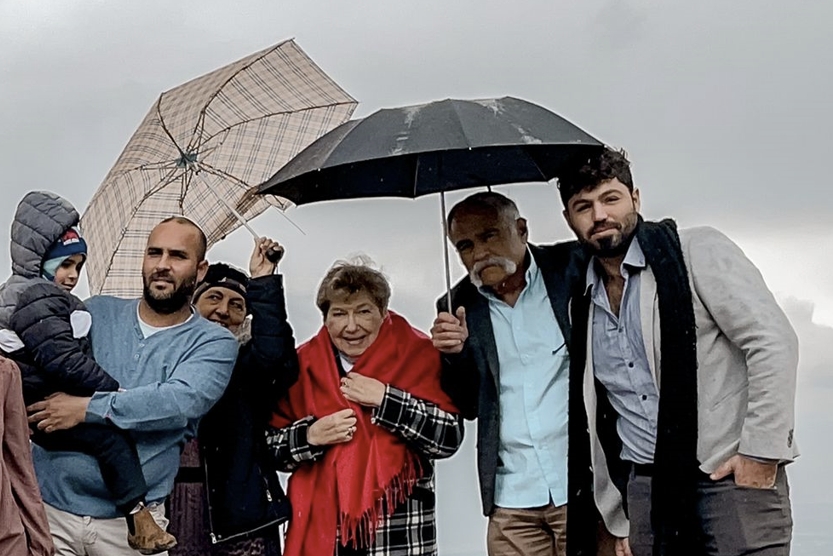 Moti and Shoshi with some of their family
 Helping Other Adoptive Families
As the years passed, Moti’s experience led him to help other families navigating adoption.
He volunteered as chairman of an Israeli adoption association, where he was able to guide adoptive parents through a process he understood intimately.
“I was happy to help from my own experience,” he says. “I could both give support and receive it.”
Today, the Zelikovich children are adults and maintain close relationships despite living in different parts of the country. Family gatherings and Shabbat visits bring everyone together, now with grandchildren as well.
Moti’s elderly mother also shares in those family occasions, witnessing a family tree that once seemed impossible.
“Maybe This Is My Life’s Mission”
Under Israeli law, adopted children can generally request access to their adoption files once they turn 18, allowing them to learn more about their biological origins.
The Zelikovich children have approached that possibility differently.
Shamerit looked into her file before getting married. Shlomi and Eti had known their biological parents and later found additional information that gave them a sense of closure. Sharya, meanwhile, has shown little interest in investigating his biological roots.
When Moti recently complimented him on something he had accomplished, Sharya jokingly replied, “I got those genes from you, Dad.”
For Moti, moments like that contain an entire world.
For years, he wondered why Hashem had chosen this particular path for him and Shoshi. Why had they needed to experience infertility? Why had building their family required so much waiting, uncertainty, and pain?
Over time, he began to see the question differently.
After a business venture failed, Moti found himself reconsidering what success and purpose meant to him.
“Maybe my purpose isn’t about making money,” he says. “Maybe my mission in life is to give—to nurture and support other people.”
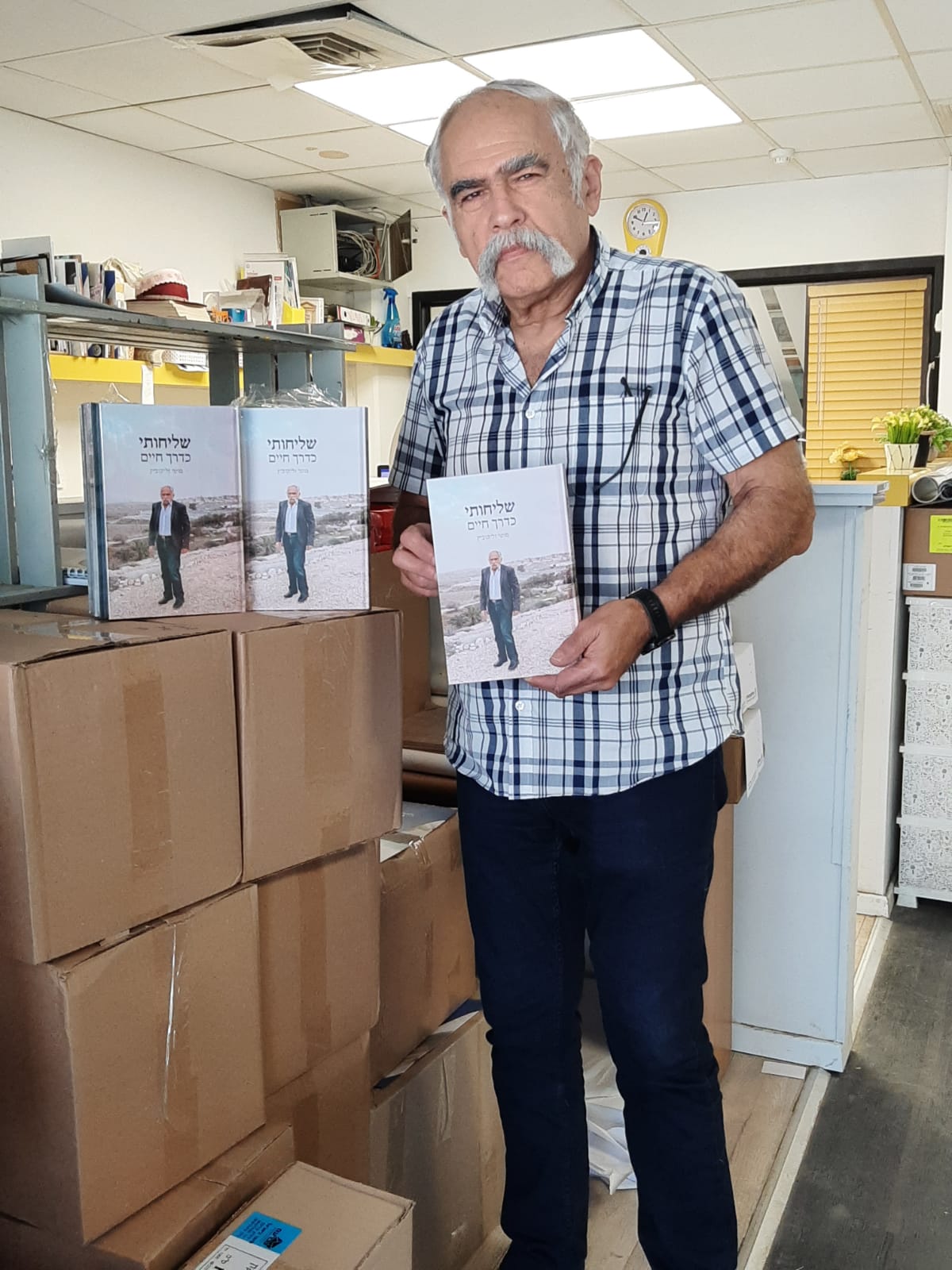 Moti presenting the book he wrote about his life
Looking back at the four children he and Shoshi were privileged to raise, the years of waiting appear very different from how they felt at the time.
The family they once imagined never came to be.
Instead, another family did.
It arrived through phone calls they could never predict, children they had never met, neighbors who rushed to prepare their home, and a journey that ultimately transformed not only four children’s lives, but their own.
What began with “crying nights and smiling days” became a home filled with children and, eventually, grandchildren—a family built through love, giving, and a path they believe Hashem chose especially for them.

