

Parashat Ki Tetse
Why Is the Yetzer Hara Compared to an Ox and a Donkey?
An ox moves with strength, while a donkey resists movement. Discover how the sages use these two animals to reveal the different ways the yetzer hara works.
- Rabbi Moshe Shainfeld
- | Updated
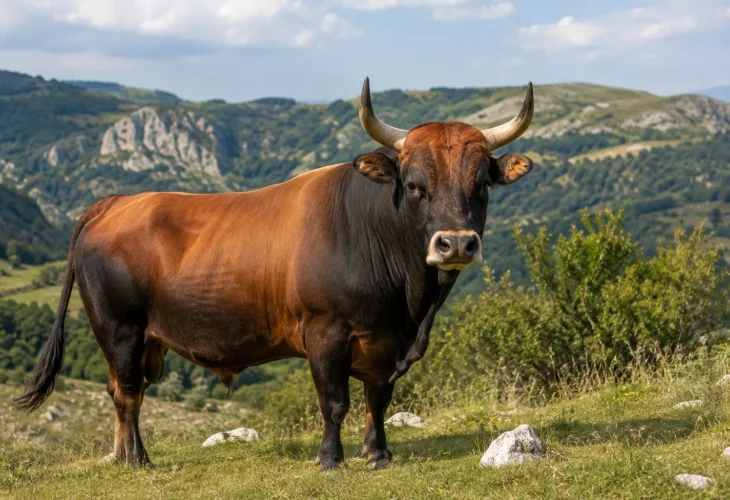
The ox and the donkey are both known as working animals. Oxen have traditionally been used for fieldwork such as plowing, while donkeys are known for carrying heavy loads, particularly over short distances.
It turns out that each of us has an “ox” and a “donkey” within us. One pushes us to act, sometimes in the wrong direction, while the other can prevent us from acting at all. Understanding these two forces can teach us something fundamental about our battle with the yetzer hara.
The Ox and Donkey Within the Yetzer Hara
Parashat Ki Tetzei is always read during the month of Elul, and it opens with the subject of a captive woman taken in war. The sages of Jewish mysticism reveal that the passage about the captive woman also refers to the human soul, which may be taken captive in a person’s battle against his greatest enemy, the yetzer hara, the evil inclination (see Or HaChaim and others).
One of the ways the prophet Isaiah describes the yetzer hara is through the “ox” and the “donkey”: “Happy are you who sow beside all waters, who send forth the feet of the ox and the donkey” (Isaiah 32:20).
On a simple level, the prophet foretells Israel’s success. Wherever they sow, they will find abundant water. The crops will grow, and they will be able to send their animals out to graze in rich pastureland (Radak, Metzudat David).
The Talmud (Avodah Zarah 5b), however, reveals another layer of meaning in this verse:
“Rabbi Yochanan said in the name of Rabbi Benaya... Fortunate are Israel: when they engage in Torah study and acts of kindness, their inclination is in their hands, and they are not in the hands of their inclination, as it is said: ‘Happy are you who sow beside all waters.’ Sowing means nothing other than charity, as it is said: ‘Sow for yourselves righteousness; reap according to kindness’ (Hosea 10:12). And water means nothing other than Torah, as it is said: ‘Ho, everyone who thirsts, go to the waters’ (Isaiah 55:1). The academy of Elijah taught: A person should always place himself before words of Torah like an ox under a yoke and like a donkey bearing a load.”
Rashi, commenting on this Talmudic passage, explains the words “who send forth the feet” as meaning: “They send away and cast off the feet of the yetzer hara that comes upon a person.”
In other words, the verse addresses our ability and obligation to cast away the yetzer hara within us, represented here by two animals: the ox and the donkey.
How does a person overcome these two forces? Through charity, represented by “those who sow,” and Torah, represented by “waters.”
But why is the yetzer hara compared specifically to an ox and a donkey?
The Ox Acts, While the Donkey Resists
An ox is distinguished by its strength, as reflected in Proverbs 14:4, while a donkey is distinguished by its ability to bear heavy burdens.
The donkey also represents physical materiality in the world, an idea discussed in many places by the Maharal. Matter, on its own, is passive rather than active. It naturally tends toward rest and requires an outside force to set it in motion.
The donkey reflects this quality. It is not known for speed or eagerness to move. Its nature resembles the nature of matter, which is drawn toward rest and must be pushed in order to act.
The verse states: “A whip for the horse, a bridle for the donkey, and a rod for the back of fools” (Proverbs 26:3).
The Alshich explains this verse through the contrasting natures of the horse and the donkey. A horse naturally wants to run and usually does not require a painful whip to make it move. A small signal may be enough. What it often needs instead is a bridle, something that restrains it and prevents it from running out of control, as the verse says, “with bit and bridle to curb it” (Psalms 32).
If a horse is constantly urged forward with a whip, it may run too quickly, making it difficult to control and placing its rider in danger.
The donkey is the opposite. It is naturally slow and reluctant to move, and therefore needs encouragement to walk. If it is restrained even further, it will become even less inclined to move.
The verse teaches that using the wrong approach produces the opposite of the desired result. The same principle applies to a fool. If we attempt to correct a person who lacks understanding in the wrong way, the result may be precisely the opposite of what we hoped to achieve.
The donkey, then, represents the tendency toward inactivity and rest. The ox represents strength, energy, and active movement.
These two animals represent two very different ways in which the yetzer hara can operate within a person.
The first is the “ox.” A person possesses strength, motivation, and the desire to act, but the yetzer hara attempts to bend that energy in the wrong direction. The person is active, but his actions are misdirected. The word yetzer is connected to the idea of forming or shaping. The yetzer hara gives a person’s actions the wrong form.
The second is the “donkey.” This represents the force within a person that seeks rest, encouraging him to remain where he is and do nothing.
One force says: Act, but act in the wrong direction.
The other says: Don’t act at all.
How Torah and Charity Fight the Yetzer Hara
We can now better understand the Talmud’s teaching: “A person should always place himself before words of Torah like an ox under a yoke and like a donkey bearing a load.”
The purpose of a yoke is to keep the powerful ox moving along the correct path. It directs the animal through the furrow so that its strength is used productively rather than allowing it to veer right or left.
Torah serves the same purpose for a person. It directs and straightens our actions: “The precepts of Hashem are upright” (Psalms 19).
A person is constantly acting. The challenge is to ensure that his energy is directed correctly, and Torah provides that direction. It places the “ox” under a yoke, channeling its strength toward the right goals.
“Like a donkey bearing a load” addresses the second form of the yetzer hara. The “donkey” tries to persuade a person to remain still and do nothing, creating opportunities for rest where rest is not needed. To overcome this tendency, a person must do the opposite. He must be willing to take on responsibility and carry a burden.
We can now understand the verse with which we began: “Happy are you who sow beside all waters, who send forth the feet of the ox and the donkey” (Isaiah 32:20).
To overcome the ox and the donkey, a person needs Torah and charity.
Torah addresses the power of the ox by directing a person’s energy and actions toward the proper path. Charity addresses the power of the donkey because charity is fundamentally an act of giving and doing, the opposite of passivity and materiality.
Matter is passive. It receives and is acted upon. When a person gives charity, however, he moves outward from himself. He becomes a giver and an active force for good. In doing so, he directly challenges the “donkey” within him that seeks only comfort, rest, and inactivity. This idea is based on the teachings of the Maharal (Netiv Koach HaYetzer) and a lesson by Rabbi Moshe Shapira.
Knowing the enemy is essential to winning any war. Parashat Ki Tetzei begins with the words, “When you go out to war against your enemies.” During Elul, when we focus on repentance and spiritual growth, this message takes on particular significance.
The battle against the yetzer hara does not always look the same. Sometimes the challenge is that our energy is moving in the wrong direction. At other times, the challenge is that we do not want to move at all.
Recognizing the “ox” and the “donkey” within us helps us understand which battle we are fighting. Torah can direct our strength, while acts of giving can move us beyond passivity. Once we understand how the enemy operates, we are already better prepared to win the war.

