

Personal Stories
Building Jewish Life in Kenya: One Couple’s Mission in the Heart of Africa
From creating a vibrant 500-member community in Nairobi to finding kosher food, welcoming travelers, and even delivering matzah to a Jewish soldier in Somalia, Rabbi Netanel and Avital Kasowitz share remarkable stories of Jewish connection, faith, and community in East Africa.
- Michal Arieli
- | Updated
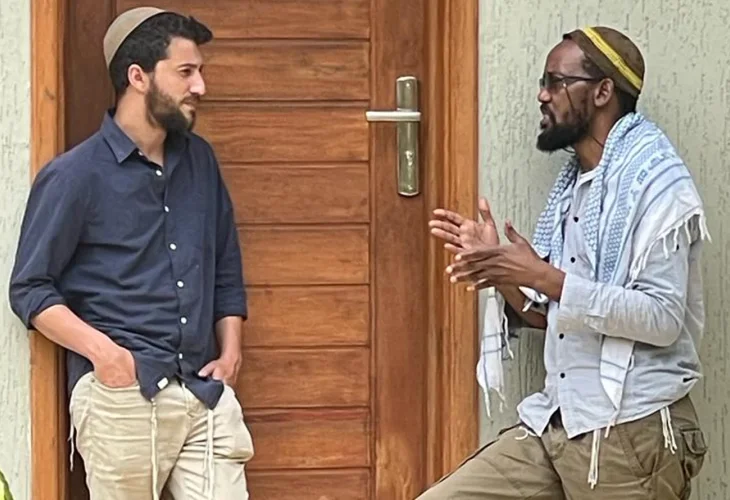 Rabbi Netanel Kasowitz with Yehuda Kahlani, head of the Yemeni community in Arusha, Tanzania, outside his synagogue
When Rabbi Netanel and Avital Kasowitz arrived in Kenya about five years ago as emissaries of the Strauss-Amiel Institute of Ohr Torah Stone, roughly 35 years had passed since the country’s last permanent rabbi had left. By the time the couple said goodbye to Africa last year and headed for their next mission in New Zealand, they had left behind a vibrant, cohesive Jewish community of about 500 members in the heart of Nairobi, along with an active synagogue and a wide network of Torah and social initiatives.
Building the community meant confronting the daily challenges of life in a developing country, from locating and connecting Jews from every background to finding creative ways to obtain kosher food in the middle of Africa. Their stories testify to the power of the Jewish spark, which can shine even in the most distant places.
During a brief visit to Israel, we met the couple for an in-depth conversation about life in East Africa and heard some of the remarkable experiences that accompanied their unusual mission.
Meeting People One on One
“We arrived in Kenya at the height of the coronavirus pandemic,” Rabbi Kasowitz recalls. “At the time, vaccines in Israel were being distributed sparingly, mainly to medical personnel and special cases. Since my wife is a nurse and I work in education, we received our vaccinations before leaving Israel, and when we landed in Nairobi, we were among the few vaccinated people in the area.”
Rabbi Kasowitz notes that Kenya’s lockdown rules differed from those in Israel. Gatherings were restricted and a nighttime curfew was imposed, but the greater fear was actually an outbreak of an Ebola strain in East Africa, a threat that worried residents even more than COVID because of the disease’s extremely high mortality rate.
“One might have expected that the first thing we would do would be to open the synagogue doors and start getting to know the community,” Avital adds. “But because that was impossible, we decided to turn the limitation into an opportunity. Instead of holding large public gatherings where it would be difficult to give anyone personal attention, we began meeting people one on one. Since we were vaccinated and less concerned about infection, we invited families and individuals to our home for in-depth conversations. That is how some of our warmest and most personal relationships with community members were formed.”
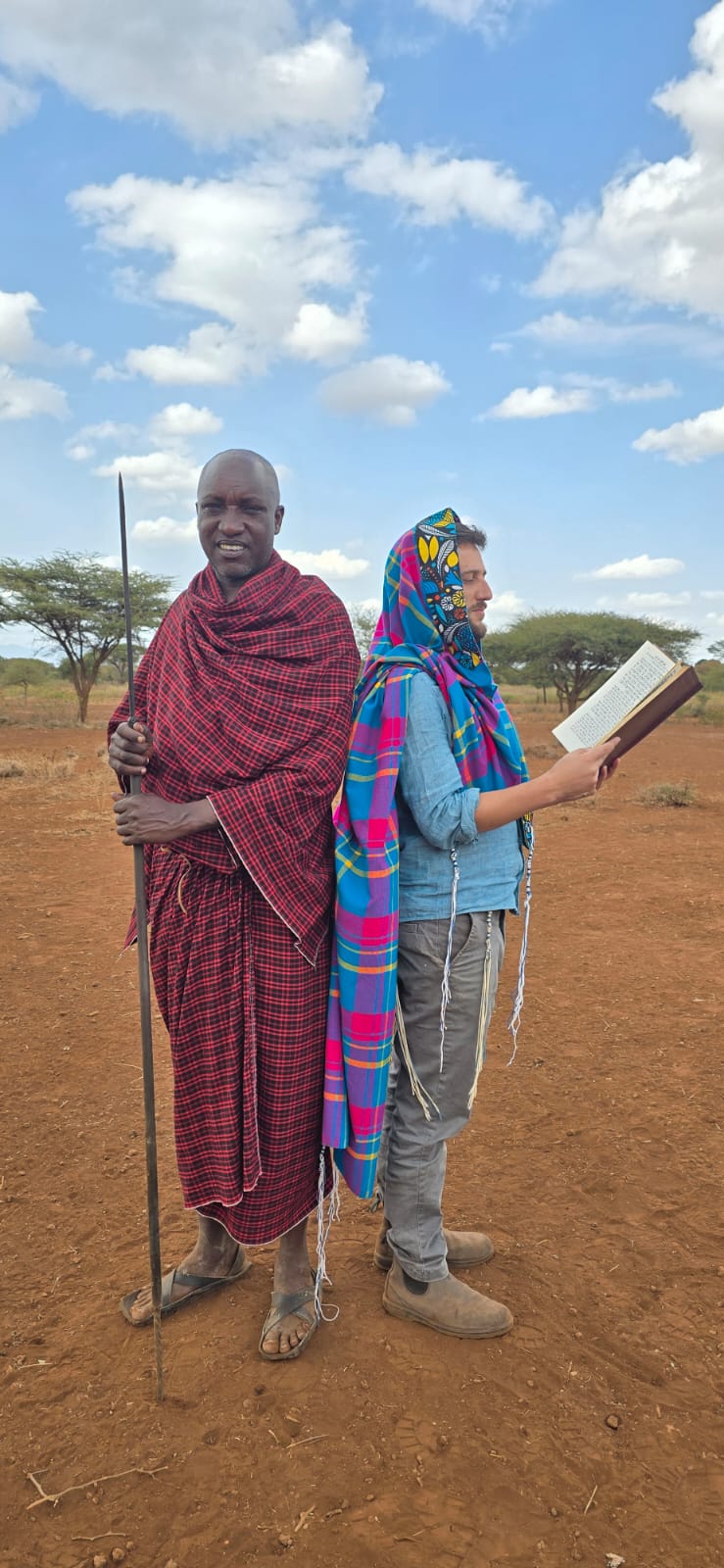 A chief of a Maasai tribe (African tribe) dressed in the tribe's clothing.
Who are the Jews living in Kenya?
“The community was officially founded in 1904, and it is probably one of the most diverse Jewish communities in the world,” Rabbi Kasowitz explains. “Some of the founders were Jews who arrived from Britain during the colonial period. At the time, the British establishment operated elitist clubs that discriminated against Blacks, Filipinos, and Jews. Since the Jews could not fully integrate into British society, they received permission to establish a community center of their own, which later became the main synagogue.
“Later, Jews who had been displaced from Europe during World War II joined that original group. The British, who prevented many Jews from immigrating to the Land of Israel, redirected some refugees to their colonies throughout Africa, thereby laying the groundwork for additional Jewish communities in the region, including neighboring Uganda.”
Africa and Israel
Living in East Africa also exposed the couple to fascinating historical links between Kenya and the Land of Israel.
“One of the most interesting stories is connected to the Uganda Plan proposed by Theodor Herzl,” Rabbi Kasowitz says. “Although the plan became known as the Uganda Plan, the proposed territory was actually located in what is today Kenya.
“During the war in Israel, I came across a fascinating article in a local newspaper asking readers to imagine what might have happened had the Jews settled in East Africa. The article revealed a historical chapter that, in my opinion, is hardly taught in Israel: the blatant antisemitism of British settlers living in the region at the time.
“When a Jewish survey delegation was sent to examine the territory as a possible temporary homeland, the local British settlers strongly opposed the idea. Their letters openly described Jews with racist and shocking slurs. In order to make sure the initiative failed, British guides reportedly led the delegation through the most dangerous routes, including hostile tribal areas and regions infested with lions, hoping to frighten them away.”
Another historical connection dates to the Jewish underground struggle against British rule in Mandatory Palestine. Hundreds of members of the Irgun and Lehi were deported to detention camps in Africa.
“Among the detainees was Yitzhak Shamir, who was imprisoned in Eritrea and later escaped in a daring overland journey before returning to continue the struggle in the Land of Israel,” Rabbi Kasowitz explains. “Other exiles were eventually transferred to the Gilgil detention camp in Kenya. To prevent escapes, the British distributed land to local families and instructed them very clearly that if they saw a white man escaping, they should shoot him because he was Jewish.
“As tensions increased, the authorities approached the local community rabbi for assistance. He established a small Jewish community and synagogue near the detention camp, and that building still stands today.”
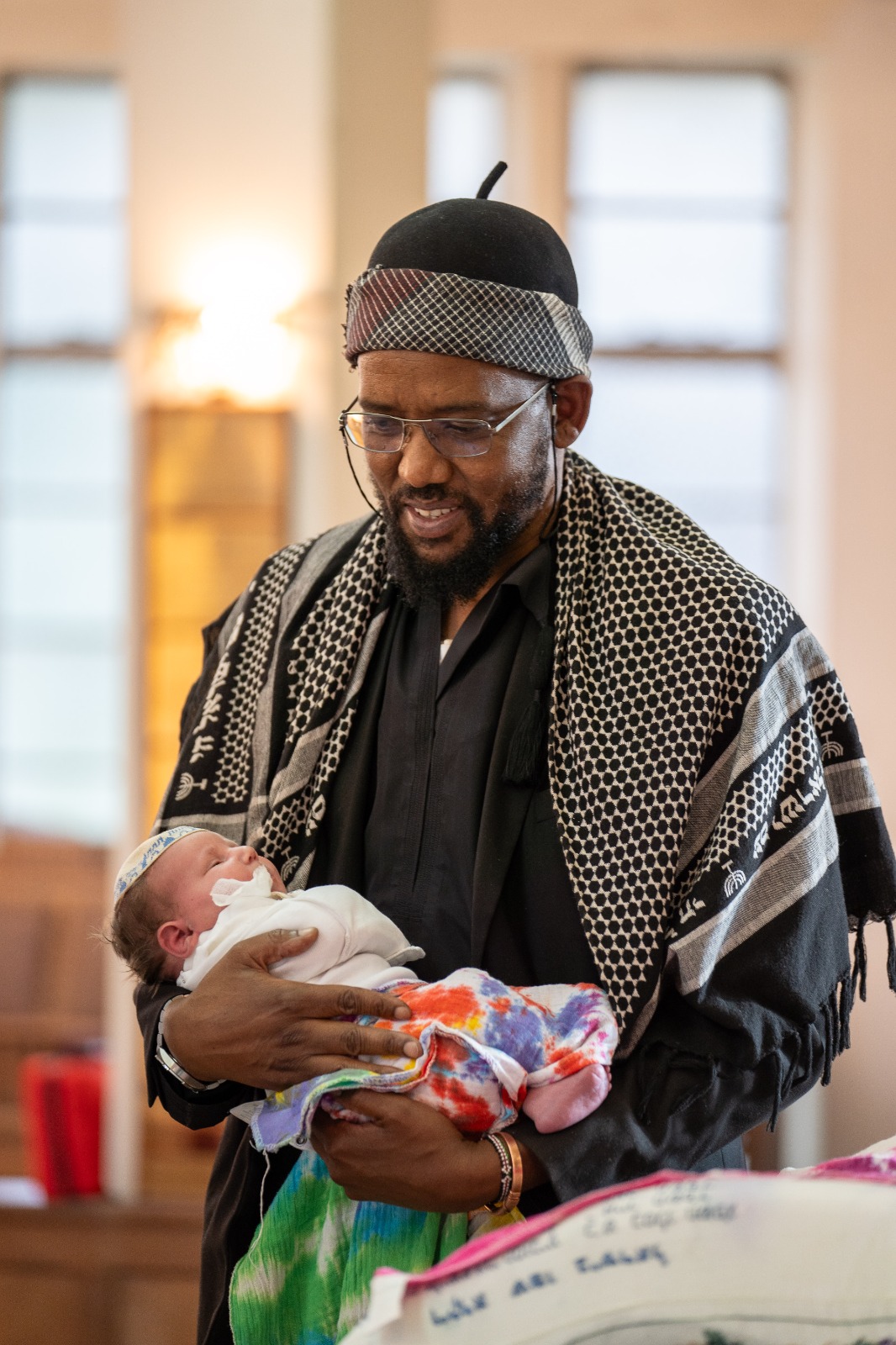 Head of the Tanzanian community, Yehuda Kahalani, godfather in the covenant of Ohev Yisrael Kasowitz (son of Rabbi Netanel)
Who belongs to the Jewish community today?
“Today’s community includes fourth- and fifth-generation descendants of those early settlers, alongside Israelis who came for business and development work. There are also diplomats, embassy employees, and staff members from international organizations. Although Kenya is often perceived as a developing country, Nairobi is a major financial and diplomatic center in central Africa and is home to one of the United Nations’ four main global headquarters.”
How do you create a unified community from such different people?
“It is a challenge,” Rabbi Kasowitz acknowledges. “Creating a framework in which everyone feels comfortable and included required a great deal of work and sensitivity. About a year ago, we completed our mission and left Kenya, and we were grateful to leave behind a vibrant community of around 500 Jews. Rabbi Yosef Zimmerman and his wife are continuing the work today, doing a wonderful job finding more Jews and expanding the community.”
Did you encounter antisemitism during your time there?
“Absolutely none,” Rabbi Kasowitz replies.
Avital agrees. “It may be one of the last places in the world where you can openly walk around as a Jew and an Israeli and people look at you with admiration. Some even stop you in the street and ask for blessings. People express tremendous warmth toward Israel and welcome you wholeheartedly.”
“At the beginning of the war in Israel, I returned for reserve duty, and the support from the local community was incredibly moving,” Rabbi Kasowitz recalls. “Pastors from different churches even sent me recordings from their Sunday sermons in which they spoke about ‘our rabbi who is fighting evil.’ After the Hamas attack on Simchat Torah, representatives of many churches contacted us to express condolences and stood firmly with Israel.
“After many meetings with religious leaders who wanted to understand Judaism more deeply, we eventually established a special Noahide community for people who were searching for truth and wanted to study seriously. We became their address for guidance.”
How did you manage sanitation, healthcare, and kosher food?
“When people hear ‘Kenya,’ they often imagine remote villages, but we lived in a very developed city,” Avital explains. “There are malls, restaurants, and everything else you need. We lacked nothing. We also had no problem obtaining kosher chicken because my husband had learned shechitah and regularly slaughtered chickens for members of the community, so we had a steady supply.”
“It was moving to see that because of the private shechitah, even community members who were not fully observant began becoming careful about kashrut,” Rabbi Kasowitz adds. “Every three months we conducted a slaughter, and each time the demand increased.”
For other food products, Avital says they made kashrut into a major project. “We visited local factories, checked ingredients, and compiled a detailed list of products that could be used. When we left, we handed over a 54-page booklet for the next emissaries and for anyone coming to East Africa who wanted to keep kosher.”
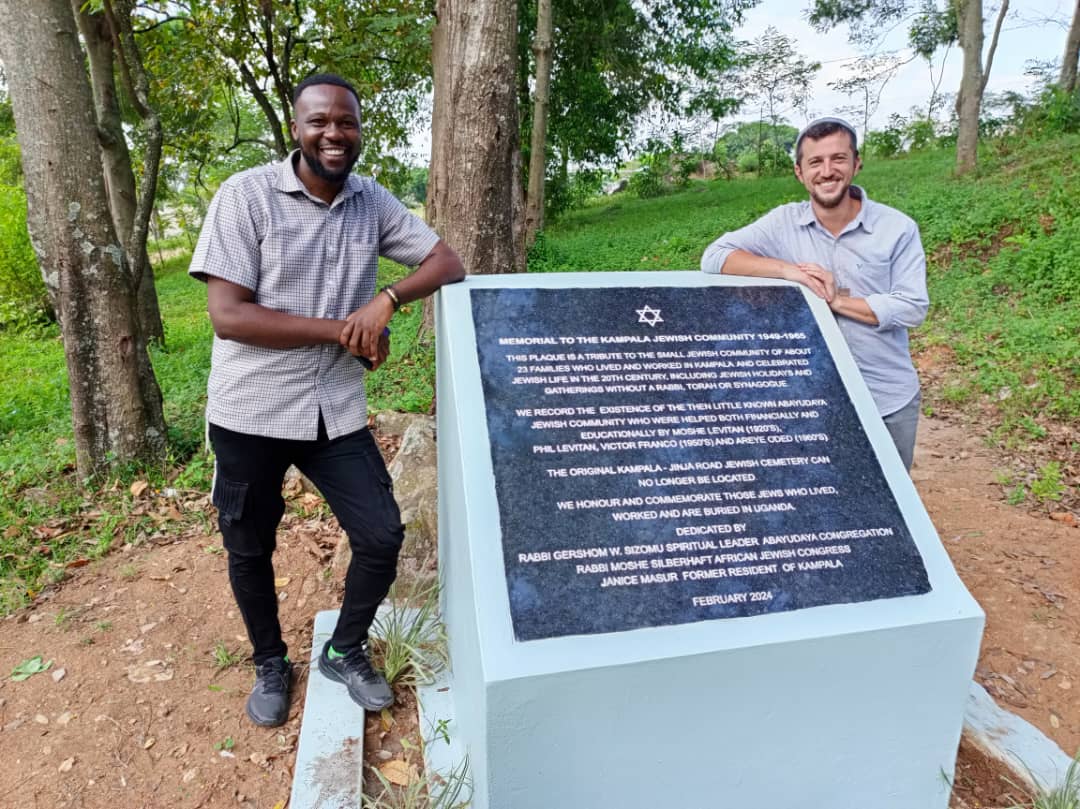 In Uganda, in establishing a monument to the Jewish community. The ceremony was attended by individuals from the Abayudaya community and tribe (converted Ugandans)
What were your Shabbat meals like?
“They were meals with dozens of participants,” Avital says.
“We had regular guests from the community who were becoming more observant, along with many Israeli travelers and embassy employees from the United States and Europe,” Rabbi Kasowitz adds. “Everyone sat around the same table: diplomats, businesspeople, Haredim, secular Jews, ideological activists from very different ends of the political spectrum, and many others.
“One sentence we heard almost every week was: ‘You won’t believe this. I just called my mother and told her I’m going to the rabbi’s house for Shabbat dinner. She was shocked and asked, “What are you going to do there? You’ve never even been to a synagogue!”’”
“And the most moving thing is that we came to Israel now specifically to officiate at the wedding of a couple of travelers who met at our Shabbat table,” Rabbi Kasowitz reveals. “They both came to volunteer in Africa through the same group and ended up eating at our home. The young man sat to my left and tried to ask the most provocative questions imaginable. But he came back the next day and again the following week.
“About six months ago, they called to tell us they were engaged. They said, ‘We never imagined having a Jewish wedding, but we want you under the chuppah. And if we are already having a chuppah, then we want kosher food too.’
“This is actually the fourth couple I have married, all of them travelers who originally said they had no interest in a religious wedding.”
The Kasowitzes still maintain close contact with hundreds of travelers who passed through their home and keep active WhatsApp groups with them. Whenever they return to Israel, they arrange reunions and reminisce about their experiences in Kenya.
“For many of them, staying with us was the first positive religious experience of their lives,” Rabbi Kasowitz says. “That moves us every time.”
Matzah for a Jewish Soldier in Somalia
Life in Africa also produced questions and situations unlike anything they had experienced in Israel.
“It was the night before the Seder, and I was in the middle of checking for chametz,” Rabbi Kasowitz recalls. “My phone kept ringing. I ignored it, but the caller kept trying. I sent a message saying I was in the middle of bedikat chametz, and the reply came back: ‘It’s urgent.’
“When I called back, they told me: ‘There is a Jewish American soldier serving in Somalia, and he has no matzah. You are the only person in the region who can help him.’
“The problem was enormous. Somalia is not only far away, but one of the most dangerous countries in the world. How do you get matzah from Kenya to Mogadishu?
“Then, in an extraordinary act of Divine Providence, exactly an hour later, a Somali man knocked on our door. I explained the mission to him: ‘These matzahs need to reach Mogadishu, where a driver will be waiting after traveling five hours specifically to pick them up from the airport.’ The matzahs passed from hand to hand until they ultimately reached the American soldier only moments before the Seder began.”
Rabbi Kasowitz says there were hundreds of stories like that.
“Because of our geographical location and because we were often the only Jewish address in the region, we had opportunities to help Jews in almost every imaginable situation: detention camps, remote hospitals, and many other places.
“Over five years, we discovered that leaving behind the familiar and comfortable to serve as emissaries in Africa is not only about teaching Judaism. It is about meeting the Jewish people in the most unexpected places and discovering that the Jewish heart is always beating, and very often waiting just for you.”

