

Sukkot
The Greatest Segulah for Simchat Torah: Rejoice in the Torah
Why is Simchat Torah considered such a powerful time for joy and prayer? Discover the segulot and teachings associated with this extraordinary day.
- הרבנית חגית שירה
- | Updated
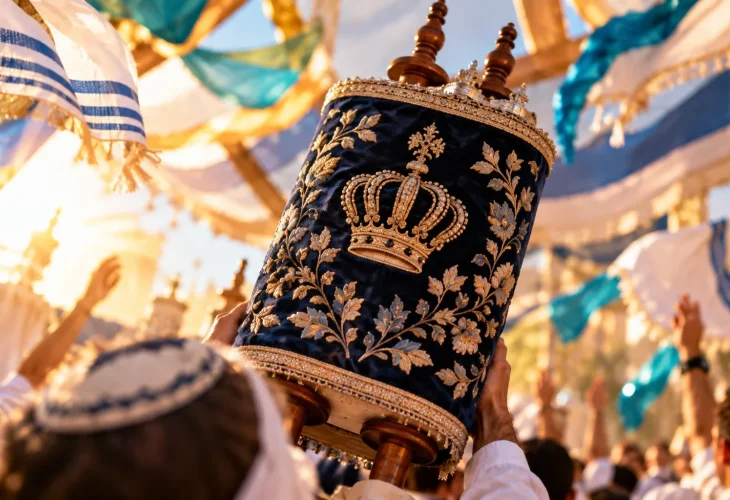
Shemini Atzeret is a festival in its own right, separate from the seven days of Sukkot. According to Kabbalah, the heavenly notes written on Rosh Hashanah, signed on Yom Kippur, and sealed on Hoshana Rabbah are delivered on this day. Through the extraordinary joy of Shemini Atzeret, judgment can be sweetened and blessing brought to the work of our hands.
A long period of closeness to Hashem is now drawing to an end. For 51 days, beginning with Rosh Chodesh Elul, we have moved through Elul, Rosh Hashanah, Yom Kippur, and Sukkot. Now it is difficult to part.
Our sages describe Hashem as saying, “Your parting is difficult for Me.” This is the meaning of Atzeret: one more day to pause, remain close, and absorb the holiness before returning to everyday life.
According to Kabbalah, Shemini Atzeret represents the culmination of the spiritual work that began on Rosh Chodesh Elul. And how does that work reach its completion? Through joy.
The Extraordinary Joy of Simchat Torah
In Israel, Shemini Atzeret and Simchat Torah are celebrated on the same day, while in the Diaspora, Simchat Torah is celebrated on the following day. On Simchat Torah, we have the privilege of completing the annual cycle of Torah reading, a moment of immense and profound joy.
The holy Zohar describes the unique closeness of this time: “This day is set aside for Israel alone with our Father in Heaven, to pause and take one another in, and whatever a person asks and requests from the Master of the World, He will answer and fulfill that request.”
Our sages spoke of great merits associated with making a sincere effort to rejoice and dance before the Sefer Torah on this day. The Yesod VeShoresh HaAvodah writes: “Anyone who is careful about the joy of Torah on this day can be assured that Torah will not cease from his descendants.”
The segulah of Simchat Torah, then, is beautifully simple: Rejoice in the Torah.
The joy is not limited to those dancing with the Torah scrolls. Women, too, can participate in the celebration from the women’s section, clapping and dancing with joy while maintaining the appropriate separation.
According to kabbalistic teachings, when clapping, one should strike the right palm against the left, symbolically strengthening the attribute of kindness over the attribute of strength. The right is strengthened over the left, subduing the yetzer hara that seeks to prevent us from experiencing the joy of this holy day.
A Powerful Time for Prayer
Express your love for the Sefer Torah and rejoice with it wholeheartedly. According to the tradition cited here, rejoicing with the Torah on this day is associated with blessings for livelihood, children, shidduchim, contentment, joy, and blessing throughout the year.
Rabbi Chaim Palagi writes that a person should be especially careful with their prayers on Simchat Torah, describing it as an exceptionally favorable time for prayer: “Among all these days, there is no day more favorable before Hashem for Hashem to hear a person’s prayer for whatever they need than this day.”
Rabbi Mordechai of Nadvorna also emphasized the importance of completing the Book of Tehillim on this day, while the holy Baal Shem Tov taught that a person who prays with kavanah on this day will merit to pray with kavanah throughout the year.
After weeks of reflection, teshuvah, prayer, and spiritual work, this final stage is marked not by solemnity, but by joy. Simchat Torah invites us to dance, pray, and express our love for the Torah, carrying that joy and connection with us into the year ahead.

