

For the Woman
Conditioner or Hair Mask? Here’s What Your Hair Actually Needs
Should you use conditioner, a hair mask, or both? Learn the difference between them and how to choose the right option for your hair type.
- תהילה כהן
- | Updated
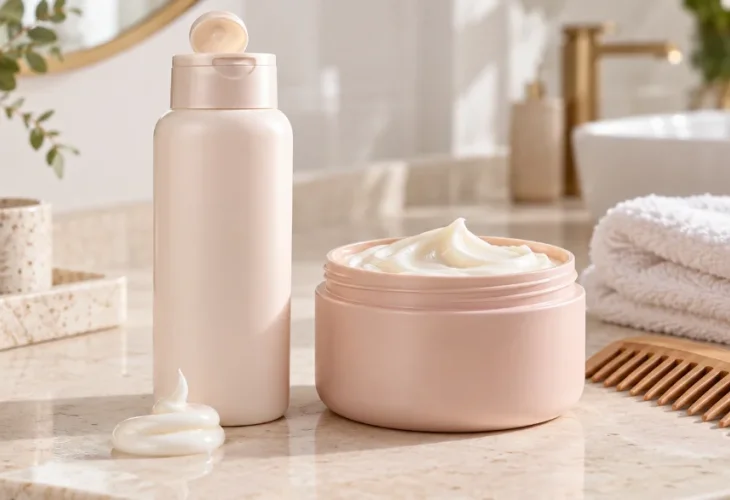
After shampooing comes the question: Should you use conditioner, reach for a hair mask, or use both? The answer depends on your hair type, its condition, and the product you are using.
Conditioner is designed primarily for regular use. It coats the hair shaft, reduces friction, makes detangling easier, and leaves hair feeling softer and smoother. Most conditioners are relatively lightweight and need to stay on the hair for only a few minutes.
A hair mask, on the other hand, is usually thicker and richer. It provides extra conditioning and moisture, making it particularly useful for dry, thick, curly, color-treated, or damaged hair, as well as hair that is regularly exposed to heat styling.
Which One Is Better for Your Hair?
For normal or fine hair, using conditioner after shampooing may be all you need. Using a rich hair mask too frequently can weigh fine hair down, reduce volume, or leave it looking greasy.
Dry, thick, curly, color-treated, or damaged hair may benefit from a hair mask once or twice a week, depending on the hair’s needs and the product instructions. For other washes, regular conditioner is usually enough.
There is no universal winner. The better choice is simply the one that suits your hair type and what your hair needs at the time.
Can a Hair Mask Actually Repair Damaged Hair?
A hair mask can significantly improve the way damaged hair looks and feels. It can reduce roughness, increase softness, and make hair easier to manage. However, significantly damaged hair cannot fully repair itself.
Hair products can coat the hair shaft, temporarily smooth damaged areas, and help protect the hair from further friction and breakage. This can make damaged hair look and feel healthier, but a mask cannot permanently repair split ends. Once the ends are badly split, trimming them is the only way to remove the damage completely.
Should You Use Conditioner and a Hair Mask Together?
In most cases, there is no need to use both during the same wash. A rich hair mask can usually take the place of conditioner that day. Layering both products may be unnecessary and, particularly for fine hair, can leave the hair feeling heavy or flat.
However, there is no single rule that works for everyone. If the manufacturer recommends using the products together, or your hair is especially dry and responds well to both, you can use them in the same routine.
How to Use Conditioner and Hair Masks Correctly
After shampooing, gently squeeze excess water from your hair. If your hair is soaking wet, the product may become diluted and may not distribute as effectively.
Apply the conditioner or mask from the mid-lengths to the ends, concentrating on the driest areas. There is usually no need to apply it directly to the scalp unless the product is specifically designed for scalp use.
Leave the product on for the amount of time recommended on the packaging, then rinse thoroughly. Keeping a hair mask on for longer than instructed does not necessarily produce better results.
Is Your Hair Product Too Heavy?
Your hair can often tell you whether a product is working for you. If it looks greasy, flat, sticky, or lacking in volume after drying, you may be using too much product or a formula that is too rich for your hair type.
If your hair still feels rough, tangles easily, or is prone to breakage, it may benefit from a richer conditioning product. Reducing heat styling and trimming damaged ends can also help improve its overall appearance and manageability.
Ultimately, conditioner and hair masks do not have to compete for a place in your routine. Conditioner is a practical choice for regular maintenance, while a hair mask can provide extra conditioning when your hair needs it. The key is paying attention to how your hair responds rather than assuming that a richer product will always give better results.

