

Sukkot
5 Fascinating Facts About the Etrog You May Not Know
Discover the etrog’s surprising history, traditional segulot, role in Jewish life, and unique place in Sukkot tradition
- Orit Grosskot
- | Updated
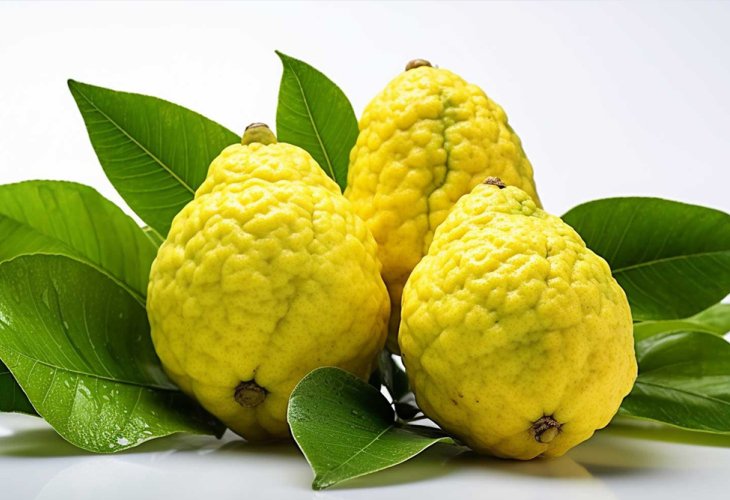
Have you purchased a beautiful etrog for Sukkot and found yourself wondering about the meaning behind this remarkable fruit? Beyond its central role in the mitzvah of the Four Species, the etrog has a rich history, deep spiritual significance, and a surprising place in Jewish tradition.
Following are five fascinating facts about the regal yellow fruit resting in your etrog box.
1. The Etrog in the Talmud and Jewish Tradition
The etrog is one of the Four Species taken on Sukkot, alongside the lulav, hadassim, and aravot.
The Talmud identifies the Biblical phrase “pri etz hadar” — “the fruit of a beautiful tree” — with the etrog: “Our Rabbis taught: ‘The fruit of a beautiful tree’ refers to a tree whose wood and fruit have the same taste. Which is it? The etrog.”
The etrog also appears in traditional Jewish writings in connection with health and healing. Maimonides is cited as praising its medicinal qualities and describing various uses for the fruit, leaves, and tree.
Because modern etrogim are often treated with pesticides and other agricultural chemicals, however, anyone planning to consume an etrog should wash and prepare it carefully and ensure that it is suitable for eating.
2. A Traditional Segulah for an Easy Birth
One well-known custom is to prepare etrog jam or preserves after Sukkot.
Some pregnant women eat these preserves as a segulah (spiritual merit) for an easy delivery, while women hoping to have children have also traditionally eaten etrog preserves as a segulah to be blessed with healthy offspring.
This custom is mentioned in a number of Jewish works. Rabbi Yaakov Chaim Sofer writes in Kaf HaChaim (Orach Chaim 664:60) that it is customary to prepare the etrog with sugar and serve it on Tu Bishvat, the New Year for Trees, together with the other fruits eaten that evening.
He adds that there is a special merit for a pregnant woman to eat preserves made from an etrog that was used for the mitzvah of Sukkot, as a merit for an easier birth.
3. The Great Etrog Boycott
The etrog also has an intriguing chapter in Jewish economic history.
In 1852, Greek growers in Parga and Corfu joined forces and sharply raised the price of etrogim, assuming that Jewish communities would have no alternative but to purchase from them.
Jewish etrog merchants responded by organizing a boycott. With rabbinic approval, they agreed not to purchase Greek etrogim that year.
A committee of ten was formed, headed by Rabbi Avraham Yitzchak Maskil, Av Beit Din of Smalyavichy. Instead of relying on the Greek crop, the merchants sourced etrogim from the Land of Israel, Genoa, Corsica, and Morocco.
Their coordinated effort allowed Jewish communities to avoid the inflated prices and prevented the growers from taking advantage of a religious necessity.
4. The Development of the Etrog Industry in Israel
By the early twentieth century, etrog cultivation had also become an important part of Jewish agriculture in the Land of Israel.
In 1905, Jewish etrog growers joined together to establish the Pri Etz Hadar association under the supervision of Rabbi Avraham Yitzchak Kook. Rabbi Kook pledged his support and agreed to provide kosher certification to growers who met the halachic standards he established.
Over the years, the cultivation and export of etrogim developed into a significant agricultural and commercial enterprise in Israel, supplying Jewish communities around the world before Sukkot.
5. More Than a Beautiful Fruit
The etrog has also attracted interest for its nutritional and medicinal properties.
Like other citrus fruits, it contains antioxidants and various vitamins and minerals. Antioxidants help protect cells from oxidative damage, a process associated with a range of chronic conditions.
The etrog has also been studied for possible anti-inflammatory, antibacterial, and antifungal properties. In traditional and complementary medicine, it has been used in connection with respiratory ailments, infections, and general immune support.
Its medical benefits should not be overstated, and traditional uses should not replace professional medical treatment. Still, it is striking that a fruit treasured for centuries for its spiritual significance has also long been associated with physical well-being.
From the pages of the Talmud to Jewish farming in the Land of Israel, from age-old customs to modern research, the etrog carries a story far richer than its elegant appearance suggests. When you hold one on Sukkot, you may find yourself appreciating not only its beauty, but the centuries of tradition, history, and meaning contained within it.

