

Sukkot
What Should You Do With Your Etrog After Sukkot?
From saving your lulav for burning chametz to eating your etrog on Tu BiShvat, discover what you can do with the Four Species after Sukkot.
- Yonatan HaLevi
- | Updated
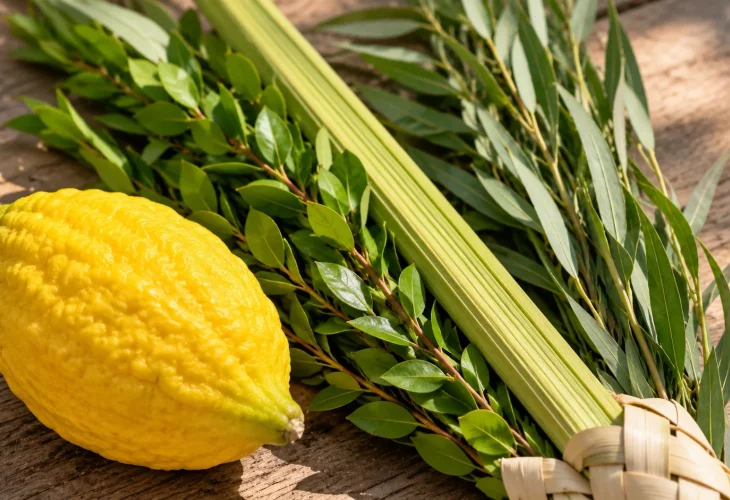
There is an expression about “etrogs after Sukkot,” referring to something whose moment has passed and that is no longer considered useful or valuable.
But in Jewish tradition, the story of the etrog and the other Four Species does not necessarily end when Sukkot is over.
Objects that have been used for a mitzvah should be treated with respect even after their primary use has ended. Our sages also speak of the special significance of shiyurei mitzvah, the remnants of a mitzvah.
So what should you actually do with your lulav, etrog, hadassim, and aravot after Sukkot? And what traditional segulot have become associated with them?
What Can You Do With the Four Species After Sukkot?
1. Don’t use them for something else while the mitzvah still applies
While an object is still designated and fit for its mitzvah, it should not simply be taken and used for an unrelated purpose.
This principle applies to items designated for various mitzvot and, during Sukkot, to the sukkah and the Four Species.
Once the period of the mitzvah has ended, however, their status changes.
2. They do not have inherent holiness, but they should still be treated respectfully
After their mitzvah has been completed, items such as the Four Species do not have the same status as objects possessing inherent kedushah, such as a Sefer Torah.
Nevertheless, halachic sources emphasize that objects used for a mitzvah should not be treated disrespectfully once we have finished using them.
For that reason, many have the custom not to simply throw the Four Species directly into the garbage.
3. Allowing them to dry naturally is one option
The Four Species may be set aside and allowed to dry out naturally. They may also be placed somewhere they will not be treated disrespectfully as they are eventually discarded.
The underlying idea is simple: something that helped us perform a mitzvah deserves a respectful ending.
4. Don’t turn them into something degrading
A dried lulav or old s’chach should not be turned into something that would constitute a disrespectful use, such as a sleeping mat or floor covering.
Ordinary uses that are not degrading, however, may be permitted once the mitzvah has ended. One familiar example is using an etrog to make jam.
5. What about the aravot from Hoshana Rabbah?
In some communities, there is a custom of placing the aravot used for the hoshanot on top of the Aron Kodesh.
Some halachic authorities objected to this practice, particularly when the branches are thrown there carelessly and then discarded in the garbage a few days later.
Again, the concern is not that the branches themselves possess inherent holiness, but that an object used for a mitzvah should be treated with respect.
6. Use one mitzvah object for another mitzvah
A beautiful custom is to save an object used for one mitzvah and later use it to help perform another.
For example, some save the dried lulav and use it when burning chametz before Pesach, or as fuel in connection with baking matzah. Hadass leaves may also be saved and added to the spices used for Havdalah.
In this way, an object that has already served one mitzvah is given another opportunity to be used for something meaningful.
7. What about the special segulot associated with them?
Beyond the practical halachot, generations of Jewish communities have preserved various segulot involving the Four Species after Sukkot.
These are traditional practices recorded in different Jewish sources and should be understood as segulot rather than guarantees of a particular result.
Here are seven of the best known.
1. Aravot as a Segulah for Protection
Rabbi Chaim Palagi wrote about keeping the beaten aravot from Hoshana Rabbah as a segulah for protection while traveling.
He writes that a person traveling should take some of the beaten willow with him. If he finds himself in a dangerous situation without it, he should remember where the aravot are kept in his home.
It is also related that the Or Sameach would give remnants of the beaten aravot to soldiers as a segulah for protection.
Based on this tradition, some people keep willow leaves with them while traveling or in their cars.
2. Aravot as a Segulah for Livelihood
Keter Shem Tov records a practice of placing leaves from the beaten aravot inside one’s wallet as a segulah for success in business and livelihood.
As with other segulot, this is a traditional practice and not a substitute for practical effort, prayer, or responsible financial decisions.
3. Aravot as a Segulah Against Fear
Another tradition concerns fear and troubling dreams.
Yafeh LaLev mentions placing leaves from the beaten aravot beneath the pillow of someone troubled by frightening dreams.
Rabbi Nachman of Breslov’s Sefer HaMiddot also mentions aravot as a segulah connected with overcoming fear.
4. Aravot and a Stormy Sea
An unusual tradition appears in Vayikra Avraham, which mentions throwing leaves from the beaten aravot into a raging sea as a segulah for calming it.
This is, of course, a traditional segulah and should not be understood as a replacement for following safety instructions in dangerous weather or at sea.
5. Keeping the Lulav at Home
A tradition cited in the name of the Chida recommends keeping the lulav near the entrance of the home as a segulah for protection.
For those who follow this custom, the dried lulav can therefore remain meaningful long after Sukkot has ended.
6. The Etrog and a Segulah for an Easy Birth
One of the best-known traditions involving the etrog concerns pregnancy and childbirth.
Nazir Shimshon on Tractate Sukkah records a custom in which a pregnant woman removes the pitom from the etrog, gives tzedakah according to her ability, and prays to Hashem for a safe and peaceful birth and a healthy child.
The custom is connected to the opinion that the Tree of Knowledge was an etrog.
Maran Rabbi Ovadia Yosef z”l writes in Chazon Ovadia that this practice should be performed only after Simchat Torah. Until the completion of the holiday, the etrog remains designated for its mitzvah and should not intentionally be rendered invalid.
A traditional prayer associated with the custom reads:
“Master of the Universe, it is revealed and known before You that because Chava ate from the Tree of Knowledge, through her sin she caused death to come into the world and the pains of childbirth. And had I been there at that time, I would not have eaten from it, nor would I have derived any benefit from it at all, just as I did not wish to render this etrog invalid throughout all the days of the holiday that have passed. Now that I have rendered it invalid because its mitzvah has been completed, I would not have transgressed Your commandments. Accept favorably my prayer and my supplication, that I should not die due to pregnancy or childbirth, and save me so that the birth may be easy and peaceful, without pain or difficulty, and that neither I nor the child should suffer any harm, for You are the saving G-d.”
7. Eating the Etrog on Tu BiShvat
Finally, there is a tradition cited in the name of the Yehudi HaKadosh that eating an etrog on Tu BiShvat is a segulah for completing the year.
The custom is cited in Ohel Yissachar.
Some people therefore preserve their etrog after Sukkot, turning it into jam or another edible preparation that can be saved until Tu BiShvat.
So before automatically throwing away your Four Species when Sukkot ends, remember that their story may not be finished.
Whether you save your lulav for burning chametz, use your hadassim for Havdalah, turn your etrog into jam, or follow one of the traditional segulot, the underlying idea is the same: something that helped us perform a mitzvah deserves to be treated with respect even after the holiday has passed.

