

Magazine
From 11 Seizures a Day to 3 Years Without One: A Journey of Faith
Epilepsy shaped Galit Shira Elul’s life from childhood, affecting her work, motherhood, and independence. After major brain surgery and a difficult recovery, she is now marking three years without a seizure.
- Moriah Luz
- | Updated
The sound of babies cooing surrounded Galit Shira Elul that morning. After years of moving from job to job, she was trying out work as a caregiver at a daycare center. For three hours, she fed babies, changed them, played with them, and sang to them.
Then she left the daycare and suffered another epileptic seizure.
“I cried when I thought about what could have happened if I had been holding a baby,” she recalls. Out of a sense of responsibility, she immediately gave up the job.
It was one of countless moments in a lifetime shaped by epilepsy. As a child, Galit Shira endured frequent seizures, hospitalizations, injuries, and cruel comments from other children. As an adult, she says she sometimes experienced between seven and 11 seizures a day.
Then came major brain surgery, a difficult rehabilitation, and an outcome that changed her life.
Today, at 54, Galit Shira is marking three years without a single seizure. “When I tell people, they don’t believe me,” she says emotionally. “For me, it wasn’t only the surgery. It was an enormous miracle. My Father in Heaven saved me.”
She says it was her neurologist who encouraged her to share her story publicly. “He told me I had to tell the story of my miracle so I could give strength to other patients like me.”
“Why Do You Suddenly Fall?”
Galit Shira experienced tragedy before she was old enough to understand it. Her father was killed in the Yom Kippur War when she was just 20 months old.
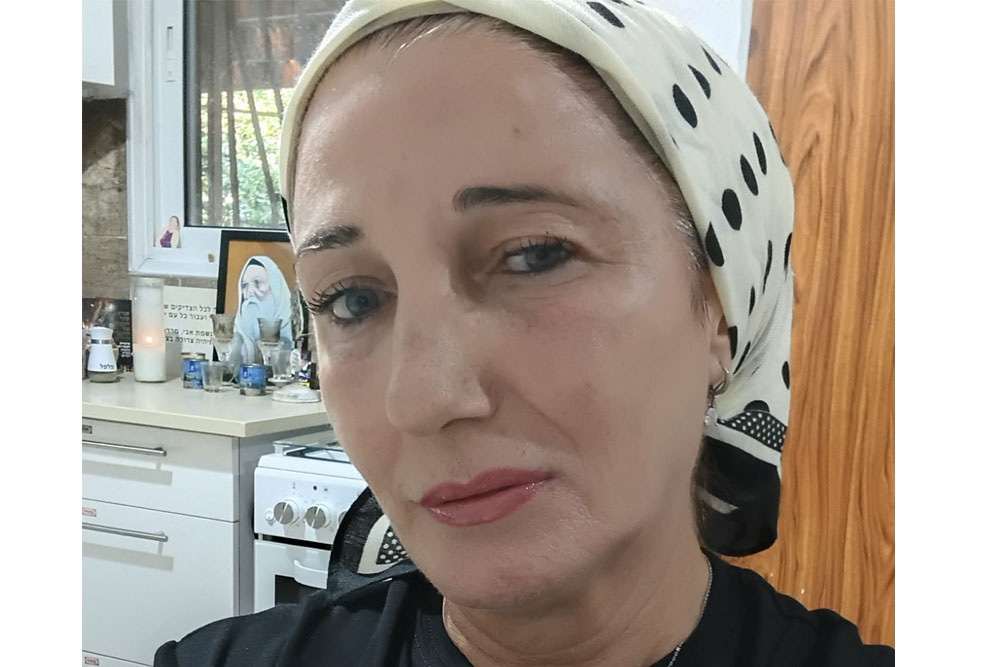
“My mother was 20 years old and was left with two babies, me and my twin brother,” she says. “The absence of a father was always there. Even now, while I’m talking to you, I’m looking at his picture.”
Her first known epileptic seizure occurred when she was around nine. She was playing outside with friends when the children jumped over a garden fence, angering a nearby gardener. He approached from behind and shouted at them.
“Suddenly, I fell to the ground,” she recalls.
The other children laughed. Embarrassed, Galit Shira did not tell her mother what had happened, or about the falls that followed. Eventually, her mother discovered what was happening, took her for medical testing, and Galit Shira was diagnosed with epilepsy.
“There was a terrible lack of confidence,” she says. “There were social difficulties too, because friends would laugh at me and ask, ‘Why do you suddenly fall?’”
The seizures could also put her in serious physical danger. On one occasion, she fell approximately seven meters while sitting on a fence with friends. During another seizure at home, she crashed into an oven and shattered its glass.
“I was covered in glass, and then I heard my mother coming up the stairs,” she recalls. “I felt guilty, so the moment she walked in, I said, ‘Mom, I’m sorry.’ My whole face was covered in blood. She was terrified.”
Galit Shira says periods of emotional distress often seemed to coincide with her seizures as well. “I barely remember my childhood because I repress so much of it,” she says quietly. “It was a very difficult childhood.”
Her mother carried much of the burden alongside her, taking her from hospital to hospital and through repeated admissions. “I spent more time in hospitals than I did at home,” Galit Shira says. “And honestly, I wasn’t an easy child. I was suffering socially, and I took a lot of my pain out on my mother.” Today, she says, she often asks her mother to forgive her for those difficult years.
When Her Daughter Had to Watch Over Her
Galit Shira eventually married, had a daughter, and later divorced. But the epilepsy continued to dominate her daily life. As an adult, she says she experienced between seven and 11 seizures a day, making steady employment extremely difficult.
Raising a child under those circumstances brought another kind of pain. “From a young age, instead of me watching over my daughter, she had to watch over me,” Galit Shira says.
Because of her epilepsy, she mostly traveled by taxi. But there were times when she would suddenly become dizzy or unwell in the middle of a journey and have to return home. “I think she missed out on a lot because of me,” she admits.
At the time, Galit Shira says she did not fully recognize what her daughter was experiencing. She was struggling so much herself that she was focused on getting through each day.
“I only really understood what she had gone through after I recovered,” she says. Today, their relationship is strong, and her daughter is now a mother of two. “She lives far away, but she took values from our home. She has a special faith in the Creator of the World.”
At 48, She Discovered Tehillim
About six years ago, after decades of living with epilepsy, Galit Shira's condition deteriorated to the point that doctors recommended brain surgery. The first operation did not bring the improvement she had hoped for.
“I came out of rehabilitation in worse condition than I had been before,” she says.
Yet it was during this extraordinarily difficult period that another transformation began. Galit Shira had grown up in a home far removed from religious observance, with most of her limited familiarity with Judaism coming from her religious grandmother.
While she was hospitalized, a religious acquaintance visited her and brought her a book of Tehillim. She was 48 years old.
“I didn’t even know what it was,” she says with a laugh. “I started reading, and every few minutes I would call him and ask, ‘What does this verse mean? And what does this one mean?’”
His answer was always similar: “Your Father in Heaven wants you to come closer to Him.”
Something began to change. “My soul cried upward,” Galit Shira says. “I felt that something was missing, even though I didn’t yet know what it was.”
During rehabilitation at Loewenstein Hospital, she observed Shabbat for the first time in her life.
Her new commitment was soon tested. At the time, Galit Shira worked as a waitress at a busy beachfront restaurant and had arranged to finish her Friday shifts two hours before Shabbat.
One particularly busy Friday, however, her shift manager refused to let her leave. “I decided I was leaving no matter what, even if it meant I would never work there again,” she recalls. “I earned very good money there, but observing Shabbat mattered more to me.”
She left.
Seven years later, she says, the restaurant owner and his family have themselves become religious and now observe Torah and mitzvot.
The Surgery That Changed Everything
A year after her first operation, Galit Shira returned for extensive neurological monitoring. “I was connected to electrodes for five days, and they recorded major seizures one after another,” she recalls. Doctors ultimately recommended another brain operation.
She entered surgery hoping it would finally reduce the relentless seizures. But when she emerged, she faced serious new challenges.
For a long period, Galit Shira used a wheelchair. She experienced significant difficulty moving her hand and leg and struggled to speak. “There was a long period when I couldn’t speak properly,” she says. “I was like a little child.”
She began singing and doing exercises as part of her efforts to regain her abilities. The rehabilitation was grueling.
But something extraordinary had also happened: the seizures stopped.
Three years later, Galit Shira says she has not experienced another one. She expresses particular gratitude to Dr. Felix Benninger and Dr. Idit Tamir, who were involved in her medical care, while describing her own recovery through the lens of faith.
“The medical team was surprised by how optimistic and strong I was,” she says. “I told them it wasn’t coming from me. It came from the Creator of the World.”
Her rehabilitation reflected that determination. After progressing from a wheelchair to a walker, she remembers reaching a moment when she decided she no longer wanted to depend on it.
“One day, I simply threw the walker aside in the ward and said, ‘I don’t need it anymore,’” she recalls. “Sometimes a person has to do something extreme to get through something. I didn’t want to become convinced that the walker was what was holding me up. The One who truly holds us up is the Creator of the World.”
“Father, Take Me Upstairs”
Life without the constant fear of another seizure has given Galit Shira something she lacked for much of her life: confidence.
“Sometimes people who know me will say, ‘Be careful,’” she says. “And I smile and answer, ‘But I don’t have epilepsy.’”
After decades of seizures, injuries, hospitalizations, and limitations, three seizure-free years have transformed her life. But when Galit Shira tries to explain what gives her strength today, she remembers a much quieter moment.
Her mother lived on the seventh floor of an apartment building. One Shabbat, Galit Shira arrived to find the building completely dark.
“I couldn’t see anything,” she recalls. “So because it was so dark, I closed my eyes and said, ‘Father, take me upstairs.’”
For Galit Shira, those few words capture everything she has learned.
“That, to me, is faith,” she says. “And that is the secret that gives me strength for everything.”

