

World News
German Town Halts New Holocaust Memorial Stones, Drawing Israeli Criticism
The Heidenau city council voted to stop installing new Stolpersteine in streets and sidewalks, prompting criticism from Israel’s ambassador to Germany and Jewish organizations.
- Shlomo Hodges
- | Updated
 Illustration
A German town has voted to stop installing new Stolpersteine memorial stones in public streets and sidewalks, prompting criticism from Israel’s ambassador and Holocaust remembrance groups.
The city council of Heidenau, a town near Dresden in the eastern state of Saxony, approved the measure on Thursday by 13 votes to six, with one abstention.
Council members from the Christian Democratic Union, Alternative for Germany and a local citizens’ group submitted the proposal.
Under the decision, Heidenau will reject future requests to install Stolpersteine in public roads and sidewalks. The council instead called for a memorial area to be established, preferably at the town’s North Cemetery, where visitors would not walk directly over the names of victims.
Supporters of the measure argued that placing victims’ names in the pavement can be disrespectful because pedestrians walk over them. However, some Jewish figures in Germany have previously raised similar objections, including Holocaust survivor Charlotte Knobloch. Knobloch criticized the Heidenau decision and said removing remembrance from public spaces was the wrong approach.
Meanwhile, Israel’s Ambassador to Germany Ron Prosor strongly criticized the vote. “I am ashamed,” Prosor wrote on X. He noted that Stolpersteine in Berlin commemorate members of his own family who fled Nazi Germany. “Every person has a name. A world. A story,” Prosor wrote. “Whoever erases the victims from the past erases the past itself.”
Germany’s Education Minister Karin Prien also criticized the decision, calling it a “scandal” and arguing that Holocaust remembrance should remain visible in public life.
Heidenau currently has five Stolpersteine. An application had been submitted for 12 additional stones commemorating local victims of Nazi persecution. The new council decision prevents those stones from being installed in public streets and sidewalks.
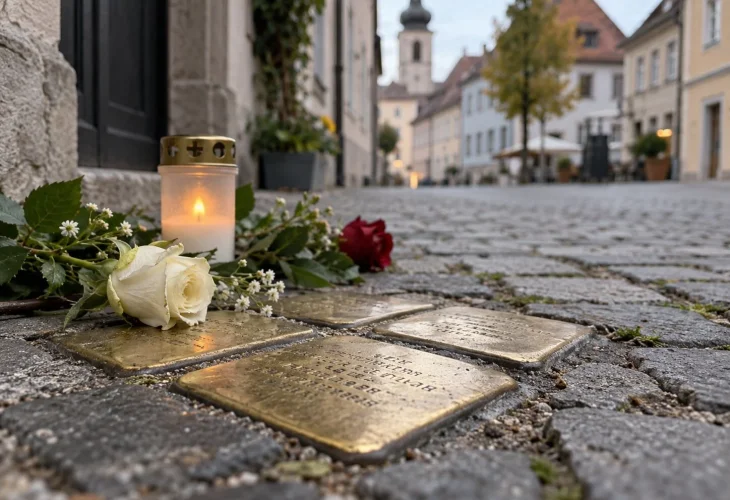
The Stolpersteine project was created by German artist Gunter Demnig in the 1990s. Small brass plaques are placed in front of the former homes of people persecuted or murdered by the Nazi regime and typically include their names, birth dates and fate.
According to the project’s official website, around 116,000 Stolpersteine have now been installed in more than 1,860 municipalities across 31 European countries, making it the world’s largest decentralized memorial.
The International March of the Living called on Heidenau to reverse its decision, saying the vote raised concerns about pushing Holocaust remembrance out of public spaces.
Existing Stolpersteine in Heidenau will remain in place.

