

Home Styling
6 Storage Mistakes That Are Making Your Small Home Feel Even Smaller
Struggling to keep a small home organized? Avoid these six common storage mistakes and make better use of the space you already have.
- תהילה כהן
- | Updated
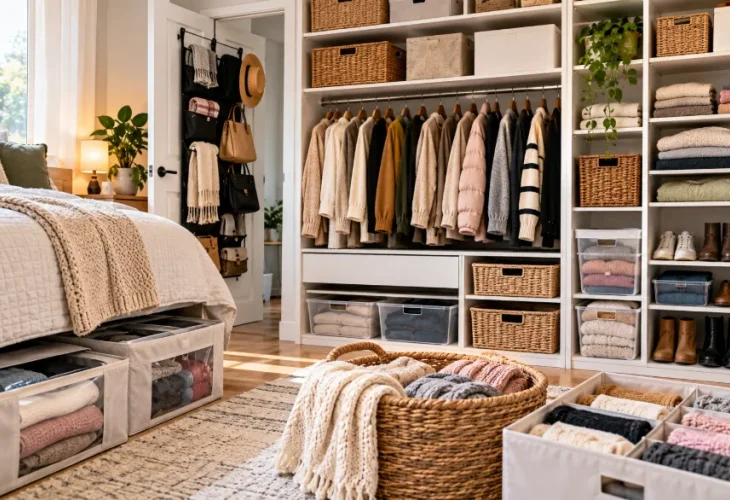
Before you order another cabinet or fill your home with more storage boxes, stop and take a look at what you already have.
When space is limited, the instinct is often to find a use for every available inch. But more storage does not necessarily mean less clutter. In fact, some common storage habits can make a small home feel even more crowded.
Here are six mistakes to look out for.
1. Turning Every Surface Into Storage
Kitchen counters, dining tables, sideboards, and entryway consoles have a habit of slowly filling up.
Even when everything is arranged neatly, covering every available surface can create visual clutter and make a room feel smaller.
Try leaving some surfaces intentionally clear. Give smaller everyday items a designated drawer, basket, or cabinet instead of automatically placing them on the nearest surface.
2. Buying Storage Boxes Before Decluttering
A beautiful set of matching boxes can make clutter look organized, but it is still clutter if you do not actually need what is inside.
Before buying another storage solution, sort through your belongings first. Donate, discard, or relocate anything you no longer use.
Once you know what genuinely needs to stay, measure the available space and choose storage that actually fits it.
3. Forgetting to Look Up
When floor space is limited, vertical space becomes especially valuable.
High shelves and the tops of cabinets can be useful for storing seasonal decorations, luggage, extra bedding, or other things you rarely need.
Keep frequently used items within easy reach and reserve the harder-to-access spaces for occasional-use belongings.
4. Packing Cabinets to the Brim
Closing a cabinet door may make the clutter disappear temporarily, but an overstuffed cabinet rarely stays organized for long.
If getting one shirt, plate, or container requires moving five other things first, putting everything back becomes a chore. Eventually, those items are much more likely to end up sitting outside the cabinet.
Leave enough breathing room that you can easily see, remove, and return what you need.
5. Ignoring the “Dead” Spaces
Before adding another piece of furniture, look for storage space you may already have.
The area under the bed, the inside of cabinet doors, high shelves, and other overlooked corners can provide useful storage without taking up additional floor space.
There is one catch: hidden storage can easily become a graveyard for things you forget you own. Use these spaces intentionally, and occasionally check what is actually hiding there.
6. Choosing Storage That Doesn’t Match Your Routine
The best storage system is not necessarily the prettiest one. It is the one you will actually use.
If putting something away requires walking across the house, opening three containers, or moving several other items, chances are it will eventually be left out.
Store things close to where you naturally use them: keys near the entrance, towels near the bathroom, frequently used kitchen tools within easy reach.
In a small home, good organization is not about squeezing belongings into every possible corner. It is about keeping what you need, giving it a logical place, and making that place easy to use.
Sometimes the best way to create more space is not to add more storage at all.

