

Interesting
Inside the Svalbard Global Seed Vault: Protecting the World's Food Supply
Hidden deep inside a Norwegian mountain, the Doomsday Vault preserves millions of seeds to safeguard global agriculture against war, climate change, and future disasters
- Tehila Cohen
- | Updated
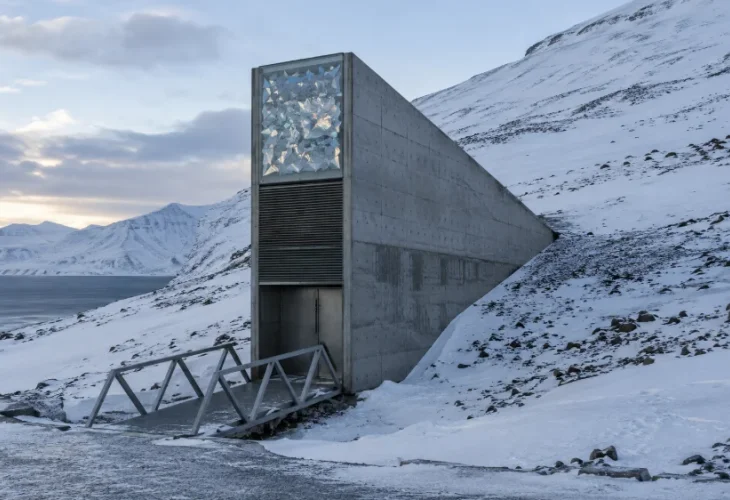
Deep inside a mountain in Norway’s Svalbard archipelago, the Svalbard Global Seed Vault stores samples of wheat, rice, barley, and numerous other crops. Opened in 2008, the vault preserves seeds at a temperature of minus 18 degrees Celsius (0°F), helping maintain their ability to germinate for many years.
A Backup for the World's Food Supply
Seed banks around the world preserve the genetic diversity of agricultural crops. This diversity may contain valuable traits that could help scientists develop crop varieties capable of withstanding drought, extreme heat, and disease. Losing one of these collections could mean the permanent disappearance of genetic material that would be extremely difficult to replace.
The Svalbard Global Seed Vault serves as a secure backup facility, storing duplicate samples from these collections. The original seed banks retain ownership of their deposits, and only they are authorized to withdraw their seeds.
The Doomsday Vault
Often referred to as the "Doomsday Vault," the facility does not contain every type of seed on Earth. Instead, it safeguards the possibility of restoring agricultural crops that might otherwise disappear.
The vault stores seeds that are valuable for food production and agriculture and can withstand drying and freezing without losing their viability. Seeds from crops such as cocoa, coconut, and mango, for example, are unsuitable for these storage conditions.
The vault has already demonstrated its importance in a real-world crisis. Following the outbreak of war in Syria, the International Center for Agricultural Research in the Dry Areas (ICARDA) withdrew previously deposited seed samples to help rebuild its collections in Lebanon and Morocco.
After growing the plants and replenishing its seed stocks, the organization deposited new samples back into the vault, demonstrating how this global backup system can help protect the future of agriculture and food security.

