

World News
Europe in Turmoil: Protests Erupt Over Soaring Cost of Living
Massive demonstrations, violent clashes with police and millions of euros in damage are sweeping across Europe, as citizens take to the streets over the cost of living, sky-high housing prices and more.
- Yitzchak Eitan
- | Updated
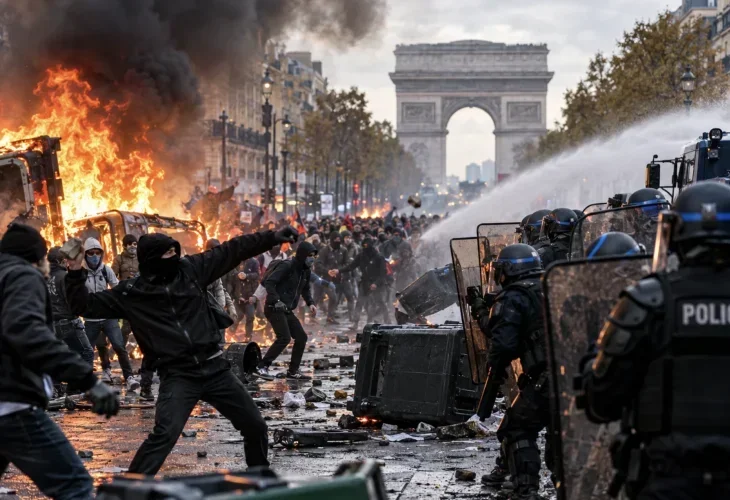
A wave of stormy protests is sweeping through European cities these days, with hundreds of thousands of demonstrators taking to the streets over the ongoing erosion of their standard of living. Residents' growing frustration stems from a sharp rise in the cost of food, housing and energy, alongside low wages and heavy pressure on public services. The situation has led to widespread demonstrations in many countries, some of which have deteriorated into severe clashes and violence.
In France, hundreds of thousands of people, including many students, joined protests against rising prices and study conditions. Although most participants marched peacefully, some of the gatherings turned into violent riots and looting across the major cities. About 1,500 stores and retailers were damaged, and historic public buildings were hit, including the Limoges city hall, which went up in flames, and the tourism office in Bellecour Square in Lyon.
The economic damage to businesses is estimated at hundreds of millions of euros. French President Emmanuel Macron vowed to prosecute those who “sought to bring down the Republic.” The mayor of Limoges, Guillaume Guerin, took a different tone: “Protest is a right, and anger deserves to be heard. That said, no disagreement or complaint can justify the destruction of public property.”
The public anger is not limited to France. In Belgium, sharp clashes broke out between demonstrators and police forces in Brussels and Liege. High school students protested against rising education costs and a shortage of teachers, and Belgian Interior Minister Bernard Quintin said the situation “is no longer just a protest” but “pure violence.” In Portugal, labor organizations and housing rights activists called for higher wages, improved pensions and lower rents and mortgages. In Italy, violent clashes were recorded in Milan, Turin and Bologna, leading to injuries and the arrest of dozens of demonstrators.
The main source of frustration lies in the fact that prices have remained very high even as the rate of inflation falls. According to an analysis of Eurostat data conducted by Euronews Business, prices of food and non-alcoholic beverages in the European Union jumped by 34% between August 2021 and August 2026. The research shows that the amount of food that can be purchased with a monthly gross minimum wage dropped by 6% in Malta, 5% in Spain and 4% in France. This situation leaves households with very limited disposable income and a daily struggle to make ends meet.

