

Shabbat
Shabbat Traditions, Hospitality, and Faith: A Mother of Eight Shares Her Secrets
Discover how a Jerusalem mother of eight creates a meaningful Shabbat through welcoming guests, family singing, traditional meals, and unwavering faith in God
- Moriah Luz
- | Updated
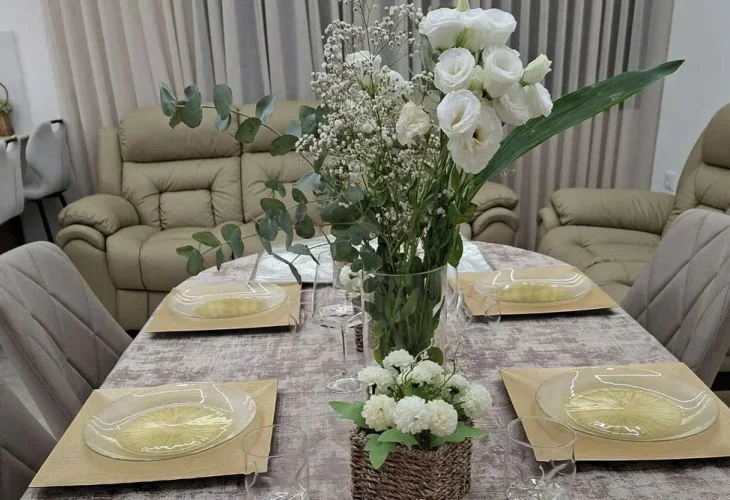 (Photos: Mali Farkash)
For Mali Farkash, Shabbat is much more than a day of rest. It is an opportunity to welcome guests, strengthen family bonds, express gratitude, and experience God's presence in everyday life. As a mother of eight and a grandmother, she has created a home where the Shabbat table is always open, singing is an essential part of every meal, and there is somehow always enough food for everyone.
A Little About Me
"My name is Mali Farkash, and I'm 50 years old. I'm the mother of eight children, ranging in age from 13 to 28. Four of them are married, and I'm also a grandmother. I live in Jerusalem and run a private practice providing emotional therapy."
A Childhood Shabbat Memory That Has Stayed With Me
"My parents' Shabbat table welcomed people from all walks of life, including baalei teshuvah, people who had become religious later in life, and converts to Judaism. One Friday, my father met a Japanese man at the market who had converted to Judaism and spoke very little English. When my father asked where he would be spending Shabbat, the young man explained that kind people invited him into their homes every week. My father immediately informed him that he would be the 'kind person' hosting him that Shabbat.
"The young man became a regular guest in our home until he settled into life in Israel. He told us that from an early age, he had asked many questions because what he had learned about Christianity didn't make sense to him. As a child, I felt compassion for that young Japanese boy who had grown up with so many questions and no one to turn to for answers."
Hosting or Being a Guest?
"I definitely prefer hosting, and I never know exactly how many people will end up sitting around our Shabbat table. One Shabbat, my son-in-law returned from the Western Wall with four or five young men from an American yeshiva. They had approached him and asked where they could eat their Shabbat meal, and he spontaneously replied, 'At our house.'
"That particular Shabbat, we were already hosting a neighboring couple. When my son-in-law arrived with the additional guests, our neighbor became terribly anxious. She asked me, 'Where are you going to seat everyone? And how will you have enough food?' I simply replied, 'What's the problem? We'll open another table.' Those young men sang with such devotion, and the atmosphere was incredibly uplifting.
"There is a concept of blessing in the food we prepare. God gives us the mitzvah of hospitality and essentially tells us: You concern yourselves with doing a kindness for another Jew and welcoming guests into your home, and I will make sure there is enough food. How exactly does that work? I don't get caught up in the details. I leave those things to the Creator. And sure enough, there was more than enough food for everyone, and the entire Shabbat was filled with an extraordinary sense of spiritual elevation."
When Do You Begin Preparing for Shabbat?
"I absolutely love the preparations for Shabbat. I feel as though a queen is coming to visit, and we are eagerly preparing to welcome her. I begin baking challah as early as Tuesday. Every two weeks, I prepare four kilograms of dough. On Wednesday, I do the grocery shopping, and in the evening, I take the meat and fish out of the freezer to defrost in the sink. On Thursdays, I work at my clinic, and as soon as I finish, I begin cooking. Attending events on Thursday evenings is simply not an option for me. I need that time to prepare for Shabbat.
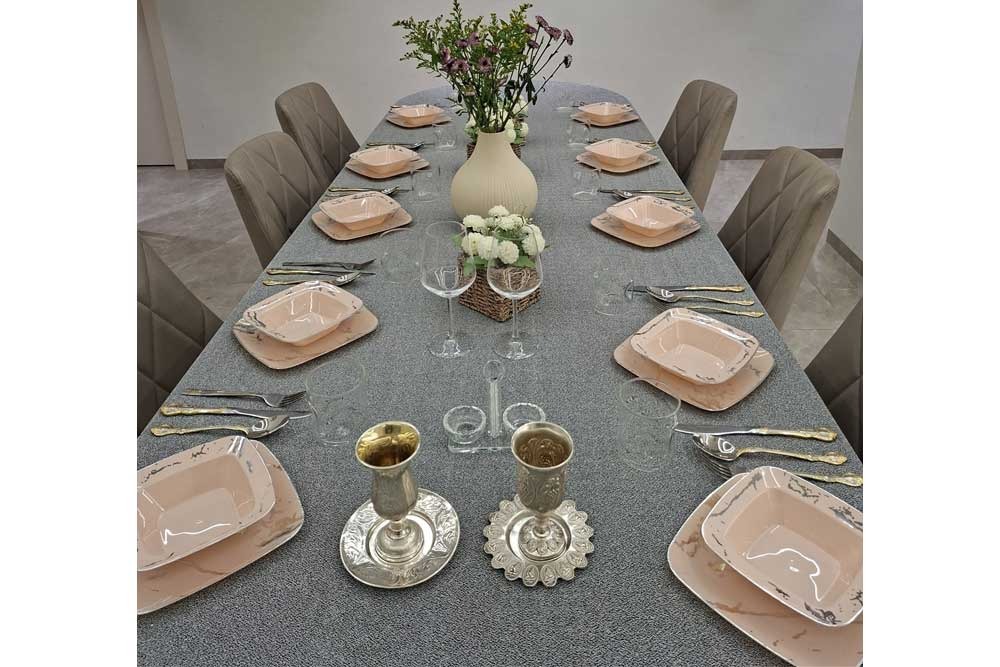
"By around nine or ten in the evening, I've usually finished cooking and begin cleaning. We also make a special effort to have the Shabbat table set by Thursday night. There are many traditional segulot, or spiritual merits, associated with this practice, including blessings for livelihood and raising children who become great Torah scholars. Beyond that, there's something wonderful about waking up on Friday morning to find the Shabbat table already beautifully prepared. It immediately brings everyone into the Shabbat atmosphere.
"On Friday mornings, right after prayers, I begin preparing what we call toameha, our traditional pre-Shabbat tasting meal. This is a firmly established custom in our family. I prepare two types of carbohydrates, choosing from dishes such as Israeli couscous, regular couscous, vegetable kugel, potato kugel, or rice. And, of course, schnitzel is absolutely essential. When my married children come for Shabbat, they prepare their own children in advance, telling them, 'We're going to eat Bubby's schnitzel!'
"By Friday afternoon, I arrange the food on the kitchen counter, and the children help themselves. Our Friday night meal doesn't begin until around 9:30 or 10:00 p.m. We're Vizhnitz Hasidim, and our synagogue service includes many melodies and deeply moving devotional songs. Knowing that the children have already eaten a substantial meal allows me to relax. They're not hungry, and they can return home from synagogue calmly and comfortably, ready for Kiddush."
My Favorite Moment of Shabbat
"The singing around the Shabbat table is my favorite part. It opens my heart and connects me directly to the Creator. My children know how important it is to me, and thank God, we have what feels like a real choir in our home.
"Recently, we introduced a new family tradition. Each person takes a turn sharing a moment from the past week when they experienced hashgachah pratit, Divine Providence, and felt that God was with them in a particularly personal way. For example, this week I was driving and offered someone a ride. His destination was different from mine, but I decided to take a different route to help him. As we drove, I suddenly remembered that I needed to collect some clothes from a seamstress. They had been waiting there for an entire week, and her home happened to be along the very route I had chosen to help my passenger."
Something I Would Love to Change
"I would love for my younger children to prepare a Torah thought to share at the Shabbat table on their own initiative. At the moment, I always have to remind them, asking, 'Did you prepare a nice Torah thought?' or 'Will you make me happy by sharing some Torah?' I would love for that desire to come from them naturally."
An Unforgettable Shabbat
"One Friday, at 12:30 in the afternoon, I discovered that my son-in-law's father was spending Shabbat in the hospital with his own sick father. His wife, my daughter's mother-in-law, was staying home alone in Safed. My daughter told me that this was already the second Shabbat she would be spending without her husband, and that she was finding it very difficult.
"I turned to my son-in-law and asked, 'If I invite your mother to spend Shabbat with us right now, do you think she'll come?' He said she might actually agree. At 12:35 p.m., just 25 minutes before the last bus was scheduled to leave, I called her and extended the invitation. She asked for a few minutes to think about it. Five minutes later, she called back and announced that she and her two unmarried daughters were getting ready to come. How they managed to prepare everything in just 20 minutes, I have no idea!
"I had already completed all my Shabbat preparations, but I trusted that God would provide a blessing in the food. I didn't prepare anything extra. Not another dessert, not more ice cream, not even another salad. I served exactly what I had already made. And somehow, there was an abundance of food, and we had an absolutely wonderful Shabbat together."
My Advice for a Meaningful Shabbat
"I believe that the body and soul are deeply connected, and that the way we experience life is influenced by the story we tell ourselves. If we repeatedly remind ourselves that Shabbat is a privilege and a precious gift from God, that is how we will experience it.
"I make a special effort to honor Shabbat in the most beautiful way possible, and I feel that God gives me twice as much in return. I see it so clearly in my own life. As a single mother, supporting my family financially is very challenging. I remember one Wednesday evening several years ago when I had no money to buy food for Shabbat.
"Suddenly, someone knocked on my door. He explained that for quite some time, he had been meaning to return money that he owed us, a remaining credit from a payment we had made in the past. I felt as though God was embracing me. It was already ten o'clock at night, but that very evening, I searched for a supermarket that was still open and went shopping for Shabbat. I believe that the Creator sees me, believes in me, and sends me challenges to help me grow."
What's on Our Shabbat Menu?
"We're a Hasidic family, so our Shabbat menu is fairly traditional and consistent. We begin Friday night with singing. We sing Shalom Aleichem, Eshet Chayil, and several additional Hasidic melodies before making Kiddush. The meal begins with salads, followed by fish. We usually serve salmon and gefilte fish.
"I don't serve individual portions. Instead, I place everything on large serving platters in the center of the table. This helps prevent bal tashchit, the unnecessary waste of food, and allows every guest to feel comfortable taking exactly what they want.
"Next comes the soup. I bring out a large serving bowl of rich, concentrated chicken soup made with turkey necks, and everyone serves themselves. I place soup croutons, matzah balls, and noodles in separate bowls so people can add whichever they prefer. After the soup, we take a break of about half an hour for singing and sharing Torah thoughts.
"Then we serve the main course, usually chicken or dark turkey meat, accompanied by kugel, Israeli couscous, or rice. By that point, everyone is usually quite full, so I prepare only a small quantity of the main course. I prefer to recite Birkat Hamazon, Grace After Meals, immediately afterward. I've noticed that when dessert is served first, people tend to move to the sofa and forget to say the blessing. So I bring out water for mayim acharonim, the ritual washing before Birkat Hamazon, and invite someone to lead the zimun, the communal invitation to recite Grace After Meals. Only afterward do I serve dessert, nuts, seeds, and popcorn.
"On Shabbat morning, the men attend a Kiddush at the synagogue, where they eat herring, crackers, and kugel. I know they usually return home with very little appetite, so our Shabbat lunch is simple: cholent and potato kugel, without any salads. For the third Shabbat meal, we serve salads and any fish that may be left over. At that time, the men are at the synagogue, and only the women remain at home. It's our special opportunity to sing together, share Torah thoughts, and enjoy meaningful conversations. To me, there is nothing more comforting, connecting, or family-oriented than sharing Shabbat meals together."
Mally Farkash's Special Shabbat Recipe
Delicious Salmon Prepared Directly on the Shabbat Hot Plate
A flavorful salmon dish that requires no additional cooking before being placed on the hot plate.
Ingredients
1 whole frozen salmon fillet
Lemon juice, for soaking
¼ cup ketchup
¼ cup sweet chili sauce
1 heaping tablespoon Philadelphia seasoning blend
Optional: Sesame seeds or nigella seeds for garnish
Instructions
Partially defrost the salmon and remove the skin. When the fish is still slightly frozen, the skin can be peeled away easily in one piece. Soak the salmon in lemon juice for 15 minutes, then rinse thoroughly.
Place the fish in a glass baking dish, such as Pyrex. Add the ketchup, sweet chili sauce, and Philadelphia seasoning blend. Massage the sauce into the fish until it is completely coated. You can also use a silicone pastry brush, like the kind used to brush egg wash onto challah.
For an attractive presentation, sprinkle sesame seeds or nigella seeds over the fish. Cover the baking dish tightly with aluminum foil and refrigerate. I usually prepare the fish on Thursday evening so it can absorb the flavors overnight.
About 15 minutes before Shabbat candle lighting, remove the covered dish from the refrigerator and place it directly on the Shabbat hot plate. The result is delicious, moist salmon, ready to serve at the Shabbat table.
Important Halachic Note: The original recipe emphasizes placing the fish on the hot plate before Shabbat begins so that it reaches at least a basic level of cooking before Shabbat. Because the permissibility of leaving raw or partially cooked fish on a hot plate depends on specific halachic conditions, consult a qualified rabbi about the appropriate preparation and timing.

