

Shabbat
10 Tips for Stress-Free Shabbat Preparation and a Peaceful Home
Discover 10 practical and spiritual tips to simplify your Shabbat preparations, reduce stress, and welcome Shabbat with greater calm, joy, and peace
- Rabbanit Chagit Shira
- | Updated

Preparing for Shabbat should be a time of anticipation and happiness. Yet between cooking, cleaning, last-minute errands, and countless details demanding our attention, Friday can easily become the most stressful day of the week. How can we accomplish everything that needs to be done while preserving the peace and joy that Shabbat is intended to bring into our homes?
The first step is prayer. Before beginning your Friday preparations, take a moment to recite the following: "Master of Peace, King to Whom peace belongs, bless me with peace, and grant me, my entire household, and all Your people, the House of Israel, a good life and peace" (Mekor HaBracha).
Then speak to Hashem in your own words, asking Him to grant you strength, tranquility, and happiness, and to give you the privilege of preparing for Shabbat in His honor.
Following are ten practical and spiritual tips for welcoming Shabbat with greater calm, joy, and peace.
1. Welcome Shabbat Early
The earlier we welcome Shabbat, the sooner we invite peace into our homes. A beautiful Hebrew saying captures this idea: Shabbat babayit takdim, shalom babayit tekabel—"Welcome Shabbat into your home early, and you will receive peace in your home."
At first glance, accepting Shabbat earlier might seem counterproductive. Doesn't having less time to prepare only increase the pressure? In practice, however, setting an earlier deadline can encourage us to become more focused and efficient. When we decide to finish sooner, we establish clearer priorities, avoid unnecessary distractions, and make better use of the time available. With Hashem's blessing, we may discover that our time stretches further than we expected.
The Chofetz Chaim taught that while people often search for special segulot to bring blessings into their lives, tremendous blessings come through honoring Shabbat. He also taught that those who encourage others to welcome Shabbat early merit children who become great Torah scholars.
2. Set the Shabbat Table Before Midday
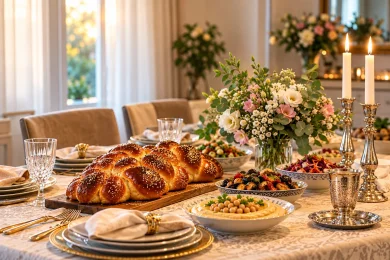
One simple way to create a sense of calm is to prepare the Shabbat table well in advance. Rabbi Hirsch of Zidichov taught that setting the table with a tablecloth before midday on Friday is a segulah for dispelling negative spiritual influences associated with conflict in the home on Erev Shabbat.
Try setting the table on Friday morning, or even Thursday night, as some families have the custom of doing. Beyond its spiritual significance, this small act can transform the atmosphere of the house. A beautifully prepared table serves as a reassuring reminder that Shabbat is approaching and that an important part of the preparations is already complete. Jewish spiritual teachings also associate this practice with bringing merit and comfort to the souls of deceased parents, who are said to experience tranquility in Gan Eden when the Shabbat table is prepared in their honor.
3. Make an Erev Shabbat Checklist
Sometimes, the most stressful part of preparing for Shabbat isn't the work itself, but the feeling that there are a hundred things to remember. A simple checklist can make an enormous difference. Write down everything that needs to be done, organize the tasks in a practical order, and keep the list somewhere visible.
Personally, I find that simply preparing a list and hanging it on the wall brings an immediate sense of relief. Instead of mentally juggling countless responsibilities, I can concentrate on one task at a time.
4. Keep Friday Free of Unnecessary Commitments
Whenever possible, avoid scheduling errands, appointments, and other activities that have nothing to do with Shabbat preparations. Friday is already filled with responsibilities, and unexpected demands can quickly disrupt even the best-laid plans. By protecting the hours before Shabbat from unnecessary commitments, we give ourselves the space to prepare without constantly watching the clock.
5. Put Your Phone Away
A quick phone call can turn into a lengthy conversation. One message leads to another, and before we know it, valuable preparation time has disappeared. Consider putting your phone on silent or setting it aside three to four hours before Shabbat begins.
Unless something genuinely requires your attention, allow calls and messages to wait. A few uninterrupted hours can make a remarkable difference, not only to how much we accomplish, but also to how calm and focused we feel.
6. Fill Your Home With Shabbat Music
The atmosphere in a home can change with something as simple as music. Play familiar Shabbat songs while cooking, cleaning, or setting the table. Their melodies can lift everyone's spirits, turn ordinary chores into part of the Shabbat experience, and help the entire family look forward to the hours ahead. Instead of feeling that we are racing against the clock, we can begin to enjoy the anticipation of welcoming Shabbat.
7. Plan Friday Travel Carefully
Long journeys close to Shabbat can be especially stressful. Traffic, unexpected delays, or other complications may leave travelers rushing to reach their destination before Shabbat begins.
Rabbi Mordechai Eliyahu recommended allowing twice the usual travel time for Friday journeys. Ideally, travelers should arrive in the city where they plan to spend Shabbat at least an hour before it begins. Building extra time into travel plans provides a welcome margin for unexpected delays and allows everyone to settle in peacefully.
8. Spread Your Preparations Throughout the Week
One of the simplest ways to avoid a frantic Friday is to stop treating Shabbat preparation as a Friday-only responsibility. Throughout the week, try to purchase, prepare, or organize something in honor of Shabbat. Whether it's shopping for ingredients, preparing a dish in advance, or organizing the house, each small task lightens Friday's workload.
This is particularly helpful during the winter, when Shabbat begins early. Starting preparations as early as Wednesday can make a significant difference.
9. Remember That Shabbat Is a Beloved Guest
In the middle of a busy Friday, it's easy to become so absorbed in the preparations that we forget their purpose. Shabbat is a beloved guest, bringing holiness, blessing, and tranquility into our homes. We prepare beautiful meals and create a welcoming atmosphere because we cherish its arrival, not because we are meant to exhaust ourselves in the process.
When the pressure begins to build, remind yourself that these preparations are an opportunity to honor Hashem. Ask Him to help you approach each task with patience and joy.
There is a beautiful Hebrew wordplay that captures this idea. Take the word lachatz (לחץ), meaning "pressure," and place the letter hei, representing Hashem, at its beginning and end. The result is hatzlacha (הצלחה)—"success." The message is that when we bring Hashem into our preparations, we can transform pressure into a sense of purpose and blessing.
10. Let Go of the Need to Do Everything
Perhaps the greatest source of Erev Shabbat stress is the belief that we must prepare more than we realistically can. More salads, more cakes, more desserts, more elaborate dishes, and more decorations. The list keeps growing, and so does the pressure. Does Shabbat truly require all of it?
The verse in Psalms teaches, "Better is the little that the righteous person has than the abundance of many wicked people" (Psalms 37:16). This offers a valuable reminder that abundance is not always the measure of what is good.
Of course, we should honor Shabbat with delicious food and thoughtful preparations. But honoring Shabbat also means recognizing our limitations and making choices that preserve the atmosphere we hope to create. A simpler meal served with warmth, patience, and genuine happiness can be far more meaningful than an elaborate feast prepared amid exhaustion and tension.
The goal is not to impress anyone with how much we've accomplished, but to welcome Shabbat into a home filled with peace. Ultimately, preparing for Shabbat should bring us closer to the tranquility we anticipate throughout the week, not leave us too overwhelmed to enjoy it.
Sometimes, the most beautiful way to honor Shabbat is to do a little less, with a little more joy.
Adapted from the booklet "Shabbat Malka," included in the prayer book Shirat Chayai.
 ShabbatHow One Family Makes Shabbat Beautiful, Meaningful, and Memorable
 ShabbatShabbat Traditions, Hospitality, and Faith: A Mother of Eight Shares Her Secrets
 ShabbatShabbat Flowers That Last: How to Keep Your Bouquet Fresh All Week
 ShabbatThe Perfect Shabbat Trap: When High Expectations Steal Our Peace

