

Israel News
Israel Unveils National Digital ID System and Smartphone Identity Wallet
The new initiative will allow Israelis to securely verify their identities across government and private-sector services, store official documents on their phones, and reduce bureaucracy while strengthening protection against identity theft and fraud
- Shlomi Diaz
- | Updated
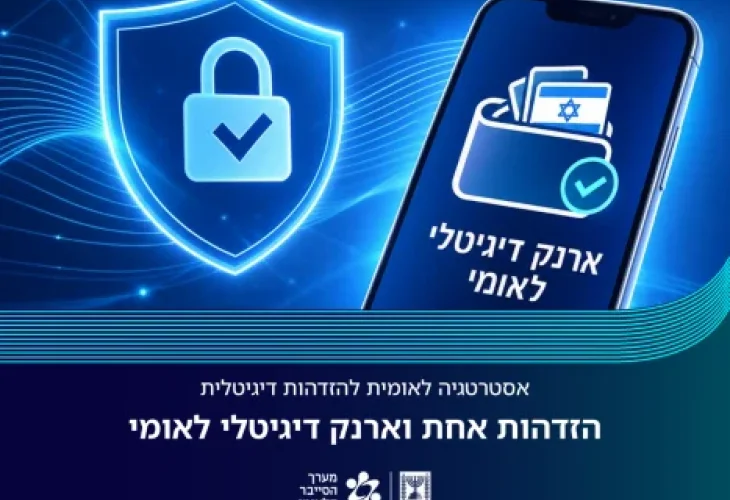 (Photo: Israel National Cyber Directorate)
Israel’s National Cyber Directorate unveiled a new national digital identity strategy on Sunday, introducing plans for a unified identification system for government and private-sector services, along with a digital wallet that will store official identification documents and certificates in one place. The initiative aims to simplify access to services, reduce bureaucracy, and strengthen protection against online fraud and identity theft.
The strategy will be presented during National Cybersecurity Week, which began on Sunday and will continue through November 12. According to the directorate, the initiative is designed to transform how Israeli residents verify their identities and access essential services. Once fully implemented, the system will allow users to authenticate their identities through a single secure and reliable identification platform, rather than undergoing separate verification processes with multiple organizations. The system is intended to serve both government agencies and private institutions, including banks, insurance companies, and healthcare providers.
Alongside the unified identification system, the government plans to introduce a national digital identity wallet that will allow residents to store official documents and certificates on their smartphones, making them accessible whenever necessary without the need to carry physical copies.
A Unified Digital Identity System for Government and Private Services
The strategy was developed by the National Cyber Directorate in cooperation with the National Digital Agency, the Population and Immigration Authority, the Finance Ministry’s Budget Department, the Accountant General, and the Bank of Israel. Its goal is to integrate existing identification infrastructure into a unified national system that is secure, convenient, and accessible while safeguarding personal privacy.
Approximately 5.5 million users are currently registered with Israel’s government identification system. However, citizens must still register and verify their identities separately with numerous organizations. Under the new strategy, the national identification platform will gradually be expanded to support private-sector services, particularly in finance, healthcare, telecommunications, and insurance.
For example, customers will eventually be able to verify their identities with a bank or insurance company through the national identification system without undergoing a separate verification process or submitting a photograph of their identity card. Importantly, accounts held with private institutions will remain separate, and the government will not have access to users’ activities within those accounts. The national system will serve solely to authenticate users’ identities.
A Digital Wallet for Official Documents and Certificates
Similar to digital wallets currently used to store credit cards, the proposed national identity wallet will allow residents to keep government-issued identification cards, licenses, permits, certificates, and other official documents on their mobile phones. Users will be able to present and authenticate documents, demonstrate eligibility for services, and securely share necessary information electronically, eliminating the need to repeatedly photograph documents or present physical copies.
The wallet will also be available for in-person transactions. However, physical identification documents will continue to be issued and will remain valid for regular use.
Strengthening Protection Against Identity Theft and Fraud
Beyond convenience, the initiative is intended to address concerns about identity theft, fraud, and the security of personal information. Currently, photographs of identity cards and other sensitive documents are frequently transferred to and stored in databases maintained by numerous organizations, sometimes without sufficient security measures. The widespread collection and storage of such information increases the risk of data breaches, impersonation, and misuse of personal details.
By allowing institutions to verify identities through a trusted national infrastructure, the new system could significantly reduce the need to collect and retain copies of identification documents. Officials believe this approach will strengthen the reliability of identification procedures while reducing opportunities for fraud. The initiative is also expected to simplify administrative processes, shorten service times, and reduce the need for residents to visit offices or branches in person.
Naama Ben-Zvi, head of the Identification and Biometric Applications Unit at the National Cyber Directorate, emphasized the broader significance of the strategy. “Digital identification is no longer merely an isolated technological component, but a national infrastructure of trust that is essential for an advanced digital economy,” she said.
“The strategy we have developed is intended to strengthen the digital identity of Israeli residents, protect them from cyber threats and sophisticated identity fraud, and enable advanced, secure, and accessible services throughout the economy, while preserving the public’s privacy.”
The initiative represents a significant step toward establishing a unified digital identity framework in Israel, with the aim of making everyday transactions more efficient while strengthening security and privacy protections.

