

World News
Iran Nuclear Talks Stall as US Considers Easing Blockade in New Deal
Iran confirms an IAEA visit to its Bushehr nuclear facility as Secretary of State Marco Rubio criticizes Tehran’s demands, while reports suggest Washington has proposed reopening the Strait of Hormuz in exchange for phased negotiations
- Shlomi Diaz
- | Updated
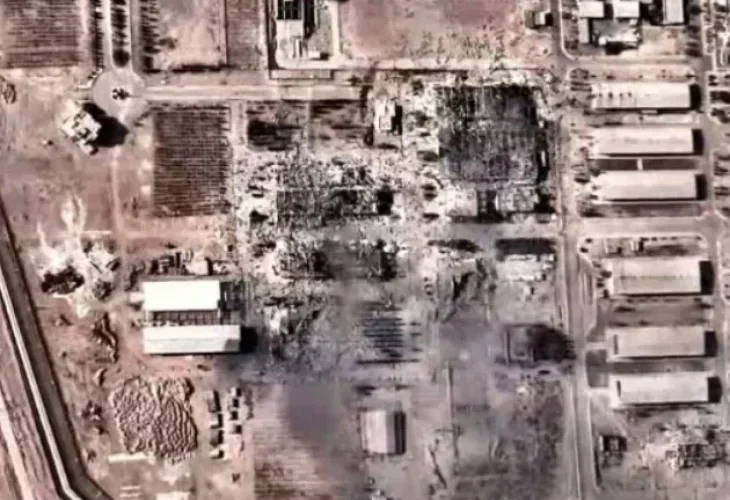 A bombed nuclear site in Iran (Photo: IDF Spokesperson)
Iranian Foreign Ministry spokesperson Esmaeil Baghaei announced on Monday that representatives of the International Atomic Energy Agency (IAEA) had visited the Bushehr nuclear facility in recent days. The announcement comes amid ongoing diplomatic efforts between the United States and Iran to prevent a return to large-scale hostilities.
Addressing Tehran’s cooperation with the UN nuclear watchdog, Baghaei insisted that Iran remains committed to the international agreements it has signed. “Tehran has not suspended its nuclear commitments,” he said, arguing that U.S. and Israeli strikes on Iranian nuclear facilities had complicated the implementation of routine monitoring procedures.
Baghaei maintained that Iran, as a signatory to the Treaty on the Non-Proliferation of Nuclear Weapons (NPT), has demonstrated its commitment to international nuclear safeguards over the years. He argued that responsibility for the disruption of inspections should rest with those responsible for the attacks, adding that “under the exceptional circumstances that have emerged, cooperation cannot continue in the same format as before.”
The Iranian spokesperson also criticized the IAEA Board of Governors and the agency’s director general, Rafael Grossi, accusing them of failing to fulfill their legal obligations in their response to attacks on Iran’s nuclear facilities. According to Baghaei, the agency’s leadership had adopted positions that appeared to assign blame in connection with the strikes rather than adequately addressing the circumstances that disrupted its monitoring activities.
Rubio Says Iran’s Demands Are Blocking Diplomatic Progress
Meanwhile, U.S. Secretary of State Marco Rubio expressed frustration with the negotiations, saying that Iran was making unreasonable demands and that talks had made little progress.
“Iran is making unreasonable demands, and the talks are not progressing at all at this stage,” Rubio said in an interview with American media. He acknowledged that several countries remain in contact with Tehran and continue to present proposals and ideas, but emphasized that an agreement was not imminent.
“The president always prefers to resolve this issue, as well as other problems, through diplomacy,” Rubio said. “Unfortunately, that is not always possible. But if an opportunity for a diplomatic solution arises, we will certainly consider it.”
Rubio added that diplomatic efforts had so far failed to produce meaningful results because Washington considered Iran’s demands unacceptable. He described some of Tehran’s conditions as “excessive, absurd, and detached from reality.”
Report: US Proposes Partial Easing of Iran Blockade
Despite Rubio’s assessment, the UAE-based news outlet Eram News reported on Monday that the United States had proposed partially easing its blockade of Iran as part of an interim agreement.
According to the report, the proposed arrangement would begin with the reopening of the Strait of Hormuz to international shipping. A subsequent phase would involve gradual negotiations over Iran’s nuclear program, including potential sanctions relief and the phased release of frozen Iranian assets. Tehran has not yet responded to the reported American proposal.
The developments underscore the continuing differences between Washington and Tehran, even as diplomatic intermediaries seek a framework that could ease military tensions and pave the way for broader negotiations over Iran’s nuclear activities.

