

Health and Nutrition
Can an Air Purifier Improve Blood Sugar Levels? New Study Finds Surprising Benefits
Researchers found that using HEPA air filters reduced daily blood sugar fluctuations by 8% in adults with prediabetes, suggesting that cleaner indoor air may support better blood sugar control
- Shira Dabush
- | Updated
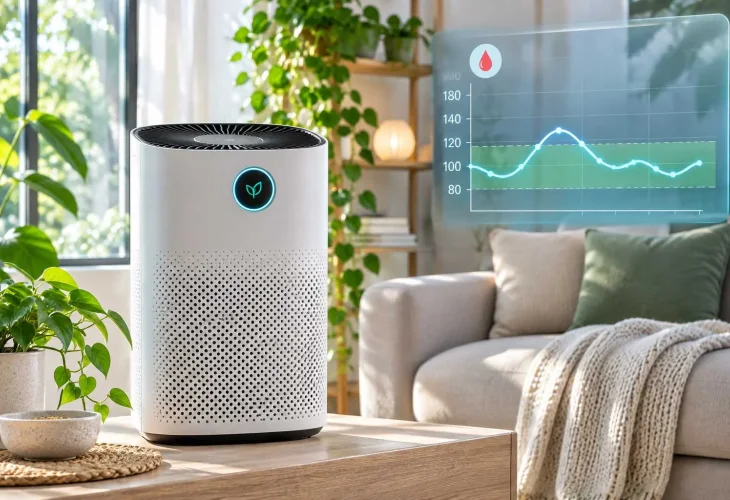
A new study conducted by researchers at NYU Langone Health in New York has found a connection between the air we breathe while sleeping and our blood sugar levels. The researchers set out to determine whether reducing indoor air pollution, particularly in the bedroom, could improve blood sugar regulation among people with prediabetes. To investigate, they used high-efficiency particulate air (HEPA) filters, which are designed to capture tiny airborne particles.
The study involved more than 150 adults from New York who were randomly assigned to two groups. One group received functioning air purifiers, while the other was given identical-looking devices that did not actually filter the air. Neither the participants nor the staff conducting the measurements knew which group each participant belonged to.
Over the course of a month, researchers monitored air quality in participants' homes, including their exposure to airborne particles before bedtime. They also used continuous glucose monitors to track fluctuations in blood sugar throughout the day and compare the results between the groups. According to findings published on NYU Langone Health's website on November 8, the functioning air purifiers not only reduced the concentration of airborne particles but also decreased daily blood sugar fluctuations by 8%.
How Does Air Quality Affect Blood Sugar?
The study builds on previous research linking exposure to fine particulate air pollution with disruptions in the body's ability to regulate blood sugar. These findings suggest that environmental factors, including the quality of the air people breathe at home, may play a role in metabolic health.
However, the researchers caution against drawing broad conclusions from the results. Dr. Jonathan Newman, one of the study's senior researchers, emphasized that the findings do not necessarily apply to people who have already developed diabetes. "It is too early to draw that conclusion from this trial alone," he explained. Researchers have yet to determine whether the improvements persist beyond one month or whether air filtration could also benefit people with diagnosed diabetes. These questions are expected to be explored in future studies.
Should You Invest in an Air Purifier?
Dr. Shereen Witkop, the cardiologist who led the study, emphasized that air filtration should be viewed as a complementary measure rather than a replacement for established approaches to blood sugar management, including a healthy diet, regular physical activity, and prescribed medications.
Although the findings are promising, the study does not establish whether using an air purifier produces lasting improvements in blood sugar control or reduces the risk of developing diabetes. For now, the research highlights an intriguing possibility: maintaining healthy blood sugar levels may involve more than what we eat and how much we exercise. The environment in which we sleep, including the quality of the air we breathe, may also deserve attention.
 Health and NutritionDaylight Saving Time vs. Standard Time: Which Is Better for Your Health?
 Health and NutritionThe Unexpected Food Pairing That May Support Heart Health
 Health and NutritionCan You Drink Coffee Before a Blood Test? Why Experts Say No
 Health and NutritionDiet Drinks or Water? New Diabetes Study Finds a Surprising Result

