Israel News
After Years in Captivity: 36 Tortoises Return to the Wild
The Israel Nature and Parks Authority returned 36 tortoises to open areas of Judea and Samaria following months of rehabilitation, using AirTags and QR codes to help monitor their movements
- Yuval Aviv
- | Updated
 (Photo: Shaked Bachbut, Israel Nature and Parks Authority)
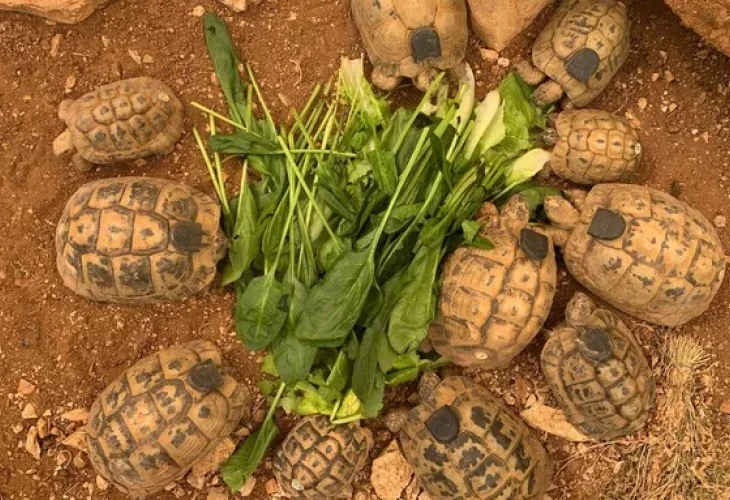
After spending years in private homes, 36 Mediterranean spur-thighed tortoises were released into open areas of Judea and Samaria over the weekend. The operation, led by the Israel Nature and Parks Authority (INPA), followed months of rehabilitation, veterinary examinations, and preparations to ensure the animals could be returned to the wild as safely as possible.
The initiative began with a chance encounter between INPA ranger Roy Gilad and a former firefighter, who explained that he had been rescuing tortoises from fires and bringing them into his home. Some had suffered burns and injuries to their limbs, while others had reproduced during their years in captivity. After Gilad explained that keeping protected tortoises without a permit is illegal and could harm their well-being, the man agreed to transfer the animals to the authority.
The following day, a resident of Gush Adumim also handed over tortoises she had kept for years. Some were in poor health and had developed shell deformities, potentially indicating inadequate nutrition or unsuitable living conditions.
Months of Rehabilitation Before Release
The tortoises were transferred to an acclimatization enclosure at the Ein Prat Nature Reserve, where they underwent weighing, veterinary examinations, and ongoing medical monitoring. The rehabilitation process was carried out by reserve staff, park rangers, and veterinary professionals.
Dr. Tomer Nisimian, a veterinarian with the Israel Nature and Parks Authority, explained that returning captive tortoises to their natural environment presents particular challenges. "One of the main challenges in releasing tortoises that have been held in captivity is the concern that they may transmit diseases to wild populations," he said.
Following professional assessments and approval from the authority's Science Division, the tortoises were released into open community areas near the locations from which they had been surrendered. The release sites were deliberately selected outside nature reserves to reduce the risk of disease transmission and allow for continued monitoring.
Tracking Tortoises With AirTags and QR Codes
To help monitor the animals after their release, some were fitted with Apple AirTags, which can provide location information when they come within range of compatible devices. QR codes were also attached to certain tortoises, allowing members of the public to report sightings and contribute to the authority's monitoring efforts.
The initiative combines wildlife rehabilitation with technology to help conservation officials gather information about the tortoises' movements and adjustment to their surroundings.
Authorities Warn Against Keeping Wild Tortoises as Pets
The Mediterranean spur-thighed tortoise is a protected species in Israel, with wild populations threatened by habitat destruction, vehicle collisions, and illegal collection.
The Israel Nature and Parks Authority emphasized that removing tortoises from the wild and keeping them in private homes can harm both the animals and local ecosystems. Officials also warned against independently releasing tortoises that have been kept in captivity, as they may carry diseases that threaten wild populations.
Members of the public who encounter a healthy tortoise in nature are urged to leave it undisturbed. Anyone who finds an injured or sick tortoise, or knows of one being held in captivity, should contact the Israel Nature and Parks Authority hotline at *3639 for guidance.
The release of the 36 tortoises marks an important step in returning protected wildlife to its natural habitat while highlighting the responsibility of the public to help safeguard Israel's native species.