

Interesting
Dallol, Ethiopia: Why Are These Colorful Hot Springs So Dangerous?
Discover the science behind Dallol’s stunning rainbow-colored pools, extreme heat, and highly acidic waters—and why this extraordinary landscape is one of the most hostile environments on Earth
- Tehila Cohen
- | Updated
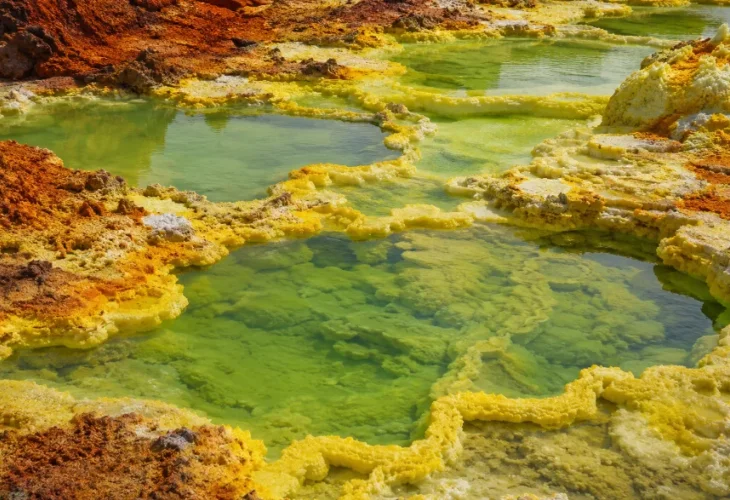
In the Dallol region of the Danakil Depression in northeastern Ethiopia lies an extraordinary landscape of hot springs that looks as though someone has spilled buckets of paint across the ground. With its brilliant pools of green, yellow, orange, and brown, Dallol is one of the most unusual geothermal sites in the world.
It is also one of the hottest places on Earth. During the 1960s, the region recorded an average annual temperature of approximately 34°C (93°F), including the winter months. What creates these remarkable colors, and why are the pools so dangerous?
What Causes the Colorful Hot Springs of Dallol?
One of the main substances responsible for Dallol's striking colors is iron. Although we usually associate iron with nails and metal tools, it can also be present in water in dissolved form. When dissolved iron comes into contact with air, it undergoes chemical changes similar to the process that causes rust to form. Different forms of iron, both in the water and in the mineral deposits accumulating around the springs, contribute to the landscape's green, yellow, orange, and brown shades.
Salts and acidity also influence the colors. A bright green pool at Dallol, for example, does not necessarily contain algae. Its color may come from the minerals and other chemical substances dissolved in the water.
At some geothermal vents, water temperatures exceeding 100°C (212°F) have been recorded. However, these extreme temperatures apply to specific points where hot water emerges from the ground, not to every pool or the surrounding air.
Why Are Dallol's Hot Springs So Dangerous?
Despite their spectacular appearance, the pools at Dallol are not suitable for swimming or even touching. Some contain extremely high concentrations of salt and acid, creating conditions that can be hazardous to humans.
Acidity is measured using the pH scale, where lower values indicate greater acidity. Ordinary water has a pH of approximately 7, while some waters at Dallol have registered values close to zero or even below it. Combined with extreme heat and high salinity, this intense acidity makes the pools particularly dangerous.
Can Anything Survive in Dallol's Extreme Conditions?
Scientists have discovered microorganisms capable of surviving in extremely hot water, while others thrive in environments with exceptionally high salt concentrations. What happens when water is simultaneously scorching hot, highly saline, and extremely acidic?
The conditions become so extreme that even microorganisms may struggle to survive. A 2019 study found no evidence of life in some of the Dallol pools examined, although microorganisms were identified in other environments within the surrounding region.
With its vivid mineral formations, scorching springs, and exceptionally harsh chemistry, Dallol offers a remarkable glimpse into the geological forces shaping our planet—and the extreme environmental limits within which life can exist.
 Wonders of CreationWhat Is a Geyser? How These Natural Wonders Work
 InterestingGlowing Mushrooms: The Mysterious Fungi That Light Up in the Dark
 Health and NutritionVegetarian and Vegan Diets: The 10 Essential Nutrients You Can't Afford to Miss
 InterestingRare Meteorite That Crashed Into Home May Hold Clues to Life's Origins

