

Health and Nutrition
Vegetarian and Vegan Diets: The 10 Essential Nutrients You Can't Afford to Miss
Learn about the 10 key vitamins and minerals every vegetarian and vegan should monitor, how to prevent nutritional deficiencies, and which foods and supplements can help support long-term health
- Revital Yitzhaki
- | Updated
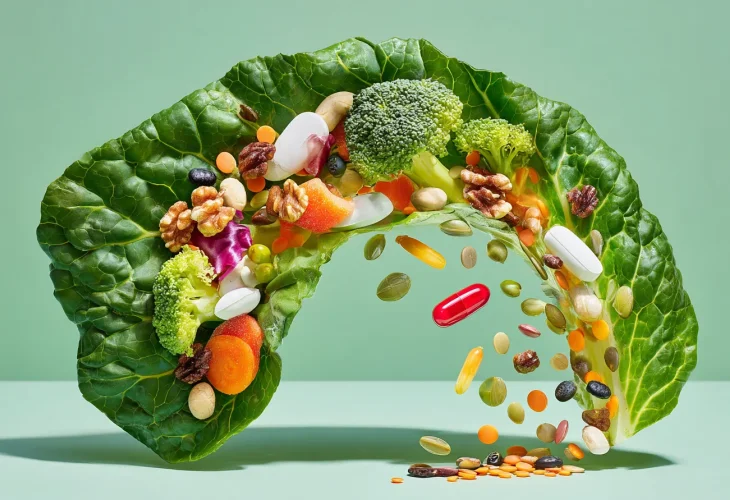
In recent years, awareness has grown that diets high in animal-based foods are not always beneficial for our health. Excessive consumption of meat and other animal products has been linked to an increased risk of heart disease, stroke, autoimmune disorders, and other chronic illnesses.
Does that automatically mean that vegetarian or vegan diets are always healthy?
According to Dr. Gil Yosef Shachar, people who choose a vegetarian or vegan lifestyle should be aware of potential nutritional deficiencies and take proactive steps to prevent them.
Nutrient deficiencies may develop for three main reasons:
Certain essential nutrients are not found in plant foods at all.
Some nutrients exist in plants but only in very small amounts or in limited food sources.
Some nutrients are present in plant foods but are absorbed less efficiently than when obtained from animal products.
There are ten key vitamins, minerals, and nutrients that vegetarians and vegans should ensure they obtain in sufficient amounts.
1. Vitamin B12
Vitamin B12 is essential for red blood cell production and proper nervous system function.
It is found naturally only in animal-derived foods. For this reason, vegans should regularly take a high-quality vitamin B12 supplement.
Vegetarians who consume dairy products and eggs may obtain B12 through their diet, but they should have periodic blood tests to ensure they are consuming and absorbing adequate amounts.
2. Iron
Iron is essential for energy production and oxygen transport throughout the body.
Although iron is abundant in plant foods, its absorption is significantly lower than iron obtained from animal sources.
Good plant-based sources include nuts, tahini made from whole sesame seeds, beets, lentils, chickpeas, and other legumes.
Iron absorption can be improved by:
Soaking nuts before eating.
Sprouting legumes.
Eating iron-rich foods together with foods high in vitamin C.
It is also advisable to avoid coffee, tea, cocoa, chocolate drinks, energy drinks, and cola close to meals, as they significantly reduce iron absorption.
3. Calcium
Calcium is essential for healthy bones and teeth and helps maintain the body's acid-base balance.
Calcium is plentiful in the plant kingdom. Although leafy vegetables contain relatively modest amounts, the calcium they provide is highly absorbable.
Nuts, almonds, seeds, and legumes are also rich in calcium, but they naturally contain compounds that inhibit calcium absorption. Soaking them for about two hours before eating helps reduce these compounds and improve calcium absorption.
4. Protein
Meeting protein requirements on a vegetarian or vegan diet requires careful planning.
Protein-rich plant foods include quinoa, buckwheat, amaranth, lentils, chickpeas, beans, peas, tofu, nuts, almonds, and seeds.
Vegetarians who consume dairy products and eggs can also obtain high-quality protein from these foods.
5. Vitamin A
Vitamin A is important for healthy skin, vision, and immune function.
Preformed vitamin A is found only in animal foods. However, plants provide carotenoids, including beta-carotene, which the body converts into vitamin A.
Orange vegetables and leafy green vegetables are particularly rich sources.
Although carotenoids are absorbed less efficiently than vitamin A from animal foods, cooking and heating vegetables significantly improves their absorption.
6. Omega-3 Fatty Acids
Omega-3 fatty acids are vital for brain function, the nervous system, and immune health.
There are three primary forms of omega-3 found in nature. Two are found mainly in animal foods, while one (ALA) is found in plants and can be converted by the body into the other forms.
Walnuts are considered one of the best plant sources. Approximately 30 grams (about one ounce) of walnuts per day provides the recommended daily intake of ALA omega-3.
7. Iodine
Iodine is essential for healthy thyroid function and proper metabolism, and is found primarily in animal-based foods.
Vegetarians and vegans may need to obtain iodine through supplements or by using iodized salt.
Although seaweed contains iodine, Dr. Shachar advises caution because some varieties may also accumulate heavy metals that can be harmful to health.
8. Vitamin B3 (Niacin)
Vitamin B3 supports nervous system function, cholesterol regulation, and numerous metabolic processes.
Although it is present in plant foods, concentrations are generally lower than those found in animal products.
Good plant sources include whole grains, legumes, nuts, and seeds.
As with iron, caffeine consumed close to meals may reduce vitamin B3 absorption.
9. Zinc
Zinc plays a role in hundreds of biological processes throughout the body and is particularly important for immune function and healthy skin and hair.
While zinc is found in plant foods, it is absorbed less efficiently than zinc from animal sources.
Soaking nuts and seeds for about two hours before eating can significantly improve zinc absorption, as well as the absorption of other important minerals such as calcium and iron.
Excellent plant sources of zinc include pumpkin seeds and tahini.
10. Vitamin K2
Vitamin K2 is found primarily in animal-derived foods and plays an important role in heart health and bone formation.
Plants contain vitamin K1, which the body can convert under certain conditions into one active form of vitamin K2 known as MK-4.
Another important form, MK-7, supports calcium deposition in bones and cardiovascular health. It can be obtained through supplements or fermented foods such as fermented buckwheat bread, tempeh, and homemade sauerkraut that has been fermented for about one month.
Special Care During Certain Life Stages
Extra attention is especially important during periods of increased nutritional demand, such as adolescence, pregnancy, and breastfeeding. During these stages, preventing nutrient deficiencies is critical for maintaining good health.
Anyone following a vegetarian or vegan diet during these life stages should consult qualified nutrition professionals, carefully plan their diet, and use supplements when necessary.
The risk of nutritional deficiencies is particularly high among teenagers who adopt vegetarian or vegan diets while continuing to rely heavily on highly processed foods that provide little nutritional value.

