

World News
Iran’s Attacks Growing More Effective as It Adapts to U.S. Defenses
Four strikes in Jordan caused mounting casualties and aircraft damage as U.S. officials report faster missiles and increasingly precise targeting
- Brian Racer
- | Updated
 Shutterstock
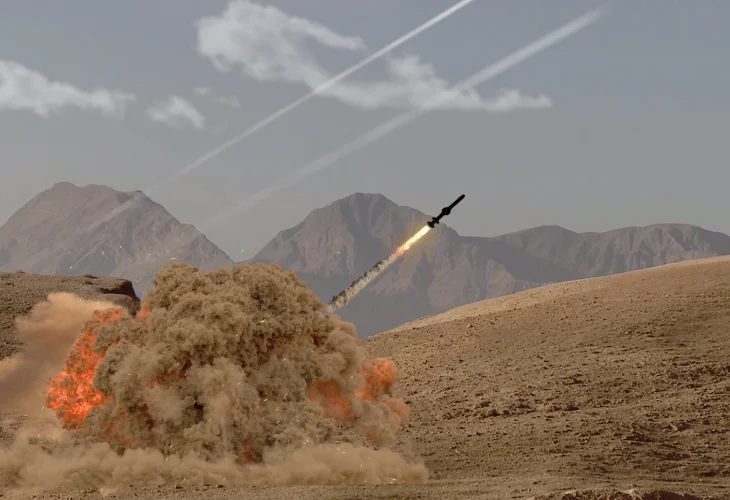
Iran’s recent attacks on American forces are producing increasingly serious results, raising concern that Iran is learning how to challenge U.S. defenses despite months of American and Israeli strikes on its military capabilities.
The clearest evidence has emerged in Jordan, where Iran carried out four attacks against U.S. forces between Monday and Friday. The sequence culminated Friday night in a strike on Muwaffaq Salti Air Base that killed two American service members, left another missing and wounded several others. U.S. Central Command said manned and unmanned aircraft were also damaged.
The attacks do not mean Iran has defeated American air defenses. U.S. and allied systems continue to intercept many Iranian missiles and drones. However, Iran does not need every weapon to reach its target. Even unsuccessful barrages can force the United States to expend costly interceptor missiles against weapons that are generally cheaper for Iran to launch, while a small number that penetrate the defenses can still kill troops, damage aircraft and disrupt operations at important regional bases.
The four attacks show a rapid increase in the damage Iran was able to cause over the course of the week. Monday’s strike hit a residential facility at King Faisal Air Base and injured up to five U.S. soldiers. A second attack struck another Jordanian base used by American Black Hawk helicopters, damaging several aircraft. On Wednesday, Iranian missiles hit Muwaffaq Salti Air Base in Azraq, injuring approximately 20 U.S. soldiers who had taken shelter in bunkers. Iran struck the same base again on Friday, this time killing American personnel.
Jordan’s growing role in the U.S. campaign may help explain why Iran has focused so heavily on the country. According to the New York Times, the Pentagon moved forces from Bahrain, Qatar and the United Arab Emirates into Jordan and Israel before and during the opening stages of the war, because they were seen as safer places to operate from. At the same time, some Gulf countries limited how the United States could use their territory or airspace. That left Jordan, which already hosted major American air bases, carrying more of the military burden, and made it a more important target for Iran.
That sequence alone does not prove that every Iranian missile or barrage became more advanced. However, the Wall Street Journal reported that U.S. officials believe Iran has been adjusting its methods after observing American defenses, including through the use of extremely fast and maneuverable missiles that are harder to intercept, with Jordan providing the clearest evidence behind that assessment.
U.S. officials told the Wall Street Journal that Iran has adapted to American defenses by firing missiles that travel at extremely high speeds and can maneuver as they approach their targets. Those characteristics make the missiles more difficult to track and intercept.
Iran also appears to be getting better at choosing what to hit. Recent strikes have reached troop housing, helicopter bases, soldiers sheltering in bunkers, and both manned and unmanned aircraft. U.S. officials are investigating whether China or Russia may be helping Iran identify these sensitive targets, though they have not released evidence showing that such assistance took place.
Iran has previously targeted the systems that support American missile defenses. Earlier attacks in the war damaged major radar installations in Jordan and Qatar, forcing the United States to replace equipment used to detect incoming ballistic missiles.
Washington is now considering a wider response. The Trump administration informed Israel that it plans to send dozens of additional U.S. refueling aircraft ahead of a possible expansion of military operations against Iran.
Options presented to President Donald Trump reportedly include strikes on Iranian power plants and other infrastructure, additional attacks on nuclear facilities and bombing the suspected underground Pickaxe Mountain site.
The deployment comes as the United States assesses whether Iran’s recent success reflects improved missile tactics, better intelligence or vulnerabilities in American regional bases, and how far Washington must escalate to prevent further casualties.

