

Magazine
Ben Sasse Is Dying. What Does He Wish He’d Done Differently?
A terminal diagnosis forced Former Nebraska Senator to confront what Judaism has warned us about all along
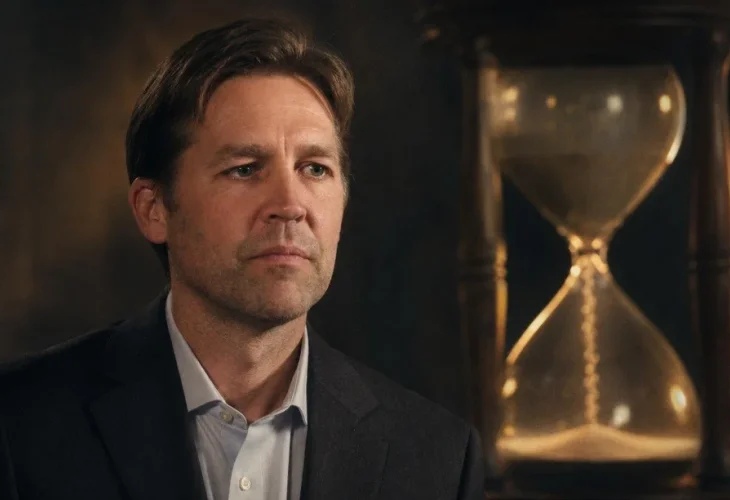
Former Nebraska Senator Ben Sasse is dying. Diagnosed last December with stage-four metastatic pancreatic cancer, the 54-year-old has been given a terminal prognosis. In a recent, wrenching interview with CNN's Jake Tapper, part of a special titled Ben Sasse Is Going Home: Lessons on Life and Death, which aired July 26, Sasse spoke candidly about one of his deepest regrets: the way he chose to spend his time.
It wasn't a policy vote or a political fight. It was how much he traveled.
"I have serious regret about how much I traveled," Sasse told Tapper, describing the years he spent frequently away from home for Senate votes and university obligations. Looking back, he said he pictured his children with an hourglass around their necks, its sand slipping away while he was elsewhere. He put to himself the question that now haunts him: what was he doing instead of being with them?
For those who don't follow Washington closely, some background is useful. Sasse represented Nebraska in the U.S. Senate from 2015 to 2023, building a reputation as a constitutionalist unwilling to bend easily to party tribalism. He left the Senate to become president of the University of Florida, a position he held for less than two years before resigning in 2024. At the time, he attributed his resignation to his wife Melissa's health problems — including a new epilepsy diagnosis and memory issues — and to his need to be, in his words, a husband who could "pull his weight" and a father who could be home more nights. His wife's health had already been seriously affected by an aneurysm and a series of strokes in 2007. It reads now like an early version of the lesson his cancer diagnosis would later bring into sharper focus.
Since receiving his prognosis, Sasse has not retreated from public life; he has redirected it. He launched a podcast with journalist Chris Stirewalt called Not Dead Yet — a title borrowed, fittingly, from a Monty Python gag — in which he interviews people about lives lived with gratitude and grit, and reflects openly on his own mortality, his faith, and his family. He has spoken about death as something to be hated even while facing it without illusions, describing it as "a wicked thief." What he has not done is pretend he has unlimited time left to figure out what matters. He has simply started living as though the hourglass is visible to him too.
Judaism has always insisted that it is visible to everyone; we just prefer not to look. "Teach us to number our days," the Psalmist asks God, "that we may acquire a heart of wisdom" (Tehillim 90:12). The request is strange on its face — counting days sounds like arithmetic, not wisdom. But the Psalmist's insight is that wisdom is the arithmetic: a heart that has genuinely internalized how few days remain will naturally reorder its priorities, because scarcity is what forces triage. Infinite time flattens everything into "eventually." Finite time sorts things into "now" and "never."
The Mishnah in Pirkei Avot makes a related point from two different angles. Rabbi Tarfon warns that "the day is short, the work is plentiful" (Avot 2:15) — a reminder that human life is too brief for complacency, especially when there is so much work to be done in the service of Torah. Rabbi Eliezer, meanwhile, tells his students to "repent one day before your death" (Avot 2:10). When they ask how anyone can know which day that is, the Talmud in Shabbat 153a records the logic of his answer: precisely because you don't know, you should do teshuvah today, lest you die tomorrow. Uncertainty about the deadline isn't a reason for delay; it is the reason for urgency.
The Mesillat Yesharim opens with a related warning. The Ramchal begins by insisting that a person must clarify what his duty is in this world and what goal he should direct his aspirations toward throughout his lifetime. His point is not that worldly pursuits are inherently wrong, but that without a clear understanding of what a life is for, even legitimate pursuits can absorb the years and displace what matters most. Chasing a career, reputation, or travel is not necessarily a failure — Sasse's Senate work and university presidency were not failures. The Ramchal's point is subtler: if we do not decide what our lives are ultimately for, secondary pursuits can quietly become our primary ones. Dinners with children do not compete well against urgent emails. They only win when we've already decided, in advance, that they should.
Sasse did not need Jewish sources to arrive at this. A terminal diagnosis was blunt enough. But Judaism aims to teach us that we were never meant to need such a rude wake-up call: the hourglass has been visible all along, to anyone willing to number their days before the days run out on their own.

