

Israel News
After Once Refusing to Sell It to Israel, the U.S. Is Now Buying It for $1.8 Billion
After previously refusing to sell Israel a comparable system, the U.S. Department of Defense has signed a massive contract to purchase an Israeli-developed system that helps fighter jets find targets and guide munitions.
- Yuval Aviv
- | Updated
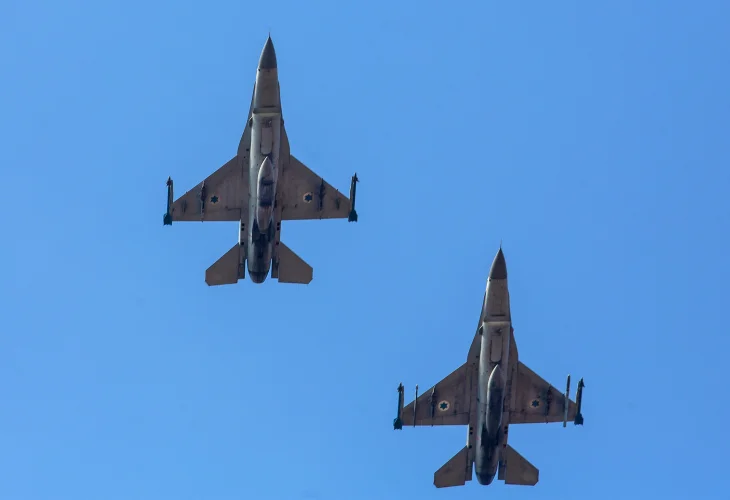 (Photo: Moshe Shai, Flash90)
As the U.S. Air Force continues investing in upgrades to its operational capabilities, one of the key strike systems it uses remains based on an Israeli development. According to a report by Udi Etzion published today (Sunday) on the Walla website, the U.S. Department of Defense awarded American aerospace corporation Northrop Grumman a framework contract worth $1.84 billion to purchase Litening pods, used to guide fighter jets, as well as to upgrade and maintain systems already in service. The agreement will remain in effect through 2035, with actual orders to be placed over the course of the contract period.
The Litening pod was originally developed by Rafael, while production for the U.S. military and foreign customers takes place in the United States through Northrop Grumman, as part of a partnership between the two companies. The pod, mounted beneath the aircraft’s fuselage and resembling a missile in its external appearance, includes a camera, advanced sensors and a laser system for guiding munitions. These capabilities allow pilots and aircrew members to locate ground targets during the day, at night and in a range of weather conditions, while helping direct precision weapons.
In recent years, Litening’s operational role has expanded. Alongside strike missions, it has become an important tool for identifying UAVs and drones—small targets that aircraft radar sometimes struggles to detect.
Behind the system’s success is an unusual story. About 40 years ago, Rafael developed Litening with funding from Israel’s Ministry of Defense, after the United States refused to sell the Israeli Air Force the LANTIRN system—the comparable American pod. Since then, five generations of Litening have been developed, including improvements in detection range, resolution and operational capabilities. An option was also added to integrate a radar made by Israel Aerospace Industries into the system, as part of a collaboration between the two Israeli defense industries.
Since 1996, the Pentagon has purchased about 900 Litening pods. When F-35 aircraft entered service with the U.S. Air Force, Navy and Marine Corps, there were assessments that Litening’s future could be affected, since the new aircraft is equipped with an integrated munition-guidance system that does not require an external pod. Despite this, the United States continues to operate Litening on its other aircraft in service, and the new contract indicates that the system is expected to remain a central part of the aerial strike array in the years ahead.

