

Interesting
While the World Heats Up, Antarctica Just Hit Minus 84 Degrees
As much of the world battles extreme heat and wildfires, Antarctica has recorded one of Earth’s lowest temperatures in more than a decade.
- Shira Davush
- | Updated
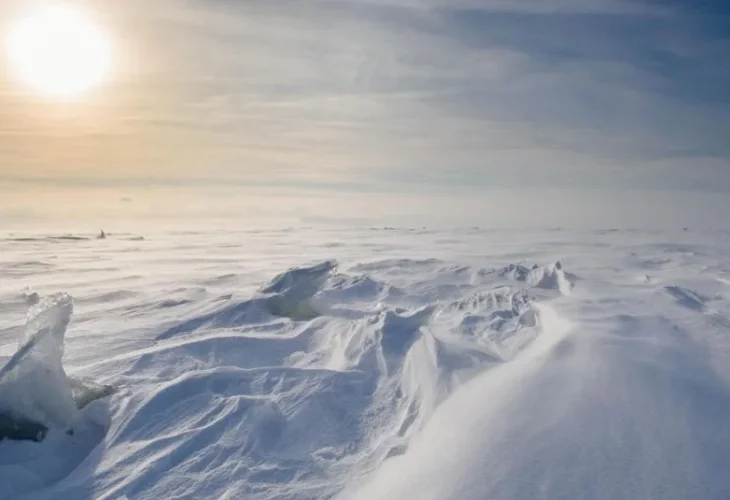
While millions of people across Europe, North America, and Asia are enduring extreme heat waves, wildfires, and soaring temperatures, something very different is happening at the other end of the world. At Antarctica’s Concordia research station, temperatures this week plunged to an extraordinary minus 84.1 degrees Celsius (minus 119.4 degrees Fahrenheit), reportedly the lowest temperature recorded anywhere on Earth since 2012.
The reading was recorded twice within just nine minutes, adding confidence that it was not simply an isolated measurement error. Even for scientists accustomed to the brutal Antarctic winter, temperatures below minus 84 degrees Celsius are considered exceptional.
Why Does It Get So Cold at Concordia Station?
Concordia Station sits more than 3,200 meters (10,500 feet) above sea level and over 1,000 kilometers (620 miles) from the Antarctic coastline. Its remote location, high elevation, and exceptionally dry atmosphere create ideal conditions for extreme cold.
During the Antarctic winter, the sun does not rise there for an extended period. Without incoming solar radiation, and with clear skies and very little moisture in the atmosphere to retain heat, warmth from the surface can escape rapidly into space.
Temperatures around minus 80 degrees Celsius are not unheard of at Concordia, but dropping below minus 84 remains relatively rare.
Still, the latest reading does not break the official world record for the lowest directly measured air temperature. That record belongs to Antarctica’s Vostok Station, where the temperature fell to minus 89.2 degrees Celsius (minus 128.6 degrees Fahrenheit) in 1983.
Extreme cold in Antarctica also does not contradict the broader trend of global warming. Weather describes short-term conditions and individual events, while climate is measured through patterns and averages over decades. A particular location can therefore experience exceptional cold even as average global temperatures rise over the longer term.
A Research Station Cut Off From the World
Concordia Station is jointly operated by France and Italy, with only a small team remaining there throughout the Antarctic winter.
During the harshest winter months, conditions become so extreme that aircraft cannot routinely reach the station. The researchers who remain there must therefore spend an extended period isolated from the outside world, relying on food, equipment, and other supplies prepared in advance.
That isolation has also made Concordia valuable for a very different kind of research.
The combination of prolonged darkness, confinement, extreme cold, and physical separation from the rest of the world provides scientists with an unusual environment for studying some of the challenges astronauts could face during long-duration space missions.
Researchers can examine how prolonged isolation and the absence of normal daylight affect the human body, sleep, mood, cognition, and social interactions. The findings could ultimately contribute to preparations for future crewed missions to destinations such as the Moon and Mars.
While much of the Northern Hemisphere searches for relief from extreme summer heat, the researchers spending winter at Concordia are experiencing an almost unimaginable opposite: months of darkness, extraordinary isolation, and temperatures approaching the coldest ever directly recorded on Earth.

