

Behind the News
Trump Is Shifting Into Midterm Mode on Iran
With Iran under pressure and elections approaching, Trump may have more to gain from managing the current reality than restarting major combat
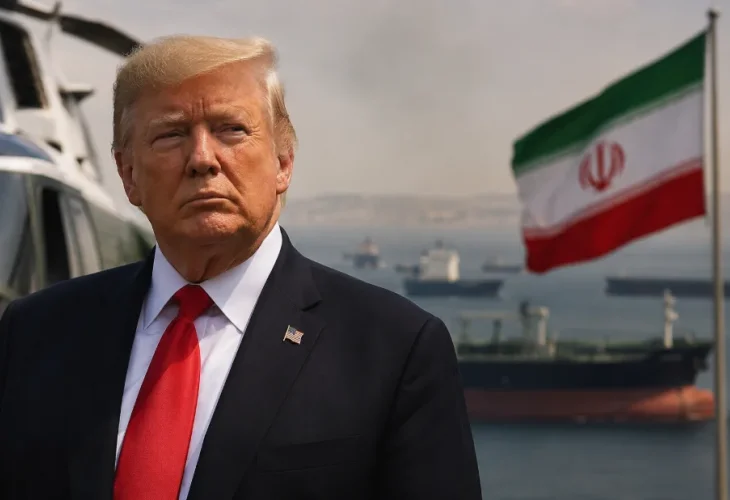
Axios reported Sunday that President Donald Trump has decided, at least for now, against returning to major combat operations against Iran, after leaning toward renewed military action just a week ago. “We are low-keying it,” Trump said, and that the United States is now only “semi-negotiating” with Iran while watching the pressure on Iran’s economy build.
That may be the clearest sign yet that Trump is shifting into midterm mode on Iran: instead of looking for another major military victory, he may now be looking to preserve the current situation and campaign in the coming months on what the United States has already accomplished.
By November, Trump may try to turn the current situation into a campaign advantage, arguing that under his leadership the United States badly weakened Iran’s military, struck its nuclear facilities, kept its economy under intense pressure and got substantial amounts of Gulf oil moving again, all without leaving America trapped in sustained major combat.
He told Axios that the United States is only “semi-negotiating” with Iran and is instead watching the country struggle with inflation and a lack of money. Trump also said Iran is in “very bad shape” and does not have enough money to pay its troops.
Iran’s latest demands only strengthen that argument. On Saturday, the head of Iran’s Supreme National Security Council laid out additional conditions for reopening the Strait of Hormuz, including lifting U.S. sanctions, releasing frozen Iranian funds, ending the American naval blockade, withdrawing U.S. forces from around Iran and paying compensation for war damage.
In a sense, Iran is telling Trump exactly where the pressure is hurting. If sanctions, frozen funds and the blockade were not affecting Tehran, there would be little reason to make their removal central demands. And if Trump believes those tools are already working, that gives him even less reason to give them up simply to secure a deal before the midterms.
If Trump believes time is now working against Iran, another major bombing campaign may offer less benefit than simply keeping the pressure in place.
Axios reported that one U.S. official made a similar argument: renewed fighting allows the Iranian regime to focus on the war rather than confront the damage to its infrastructure and the economic crisis at home. When the fighting stops, Iran has to deal with those problems.
Hormuz gives Trump another reason to keep the current pressure in place rather than rush into a deal or a larger war. Axios reported that substantial amounts of oil are already moving through the strait and that Washington wants to increase those flows even without a final agreement.
“Our expectation is the same oil and gas come out of the Gulf you saw before the conflict started,” Vice President JD Vance said Saturday, already emphasizing that point publicly. If that continues, Trump can use Hormuz as another campaign argument that the U.S. restored energy flows without giving Iran the sanctions relief and other concessions it is demanding.
Restarting a major war, however, risks sending oil and gasoline prices higher again, shaking financial markets and putting the Middle East back at the center of the American election campaign. There is little upside in destroying another Iranian target if the immediate result is more expensive gasoline two months before voters go to the polls.
Another sign that the pressure may be working is the reported split inside Tehran. Axios said President Masoud Pezeshkian’s camp is increasingly worried about economic collapse and favors reaching a deal, while a harder-line camp led by IRGC commander Ahmad Vahidi opposes making concessions.
That leaves Trump with a potentially simple midterm argument: The United States badly weakened Iran militarily, damaged its nuclear infrastructure, kept its economy under pressure, got Gulf oil moving again, avoided becoming trapped in another endless Middle East war and offered negotiations that Iran refused on acceptable terms.
Israel adds another consideration. Israel is scheduled to hold elections on Oct. 27, just one week before the U.S. midterms on Nov. 3, meaning both leaders now have another incentive to avoid an uncontrolled escalation during the final stretch of their respective campaigns.
My expectation is that without a major Iranian provocation, Trump will try to keep the conflict roughly where it is through the midterms: sanctions, blockade pressure, negotiations, warnings and limited retaliation when necessary, but no deliberate return to sustained major combat.
A major Iranian attack on U.S. forces, Israel, Gulf infrastructure or commercial shipping could obviously change that calculation. But for now, Trump may no longer be looking for the next phase of the Iran war. He may be looking for the version of the current reality he can campaign on.

