

Raising Children
How to Raise Children Who Love Torah and Shabbat
The way we present Torah and mitzvot can shape a child’s relationship with Judaism for life. Discover how warmth, joy, and a beautiful Shabbat atmosphere can inspire children to love Hashem and embrace Jewish life.
- Rabbanit Chagit Shira
- | Updated
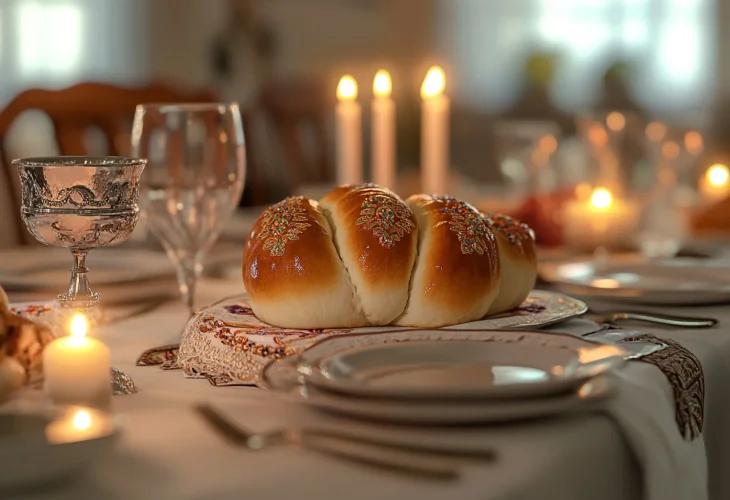
“And these are the ordinances that you shall place before them.” The words “before them” imply that the Torah should be presented like a table that is set and ready for a person to eat from.
Think about how much work and preparation goes into bringing food to the table. You chop, fry, season, set the table, and serve the meal. All of this creates anticipation among the members of the household and makes them want to taste what you have prepared. The more effort you put into the meal, and the more beautifully and neatly it is presented, the more appetizing and inviting it becomes.
This is how I want you to present the Torah and mitzvot to them, Hashem tells Moshe. Present them in a way that makes people yearn for them, become excited about them, want them, and embrace them.
In the blessings over Torah study, we ask: “Please, Hashem our God, make the words of Your Torah sweet in our mouths.” We ask that everything connected with Torah and mitzvot should be pleasant and sweet.
The Hebrew word arev, meaning sweet or pleasant, contains the same letters as ra’ev, meaning hungry. We want to feel a hunger and desire to observe, perform, and fulfill the mitzvot. And ha’arev, “make sweet,” contains the same letters as hav’er, “ignite” or “set aflame.” We want Torah to burn brightly within the heart.
How Do We Teach Our Children to Love Torah?
How do we help our children become excited about Torah? How do we make them enthusiastic about a mitzvah? How do we help their hearts burn with love for Hashem? How do we make them look forward to Shabbat and love the Shabbat table?
It all depends on how we place these things before them. Is what we are offering appealing? Is it inviting, pleasant, and beautiful? Or is Torah presented merely as a list of obligations, restrictions, and things that are forbidden?
How painful it is that many children fall away simply because no one knew how to properly present the beauty of Torah and the wonder of Shabbat to them. And how many children who strayed eventually returned because they missed Shabbat, the holidays, and the special atmosphere they remembered from home.
Give Shabbat a Taste They Will Remember
One of the most beautiful opportunities we have as mothers to convey love for Hashem and emunah is Shabbat. Shabbat has a fragrance. It has a taste.
Mother, what does your face look like as Shabbat approaches? Are you happy or resentful? Exhausted and irritated, or excited?
The moment children see you bitter and tense, they may absorb the message that Shabbat is simply work, pressure, and stress. But when they see you happily preparing for Shabbat, working with enthusiasm, a smile, and genuine excitement, they absorb a very different message: Shabbat is good.
Eventually, our children will grow up and make their own choices. What will they choose? Will they necessarily do what they saw us do? Ultimately, they will choose what they have come to believe is good.
That is why we must teach them that Shabbat is good, that making a blessing is good, and that prayer is good. These things should not be experienced merely as obligations, but as something genuinely good.
Make the Shabbat Table a Place of Warmth
Remember that the Shabbat table is not the place to solve problems or settle accounts. It is not the time to suddenly remember that your son woke up late this week or that your daughter did not clean her room. God forbid.
Do the opposite. Go around the table and offer compliments, encouragement, and kind words.
A beautiful, thoughtfully prepared Shabbat is a wonderful way of “placing it before them,” just as Hashem intended: like a table that has been beautifully set.
It is not only about the food. Even more important are the atmosphere and the sense of calm. Create memories that will make your children long for Shabbat. Set the table early. Invest in making it beautiful, warm, and inviting.
The same principle applies to all the mitzvot: as little emphasis as possible on “You’re not allowed,” and as much as possible on making Judaism sweet, inviting, and alive with passion.
May you have much nachat from your children.

