

Sukkot
Sukkot, Family, and the Power of Unity
How the sukkah and the Four Species teach us to embrace differences, create meaningful family moments, and find joy even when the holiday feels challenging
- Rabbi Dan Tiomkin
- | Updated
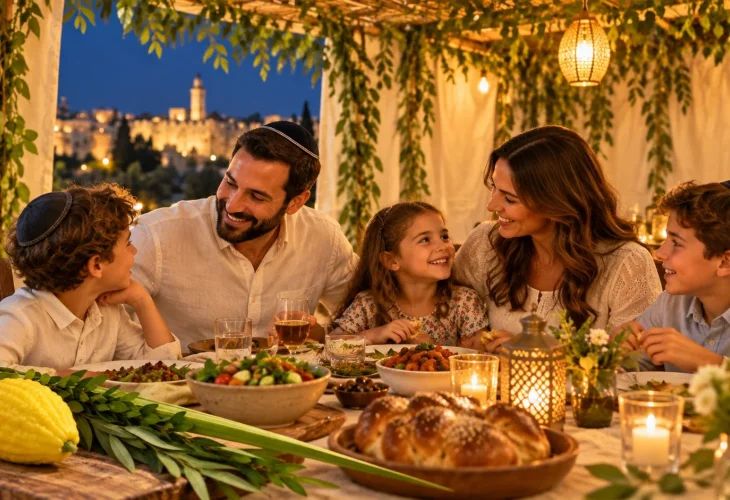
The days of Sukkot, zman simchateinu, the season of our rejoicing, are holy and uplifting. From a family perspective, they can also be complicated, especially when there are challenging children at home.
Unlike Passover, when we speak about four different sons and respond to each one according to his individual needs in order to connect with him, Sukkot emphasizes something different.
On Sukkot, we all sit in the sukkah. We bind the Four Species together. We all leave our familiar comfort zones. And within each of us shines a special light, a glimpse of the future redemption, when everything will ultimately be repaired and made whole.
The Four Species as a Symbol of Unity
The theme of unity is reflected directly in the mitzvah of the Four Species. Each of the four species represents a different type of person.
As our Sages explain in the Midrash, taste and fragrance symbolize Torah learning and good deeds, and the four species represent the different combinations of these qualities.
What the Willow Teaches Us
Special attention should be given to the aravah, the willow. It represents those who have neither Torah learning nor mitzvot, neither “taste” nor “fragrance.” On the surface, its spiritual standing seems lower, and under ordinary circumstances, forming a close connection with people represented by the willow might present difficulties.
But on Sukkot, the picture changes completely. Without the willow, it is impossible to recite the blessing and fulfill the mitzvah of taking the Four Species. The holiness and joy of the festival allow even these very different elements to come together in the right way.
Jewish works explain that the willow does not represent only other people who lack “taste” and “fragrance.” It also represents the unfinished and imperfect parts that exist within every one of us. Recognizing those parts, rather than denying them, can itself become a path toward repairing and refining them. The Sfat Emet develops this idea in his teachings for Sukkot (5634/1874).
Finding Opportunity in the Discomfort
Of course, anyone who wants to complain during the holiday can find plenty of reasons. The sukkah may be cramped. You can hear the neighbors. You have no control over the weather. Things are simply less comfortable than usual.
But that very discomfort can also create an opportunity. Because we are all in a different environment, outside our normal routines, we have a chance to step beyond our usual labels, habits, and fixed patterns. We can create new, positive experiences together.
This is an opportunity to focus on what is good and to draw as many moments of joy as possible from the wellspring of Sukkot, whether personal, marital, or family joy.
Despite the circumstances, despite sadness or frustration, we can try to seize moments of unity and calm, a smile, a kind word, an act of kindness, or a meaningful shared experience.
There Is More Than One Way to Celebrate
Some people follow the spirit of the Talmudic statement, “I praise the lazy on the festival” (Sukkah 27), and choose to avoid traffic jams and long lines. Instead, they spend more time learning Torah, playing board games, hosting family, and simply being together.
Others use the vacation days to travel and explore our beautiful and holy Land. Some seek joy through Simchat Beit HaShoevah celebrations, while others find it quietly within their own homes.
There is no single formula. Each person and each family needs to think carefully about what will help them reach genuine joy. The goal is to draw from that joy continuously, and to bring an abundance of blessing and salvation upon ourselves, our families, and the entire Jewish people, wherever they may be.
May we all have a joyful Sukkot.

