

Sukkot
Sukkah VeLulav: The Meaning Behind a Beloved Sukkot Poem
Discover the history, symbolism, and spiritual themes of “Sukkah VeLulav Le’Am Segulah,” a traditional Sukkot hymn celebrating the sukkah, the Four Species, and the joy of the festival
- Amitai Chanaya
- | Updated
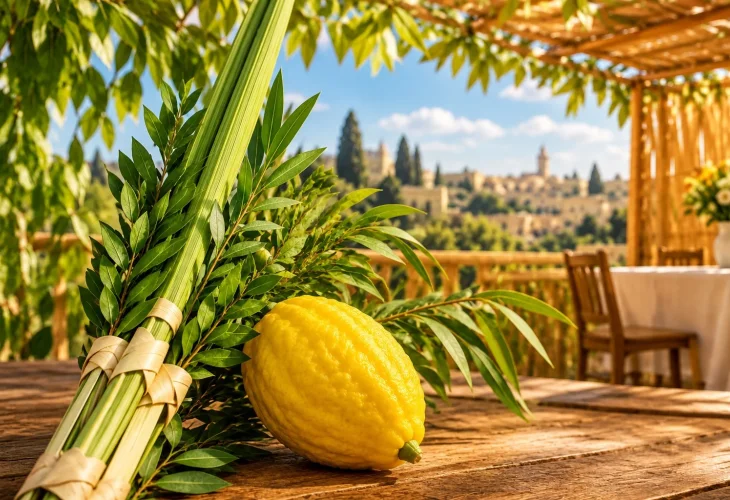
The piyut (liturgical poem) “Sukkah VeLulav Le’Am Segulah” is an important part of the musical prayer tradition of Sukkot. The poem expresses the deep connection between the Jewish people and the mitzvot of the festival, focusing especially on the sukkah and the Four Species. It celebrates the joy of Sukkot while highlighting the profound spiritual symbolism contained within these mitzvot.
Who Wrote the Piyut?
“Sukkah VeLulav Le’Am Segulah” was composed by Rabbi Moshe ben Yaakov Adahan, a poet and Torah scholar who lived in Morocco, in the Sahara region. Rabbi Moshe Adahan served as an Av Beit Din and spiritual leader of the Jewish community of Meknes, where he held important rabbinic positions until the middle of the 18th century.
Its Place in the Sukkot Prayer Tradition
“Sukkah VeLulav Le’Am Segulah” is among the piyutim traditionally sung during Sukkot, particularly during the festival and on Hoshana Rabbah. It is familiar in Babylonian and North African Jewish traditions.
The piyut may be sung during the festival prayers, in connection with the processions or Hoshanot, depending on local custom. Its words and melody express the joy and gratitude that characterize Sukkot and help worshippers connect more deeply with the spirit of the holiday.
The Sukkah and the Lulav
The piyut opens with the sukkah and lulav, presenting them as symbols of the Jewish people’s unity and connection to holiness. The sukkah represents Divine protection and kindness, while the lulav, as part of the Four Species, symbolizes spiritual elevation and closeness to Hashem.
The Four Species
The poem goes on to explore the spiritual significance of the Four Species: the lulav, etrog, hadassim, and aravot. They symbolize different spiritual qualities and the various elements within the Jewish people, while also expressing the bond between the individual and God.
The Joy of Sukkot
Another central theme of the piyut is the unique joy of Sukkot. Rejoicing on the festival is itself a mitzvah, and the poem emphasizes the inner happiness of a person who observes the mitzvot of Sukkot with gratitude and appreciation.
The Literary Structure of the Piyut
“Sukkah VeLulav Le’Am Segulah” follows a structured rhyme scheme, with each stanza ending in a consistent rhyme. This gives the poem a musical quality that lends itself naturally to communal singing. The exact rhythm varies according to the melody and synagogue tradition.
The piyut also makes rich use of imagery and symbolism drawn from nature, particularly through the Four Species. The lulav and sukkah appear as central motifs, each carrying layers of spiritual meaning.
In addition, the poem contains numerous biblical and Midrashic allusions, especially to the Torah’s descriptions of Sukkot and to teachings that present the Four Species as symbols of Jewish unity and the relationship between the Jewish people and Hashem.
“Sukkah VeLulav Le’Am Segulah” is therefore far more than a festive song. Its poetic structure, spiritual imagery, and Kabbalistic themes invite the worshipper to look more deeply at the mitzvot of the sukkah and lulav and to experience the joy of Sukkot on a more profound level.

