

Magazine
“Jerusalem Was the First Word I Knew”: Galit Levin’s Remarkable Journey
Galit Levin grew up in Ethiopia imagining Jerusalem as a city of gold filled with righteous people. Her journey to Israel was only the beginning of a remarkable story of faith, loss, identity, and rebuilding.
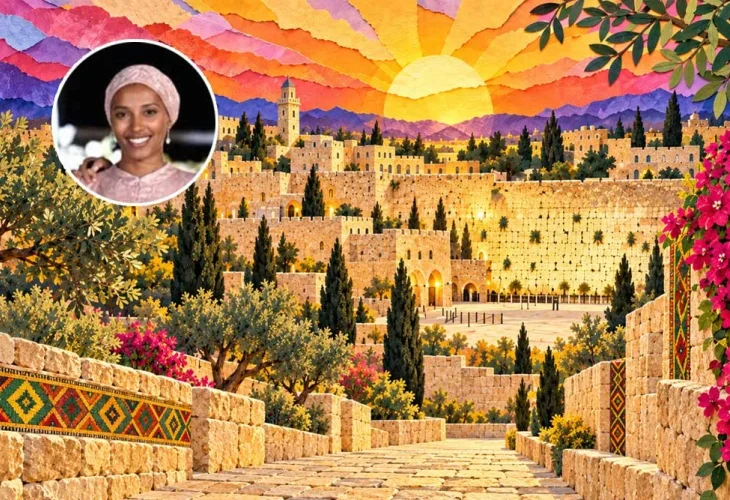
“Jerusalem was the first word I knew how to say,” says Galit (Ageritu) Levin as she begins the story of her journey from Ethiopia to Israel.
Although she was only six years old when she left the country of her birth, she vividly remembers the longing for the Land of Israel that surrounded her childhood.
“People were always talking about how we would get to Jerusalem, how the redemption would come,” recalls Galit, who today lives in Ramat Beit Shemesh. A mother of four and a grandmother, she works as an emotional therapist specializing in psychodrama and also serves as a mikveh attendant.
As a little girl, those conversations shaped the Jerusalem of her imagination. “I built an entire world in my mind: a land flowing with milk and honey, a place where even candy grew on the trees, a city made of gold where righteous people walked the streets.”
Then, one day, the dream began to become real.
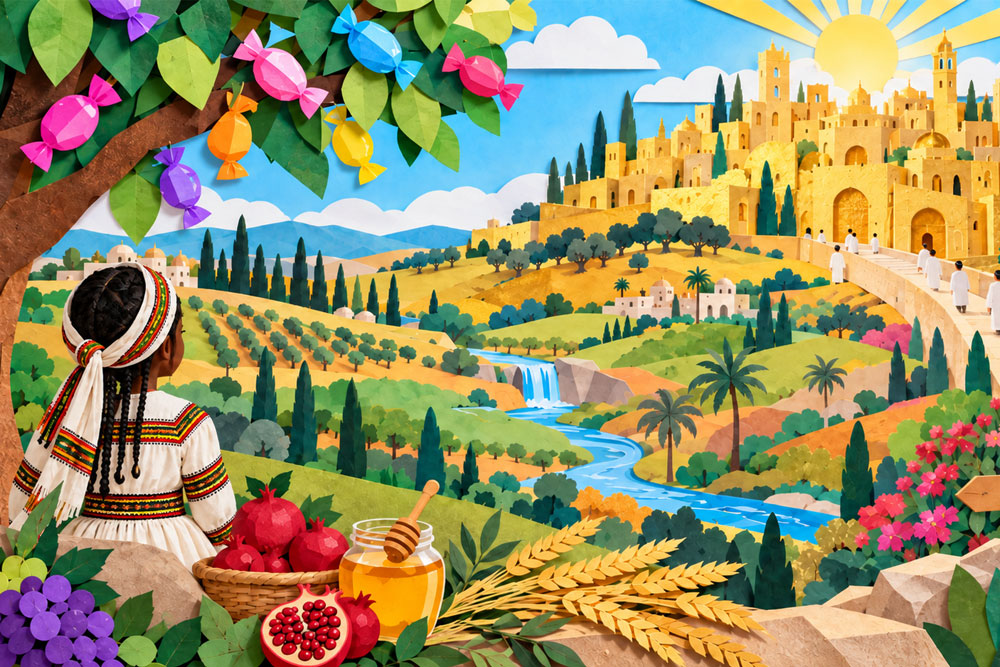
“The Dream of Jerusalem Was Stronger Than the Fear”
“There was real talk about immigrating to Israel,” Galit recalls. “It was like the Exodus from Egypt.”
Her family lived in a small village near Gondar. Galit was the sixth of seven children born in Ethiopia; another brother would later be born in Israel. Leaving Ethiopia was dangerous, and the journey had to be undertaken secretly. “There was real fear because it was illegal. Quite a few people were caught and imprisoned.”
But alongside the fear was an extraordinary faith.
“Not theoretical faith, not a philosophical idea,” she emphasizes. “Faith that was part of life itself. The dream of reaching Jerusalem was stronger than the fear of the road. On a personal level, I understood that all this suffering was part of something bigger than me.”
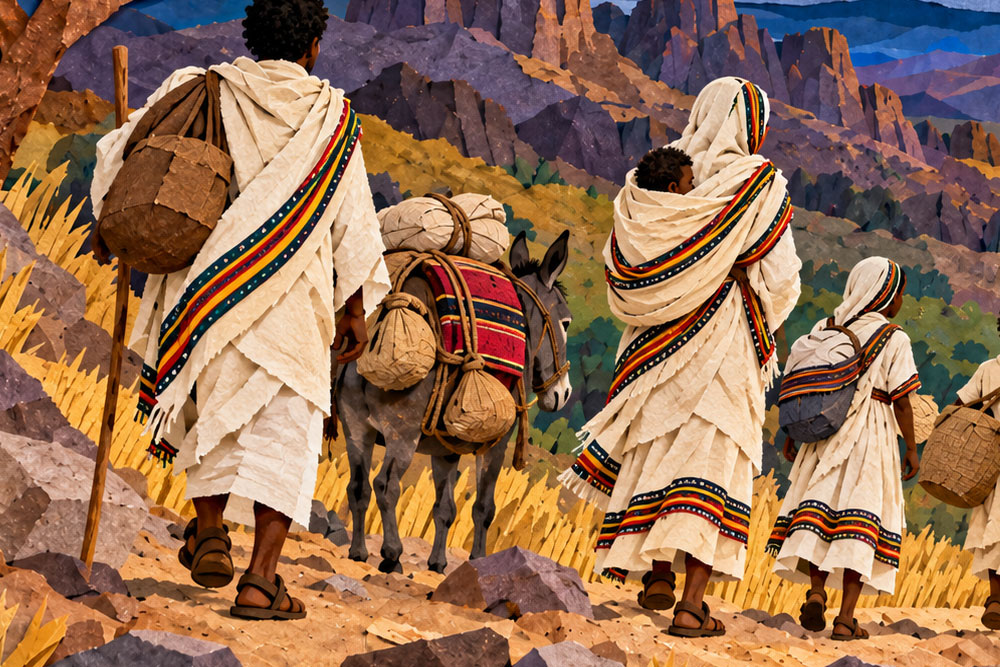
Galit describes her childhood home as a typical Jewish family in their village, living with almost no exposure to modern technology or media. To begin their journey to Israel, the family first had to reach Sudan on foot.
“We walked for a month, sometimes at night, carrying the few belongings we had on horses and donkeys.”
Reaching Sudan, however, did not mean that the danger was over. The family remained for nine months in what Galit describes as a camp, where disease and death were everywhere. Thousands died during that period, including the young son of Galit’s married sister, who was pregnant at the time and terrified that her next child would not survive either. Other relatives also died.
“What I remember most is fear and anxiety,” Galit says.
Then came the moment she had dreamed about.
When six-year-old Galit first saw the airplane that would take them to Israel, she thought it looked like an enormous bird made of iron. “I understood that we were getting close, that the dream was coming true. When we landed in Israel, we all kissed the ground and cried with excitement.”
The flight also brought another first: Galit saw white people for the first time. As a little girl, she stared at them in confusion. “I said to myself, ‘What are these people? What happened to their color? How are they without color?’”
With that enormous leap between the world she had known and the Jerusalem she had imagined, the Israeli chapter of her life began.
“We Thought Everyone Here Was Righteous”
After arriving in Israel, the family was initially taken to a hotel, where they underwent medical examinations and received clothing. Galit remembers people greeting the new arrivals with flags and songs. She couldn’t understand the words, but she understood the emotion.
“I was so moved. I said, ‘They’re happy we came, and we’re happy we came too.’”
The family was eventually taken to an absorption center in Mevaseret Zion, but Galit’s father insisted that they live in Jerusalem. After all, Jerusalem was the destination they had dreamed of for years.
The adjustment was enormous. “We had to learn everything from scratch: electricity, gas, appliances, the sea, technology, the language. We came from a completely different planet.” The family attended ulpan to begin learning Hebrew, but when Galit entered school, she realized that learning the language was only one part of the challenge.
She experienced rejection and hurtful comments from other children because of the color of her skin. She kept those experiences to herself, not wanting to burden her parents while they were struggling with their own adjustment to a new country. Her father found work in a bag factory, while her late mother participated in a project in which Ethiopian immigrant women created embroidery and sold their work.
“We all tried to integrate as much as possible,” Galit says.
There was also an unexpected spiritual adjustment. The Jerusalem Galit had imagined as a child was a place where the Beit Hamikdash stood and righteous Jews filled the streets. Reality came as a shock. “We thought there was a Beit Hamikdash here, that everyone here was righteous, and suddenly we discovered that not all Jews were observant.”
Galit continued her education in religious settings, spending much of her youth in boarding school. Her father had always worn a kippah, her family observed Shabbat, and faith remained an inseparable part of her life. Later, she studied at Midreshet Shuva in Ofra, where she developed a particularly deep connection to Torah and Chassidut.
“I felt that I was finding myself,” she recalls. “I find myself in this Torah, which is a Torah of love, of Chassidut, of a welcoming countenance, of acceptance.”
It was there that another major chapter of her life began. On the eve of Jerusalem Day, Galit went out with friends from the seminary and noticed a young man playing Carlebach music. She assumed he was probably married with children. In reality, he had noticed her too. The following day, Rebbetzin Rivka Shapira, of blessed memory, called Galit to tell her that he had asked about her.
The connection between them was immediate, but marriage meant bridging very different worlds. “He was Ashkenazi, English; I was Ethiopian. There were cultural, family, and halachic gaps.”
Galit explains that in her family, parents traditionally wanted to know the family behind a prospective match extremely well. Her parents were hesitant. “They said, ‘He is not one of us.’” His family, meanwhile, required her to undergo a stringent conversion process before the marriage. Galit emphasizes that she had been born Jewish, but says she agreed to the process because she did not want anything to stand in the way of the marriage. She never told her parents.
“It created a difficult internal identity crisis for me,” she says.
The couple went on to build a life together for 23 years and had four children. “Surely it was a match made in Heaven,” she says. “We were a symbol of a connection between worlds.”
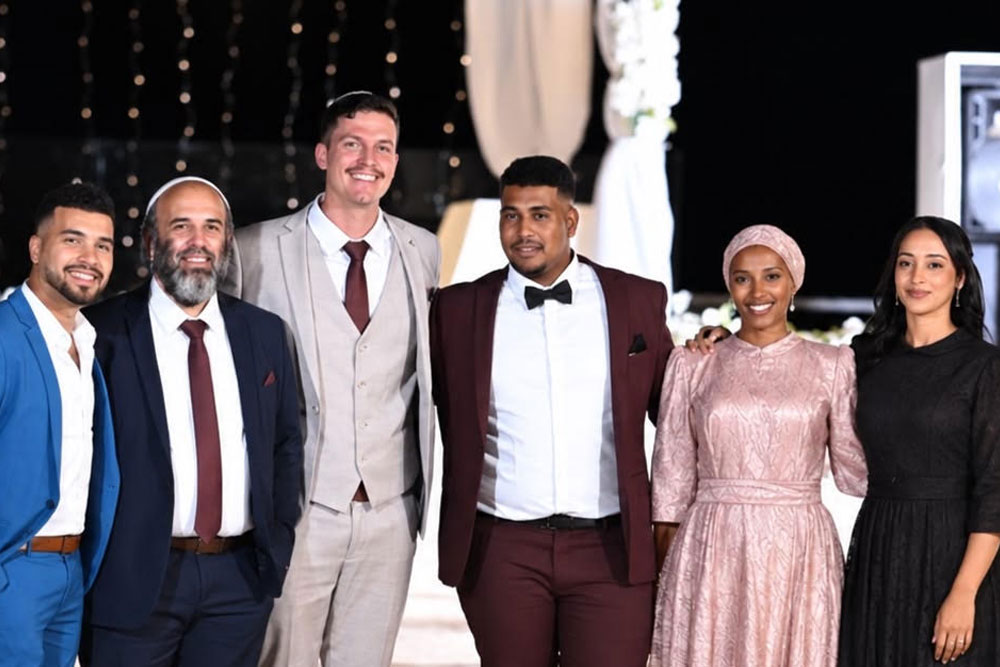
“I Thought Hashem Was Punishing Me”
Years earlier, after Galit had already spent two decades in Israel, tragedy struck the family. Her beloved sister Orit was murdered in a terrorist attack.
“The shock and pain were unbearable,” she recalls. “I felt that the world had simply ended.”
At the time, Galit was pregnant with her second son, Achya, whose name she connects with the Hebrew word for sister, achot. The loss shook not only her emotional world but also her faith.
“I thought Hashem was punishing me. That He didn’t love me.”
Her pregnancy was high-risk, and Galit feared she might lose her unborn child as well. “I spoke to Hashem and told Him that I would not be able to endure two losses at once. I prayed a great deal, and my prayer was answered.”
Over time, the experience led her toward a different understanding of Hashem. “I understood that Hashem is merciful. Truly merciful. It was a gradual discovery, and I went through a process to understand that He is good and does good.”
Then, six years ago, another major upheaval arrived. After 23 years of marriage, Galit and her husband divorced.
“We went through a long journey together. We learned so much from one another, but to contain such a gap, you need tools we were unable to carry.”
For Galit, the end of her marriage felt like nothing less than the destruction of a home. And surprisingly, that pain brought her back to the longing that had defined her earliest childhood: Jerusalem and the Beit Hamikdash.
“It was precisely after my private home was destroyed that the yearning for the Beit Hamikdash awakened with great intensity, and I began to understand my life differently.”
She had left Ethiopia with a childhood dream of redemption. She had imagined that reaching Israel would mean the journey was complete. Instead, life in the Land of Israel brought its own struggles: rejection, loss, questions of identity, crises of faith, and eventually divorce.
That realization changed the way Galit understood the concept of exile.
“I understood that even in the Land of Israel, it is possible to experience exile,” she says. “Exile is not only a geographic place. It is a state of the soul, a state in which a person does not feel connected to Hashem.”
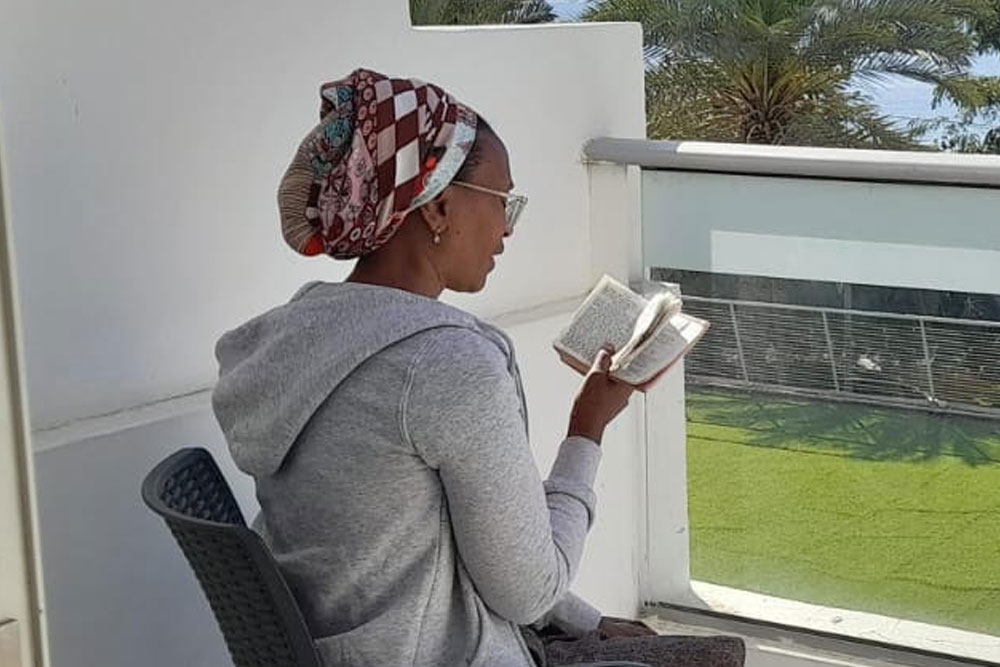 Galit Levin
A Journey That Is Still Unfolding
For Galit, the Beit Hamikdash has come to symbolize that connection: the knowledge that a person is not alone and the deep inner bond that is meant to exist between a Jew and Hashem.
Today, she shares that message with others through lectures, drawing on the experiences that shaped her own life.
“I understand that it was not for nothing that I went through everything I did,” she says. “You can look at life as a journey, one in which it sometimes seems that we have reached the destination, only to discover that we have not yet.”
Her own journey began with a six-year-old girl walking toward Sudan with Jerusalem in her imagination. She eventually reached the city she had dreamed about, but over the years she came to understand that reaching Jerusalem geographically was only one part of the journey.
“A crisis of faith can ultimately become a gateway to deeper faith,” she says. “I want people to ask themselves: Where is my connection with Hashem, and what is the lack from which I can grow?”
After a lifetime marked by longing, immigration, loss, love, upheaval, and rebuilding, Galit hopes her story will encourage others to look at the unfinished parts of their own lives differently.
“I hope my story will inspire people, so that each person, from their own place and their own lack, will seek how to connect to the Temple.”

